
About Chen Yinque
Lived 1890 – 1969 (aged 79). Chen Yinque was a Chinese linguist, historian, academia Sinica and classical literature.
Chen Yinke, or Chen Yinque (3 July 18907 October 1969), was a Chinese historian. One of the most original and respected scholars in twentieth-century China, Chen was elected to the first cohort of Academia Sinica academicians in 1948 and as an inaugural academician of the Chinese Academy of Sciences in 1955. A polyglot with command of more than twenty languages, he was especially versed in classical scripts including Sanskrit, Old Turkic, and Tangut. His scholarship ranged broadly across literature, history, philosophy, and religious studies, distinguished by rigorous textual criticism. His notable works are Draft Essays on the Origins of Sui and Tang Institutions , Draft Outline of Tang Political History , and An Alternative Biography of Liu Rushi .
Biography
Early life Chen Yinke was born in Changsha, Hunan in 1890, and his ancestral home was Yining, Jiangxi (now Xiushui County, Jiujiang). Yinke's father Chen Sanli was a famous poet, one of the "Four Gentlemen" of the Hundred Days' Reform. His grandfather was Chen Baozhen, the governor of Hunan between 1895 and 1898.
As a boy, Chen Yinke attended a private school in Nanjing, and was once a student of , a sinologist. His family had a distinguished tradition in classical learning, so he was exposed from an early age to the Chinese classics, to history, and to philosophy. In 1902 he went to Japan with his elder brother Chen Hengke to study at the (Kobun Institute) in Tokyo, where other Chinese students such as Lu Xun were also enrolled. In 1905 he was forced to return to China due to beriberi, and studied at Fudan Public School, Shanghai.
In 1910 he obtained a scholarship to study at Berlin University, and later at the University of Zurich and Institut d'Etudes Politiques de Paris. In 1914 he came back to China due to World War I.
In winter 1918 he got another official scholarship from Jiangxi to study abroad again. He studied Sanskrit and Pali at Harvard University under Charles Rockwell Lanman. At Harvard he first met Wu Mi, who was then studying literature under Irving Babbitt. They became lifelong friends.
In 1921, he went to Berlin University to study oriental languages under Heinrich Lüders, Central Asian languages under F. W. K. Müller, and Mongolian under Erich Haenisch. He acquired a knowledge of Mongolian, Tibetan, Manchu, Japanese, Sanskrit, Pali, English, French, German, Persian, Turkic, Tangut, Latin, and Greek. Particularly notable was his mastery of Sanskrit and Pali. Xia Zengyou once said to him: "It is good for you to be able to read books in foreign languages. I know only Chinese so I have no more to read after finishing all the Chinese books."
Tsinghua period In March 1925, he returned to China again, meanwhile Wu Mi was in charge of the Institute of Guoxue Studies, Tsinghua School. He accepted the invitation to become a supervisor at Institute of Guoxue Studies, together with Wang Guowei, Liang Qichao and Zhao Yuanren. In 1928 Tsinghua School was restructured to become Tsinghua University. Chen was employed as professor at Chinese Language and Literature Department and History Department, while also adjunct with Peking University. Chen married Tang Yun (唐筼), granddaughter of Tang Jingsong, former governor of Republic of Formosa, in summer 1928. During this time he mainly gave lectures on Buddhist texts translation, historical documents of Jin dynasty, Northern and Southern dynasties, Sui dynasty, Tang dynasty, and Mongolia. He also became adjunct member of Board of Academia Sinica, research fellow and director of Department 1 of the , board member of National Palace Museum, member of the Committee of Qing Dynasty's Documents. Among the many students at this time who went on to scholarly careers were Zhou Yiliang and Yang Lien-sheng.
After the Second Sino-Japanese War began, Chen moved to National Southwestern Associated University, Kunming, Yunnan, teaching lectures on history of Jin dynasty, Southern and Northern Dynasties, history of Sui dynasty and Tang dynasty, and poetry of Yuan Zhen and Bai Juyi.
During World War II In 1939, Oxford University offered him a professorship in Chinese History. He left for Hong Kong in September 1940 on his way to United Kingdom, but was forced to return to Kunming due to ongoing battles. In 1941 he became a guest professor with Hong Kong University to teach history of Sui dynasty and Tang dynasty. Since the Japanese occupation in Hong Kong began in the end of 1941, he conducted history research at home, which resulted in the writing of A Brief Introduction to the Political History of Tang Dynasty. In July 1942, Chen fled to Guilin to teach in Guangxi University, later in December 1943 he moved to Chengdu to teach in Yenching University. He became employed by Tsinghua University for a second time in 1946.
Chen had a degenerative eye condition and lost his vision during the 1940s. Red Guards surrounded his home with loudspeakers, to force Chen, whom they viewed as a "reactionary academic" to listen to the revolutionary masses.
Ideology The Monument of Wang Guowei, text written by Chen Yinke including "thoughts of freedom, spirits of independence"
In 1952, Chen composed two poems, "The Female Impersonator" and "Impromptu Verses on Watching the New Play of the Thirteenth Sister" , in which he compared the Communist Thought Reform to theatrical cross-dressing, either transforming men into women or an old man into a young girl.
In 1953, Chen was invited to relocate from Guangzhou to Beijing to head the Second Institute of Historical Research (Institute of Medieval History) at the Chinese Academy of Sciences. In his "Reply to the Chinese Academy of Sciences" dated 1 December, he set out two conditions for accepting the post: that the institute be exempt from Marxist doctrine and compulsory political lectures, and that he be furnished with a written endorsement from either Mao Zedong or Liu Shaoqi as a guarantee. He explained that without consensus from the country's paramount political and party leaders, meaningful academic research would be impossible. Having effectively declined the position on these terms, Chen was instead invited by Guo Moruo to serve on the editorial board of Historical Research, the journal of the Institute of Historical Research (now Chinese Academy of History).
In the second half of 1954, the Chinese Academy of Sciences began electing its first cohort of academicians. Chen's nomination encountered resistance during deliberations, owing to his refusal to head the Second Institute of Historical Research and his public disavowal of Marxism. The matter was ultimately referred to Mao, who instructed that he be elected.
Chen opposed the simplification of Chinese characters. Before the PRC promulgated its simplification scheme in 1956, he attempted to convey his objections to Mao through Zhang Shizhao, who reported back that the matter was unnegotiable. Chen never wrote in simplified characters and left instructions that his works be published exclusively in traditional characters with vertical typesetting. Publishers in China honored this wish until October 2019, when his works entered the public domain fifty years after his death. In 2020, Yilin Press raised controversy by publishing the first simplified-character edition of Chen's works.
Posthumous reception Political and academic debate of Chen's legacy contributed to a surge of interest in Chen and his life in the Sinophone world beginning in the early 1980s and contributing to the 2000s. Public discussions, biographies, dramas, and documentaries characterized Chen as a "master of national learning" and intellectual of major significance.
In 1995, Lu Jiandong's book The Last Twenty Years of Chen Yinke prompted major debate about Chen in the Chinese public sphere. Similar melodramatic narratives of Chen were published in newspapers, magazines, and by the popular press. Chinese liberal intellectuals promoted these narratives. Critics contended that Lu's approach used hollow rhetoric to exaggerate Chen's psychological trauma and China's cultural despair.
Chen's legacy has significantly shaped the self-conception of Chinese liberal intellectuals.
In his essay The Unfreedom of Literati, academic Ge Zhaoguang describes Chen as having been conflicted between two approaches, that of the traditional Chinese "scholar-official" seeking to save the nation and the modern scholar who adheres to neutral academic norms. Writing approvingly, Zhu Xueqin contends that Chen's refusal to commit to any ideological doctrine makes him a perfect embodiment of classic liberalism.
List of works 《寒柳堂集》 《金明館叢稿初編》(Writings on Jin Ming Guan, Vol. 1) 《金明館叢稿二編》(Writings on Jin Ming Guan, Vol. 2) 《陈寅恪魏晋南北朝史讲演录》、萬繩楠整理,黃山書社1987年版 (Chen Yinke Lectures on History of Wei, Jin, Southern and Northern Dynasties), 《隋唐制度淵源略論稿》(A Brief Introduction to the Origins of Institutions of Sui and Tang Dynasties) 《唐代政治史述論稿》(A Brief Introduction to the Political History of Tang Dynasty) 《元白詩箋證稿》(On Yuan Zhen and Bai Juyi's Poems), referring to the poets Yuan Zhen and Bai Juyi, famous in Chinese history 《柳如是別傳》(A Supplementary Biography of Liu Rushi) 《詩集 附唐篔詩存》 《書信集》 《讀書札記一集》 《讀書札記二集》 《讀書札記三集》 《講義及雜稿》 《陳寅恪史學論文選集》,上海古籍出版社1992年版,收文五十二篇。 《陳寅恪先生全集》,里仁書局1979年,收文九十四篇。(Chen Yinke Xiansheng Quanji, Chen Yinke's Entire Collection) 《论再生缘》Lun Zaishengyuan (On Reincarnation) 《陈寅恪学术文化随笔》Chen Yinke Xueshu Wenhua Suibi (Essays on Chen Yinke's Academy and Culture) 《陈寅恪文集》Chen Yinke Wenji (Collection of Chen Yin Ke) 《陈寅恪集》Chen Yinke Ji (Corpus of Chen Yin Ke)
Don’t just read it —
keep it.
Full-length biographies made to live with: read them, listen on the way to work, watch them tonight.
- E-book
- Audio
- Video
Instant download · yours to keep · every purchase keeps this site free
Important facts
Family & relationships
People in Chen Yinque's life
Named in this biography and alive at the same time
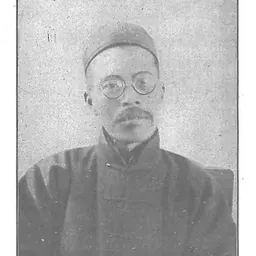




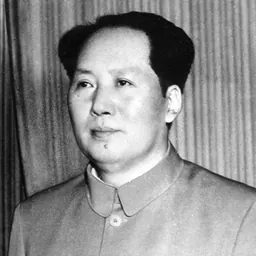

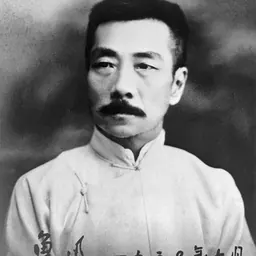
Related people
Same field, nearest in time
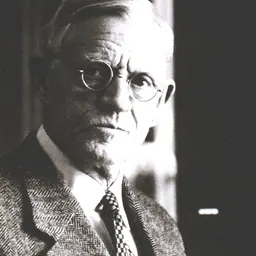
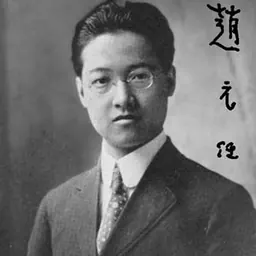

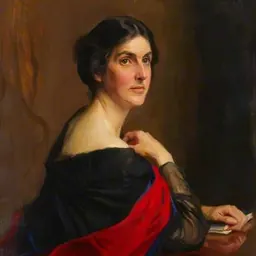
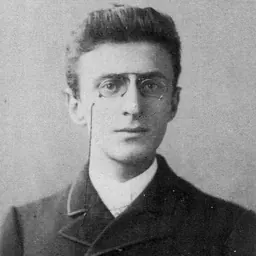
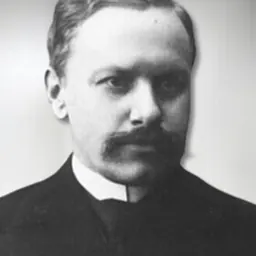
Contemporaries
People whose lives overlapped Chen Yinque's

Frequently asked questions
Who was Chen Yinque?
Chinese historian, linguist, and scholar (1890–1969)
When was Chen Yinque born?
Chen Yinque was born on 16 June 1890 in Changsha.
When did Chen Yinque die?
Chen Yinque died on 7 October 1969 in Guangzhou.
What was Chen Yinque's occupation?
Chen Yinque was a linguist, historian, academia Sinica and classical literature.
What nationality was Chen Yinque?
Chen Yinque was Chinese.
Sources & further reading
Cite this page
APA: Biography.guide. (2026). Chen Yinque. https://biography.guide/chen-yinque/
MLA: "Chen Yinque." Biography.guide, https://biography.guide/chen-yinque/.
Chicago: "Chen Yinque." Biography.guide. https://biography.guide/chen-yinque/.
Data last updated: 2026-09-24 · Spot an error? Report a correction.
Page generated 2026-09-27 05:05 UTC