
About Charles Rockwell Lanman
Lived 1850 – 1941 (aged 90). Charles Rockwell Lanman was an American indologist, orientalist, philologist, university teacher and writer, known for Harvard Oriental Series and Sanskrit.
Charles Rockwell Lanman (July 8, 1850 – February 20, 1941) was an American scholar of the Sanskrit language.
Early life and education Charles Rockwell Lanman was born in Norwich, Connecticut, the eighth of the nine children of Peter Lanman III and Catherine (Cook) Lanman, on July 8, 1850. His mother died when he was three years old, and his aunt Abigail (Abby) Trumbull Lanman helped raise him. His Aunt Abby was an artist, and as one of two legatees of the estate of her great-uncle American Revolutionary War artist John Trumbull, inherited many of Trumbull's Revolutionary War period paintings and sketches. At age ten, a young Charles Lanman read a copy of the Journal of the American Oriental Society containing a translation of a textbook of Hindu astronomy, which sparked his interest in Sanskrit.
Lanman graduated from Yale College (Phi Beta Kappa) in 1871, and was a graduate student there (1871–1873) studying Greek under James Hadley and Sanskrit under WD Whitney. He then eventually earned his doctorate degree at Yale in 1873. He also studied Sanskrit under Weber and Roth and philology under Georg Curtius and August Leskien in Germany (1873–1876).
He married Mary Billings Hinckley on July 18, 1888, at Beach Bluff, Massachusetts. She descended from Thomas Hinckley, the last governor of Plymouth Colony. Professor Lanman spent his sabbatical year with his new wife in India on a one-year honeymoon. As he travelled across India in 1889 he bought for Harvard University some 500 Sanskrit and Prakrit books and manuscripts, which, with those subsequently bequeathed to the university by Fitzedward Hall, make the most valuable collection of its kind in America, and made possible the Harvard Oriental Series, edited by Lanman.
Upon their return from India in 1890, the Lanmans built a home at 9 Farrar Street in Cambridge where he lived until his death. Charles and Mary Lanman had six children.
Academic career Lanman was appointed a professor at Johns Hopkins University when it opened in 1876. He was a professor of Sanskrit at Hopkins from 1876 to 1880. In 1880, Lanman moved to Harvard University where he was the first to preside over the department of Indo-Iranian Languages, which became the department of Indic Philology in 1902, and ultimately became the department of Sanskrit and Indian Studies in 1951. He was also the inaugural holder of the title of Wales Professor of Sanskrit.
During 1911 and 1912 one of his students at the Harvard Graduate School was T. S. Eliot, who was undertaking a doctorate in philosophy.
From 1879 to 1884, he was secretary and editor of the Transactions, and in 1890—1891, president of the American Philological Association, and in 1884-1894 he was corresponding secretary of the American Oriental Society, from 1897 to 1907 vice-president, and in 1907-1908 president.
He was also Honorary Fellow of the Asiatic Society of Bengal, of France, of England, and of Germany and Corresponding Member of the Society of Sciences at Göttingen, the Russian Academy of Sciences, and the Académie des Inscriptions et Belles-Lettres of the Institute of France. Lanman was a Fellow in the American Academy of Arts and Sciences.
Professor Lanman received an LL.D. from Yale in 1902 and an LL.D. from the University of Aberdeen in 1906, the latter university's 400th anniversary.
Literary works In the Harvard Oriental Series Lanman translated (vol. iv.) into English Rajacekhara's Karpura-Manjari (1900), a Prakrit drama, and (vols. vii and viii) revised and edited Whitney's translation of, and notes on, the Atharva-Veda Samhitā (2 vols, 1905); he published A Sanskrit Reader, with Vocabulary and Notes,
Retirement He retired from Harvard in 1926 and became professor emeritus. Most of the foremost Sanskrit scholars in the United States at the time were once his pupils or collaborators, or both. A vigorous man, Lanman rowed daily on the Charles River until age 88, ice permitting, and was nicknamed "Charles River Lanman" by the Harvard Crimson. It was his proudest boast that he had rowed 12,000 miles on the river which shared his name.
Charles Rockwell Lanman died on February 20, 1941, at age 90.
Don’t just read it —
keep it.
Full-length biographies made to live with: read them, listen on the way to work, watch them tonight.
- E-book
- Audio
- Video
Instant download · yours to keep · every purchase keeps this site free
Important facts
People in Charles Rockwell Lanman's life
Named in this biography and alive at the same time
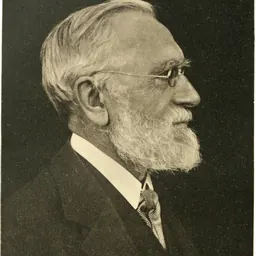



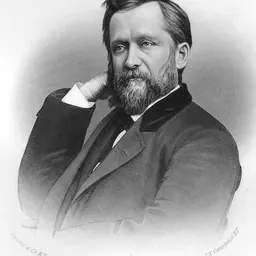
Related people
Same field, nearest in time

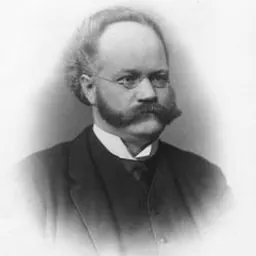
Contemporaries
People whose lives overlapped Charles Rockwell Lanman's


Frequently asked questions
Who was Charles Rockwell Lanman?
American linguist (1850–1941)
When was Charles Rockwell Lanman born?
Charles Rockwell Lanman was born on 8 July 1850 in Norwich.
When did Charles Rockwell Lanman die?
Charles Rockwell Lanman died on 20 February 1941 in Belmont.
What was Charles Rockwell Lanman's occupation?
Charles Rockwell Lanman was an indologist, orientalist, philologist, university teacher and writer.
What was Charles Rockwell Lanman known for?
Charles Rockwell Lanman was known for Harvard Oriental Series and Sanskrit.
What nationality was Charles Rockwell Lanman?
Charles Rockwell Lanman was American.
Sources & further reading
· Wikipedia: Charles Rockwell Lanman
· DBpedia: Charles Rockwell Lanman
Cite this page
APA: Biography.guide. (2026). Charles Rockwell Lanman. https://biography.guide/charles-rockwell-lanman/
MLA: "Charles Rockwell Lanman." Biography.guide, https://biography.guide/charles-rockwell-lanman/.
Chicago: "Charles Rockwell Lanman." Biography.guide. https://biography.guide/charles-rockwell-lanman/.
Data last updated: 2026-09-20 · Spot an error? Report a correction.
Page generated 2026-09-27 05:26 UTC