
Mieczyslaw Warszawski-Bronski
Polish author and socialist then communist activist
About Mieczyslaw Warszawski-Bronski
Lived 1882 – 1938 (aged 55–56). Mieczyslaw Warszawski-Bronski was a Russian and Polish university teacher, writer, politician, economist, diplomat and ambassador.
Mieczysław Broński (also known as Warszawski-Broński or Broński-Warszawski, and M. J. Braun; ; Mechislav Genrikhovich Bronsky; 1882 – 1 September 1938) was a Russian-Polish communist, Soviet diplomat, economist and academic, and a victim of the Great Purge.
Early career The Bronski family were industrialists, who owned a cotton factory in Łódź. After leaving school in 1900, he immigrated to Munich to study at the Technical University of Munich, and later at the Ludwig-Maximilians-Universität München, and joined the Polish Progressive movement. In 1902, he joined the Social Democracy of the Kingdom of Poland and Lithuania (SDKPiL), led by Rosa Luxemburg and Leo Jogiches. On the outbreak of the 1905 revolution, in February, he moved to Warsaw, to work first as a propagandist for the SDPKiL, then as a member of the Warsaw city party committee. In 1906, he edited the party newspaper Czerwony Sztandar ("Red Flag"). He was arrested in Lublin in autumn 1906, and held in prison until the end of 1907. After his release, he immigrated to Switzerland, and joined the Social Democratic Party of Switzerland. When the SDKPiL split in 1911, he joined the 'rozlamovist' faction, led by Jacob Hanecki and Karl Radek.
Bolshevik career Bronski was a founder of the Zimmerwald anti-war movement, and a Polish delegate to the second Zimmerwald conference in Kienthal in April 1916. By then, he had become part of the Zimmerwald left, and an ally of the Bolshevik leader, Vladimir Lenin. By 1916, they were near neighbours in Zurich: it was Bronski who brought Lenin news in 1917 that the February Revolution had broken out in Russia. In June 1917, he reached Petrograd, where he joined the Bolsheviks, worked in the party's Agitprop department, and edited the Polish-language newspaper Trybuna. He was shot and buried at Kommunarka, near Moscow, on 1 September 1938. He was formally rehabilitated on 21 July 1956.
Family Bronski had a daughter, (1911–1972), from his first marriage. Brought up in Switzerland and Germany, she joined her father in the Soviet Union in 1931. She was arrested in 1938 and sentenced to eight years in the Gulag, in Kolyma. She was released in 1946, moved to Germany in 1952, and became known as a writer.
In Vienna, in 1920, he married , a German communist and the mother of Wolfgang Leonhard, later renowned as a historian and critic of communism. She was arrested in 1936, and survived twelve years in the Gulag, in Vorkuta. With the help of her son, she was released in 1948, moving to East Berlin. A few months later, in the spring of 1949, mother and son decided to leave Stalinist East Germany for good, relocating to West Germany. Upon arrival, the U.S. Army's Counter Intelligence Corps interned her, but refusing to work as a spy, she was released in 1950. Susanne Leonhard died in Stuttgart in 1984.
Adopted son: Wolfgang Leonhard (1921–2014), a German historian. After his adoptive father’s arrest, he was placed in an orphanage. From 1945 to 1949, he participated in building the local administration in the Soviet occupation zone of Germany. In 1949, he emigrated first to Yugoslavia and then to West Germany.
Works Zur Geschichte und Tätigkeit der Sowjets in Rußland : aus dem Volkskalender der Petrograder Sowjets 1919. (On the History and Activities of the Soviets in Russia: From the People's Calendar of the Petrograd Soviets, 1919.) "M. J. Braun", Berlin: Rote Fahne, 1919. Die Lehren des Kapp-Putsches. (The Lessons of the Kapp Putsch.) "M. J. Braun", Leipzig: Franke, 1920.
Don’t just read it —
keep it.
Full-length biographies made to live with: read them, listen on the way to work, watch them tonight.
- E-book
- Audio
- Video
Instant download · yours to keep · every purchase keeps this site free
Important facts
People in Mieczyslaw Warszawski-Bronski's life
Named in this biography and alive at the same time

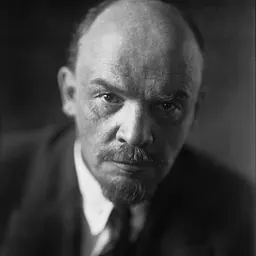
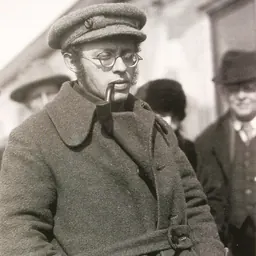
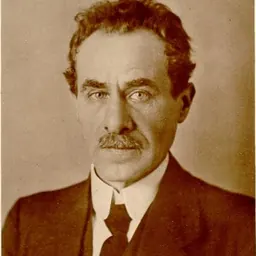
Related people
Same field, nearest in time

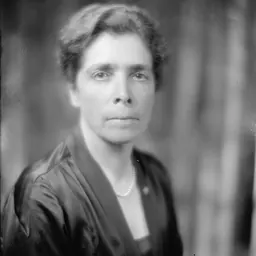

Contemporaries
People whose lives overlapped Mieczyslaw Warszawski-Bronski's





Frequently asked questions
Who was Mieczyslaw Warszawski-Bronski?
Polish author and socialist then communist activist (1882–1938)
When was Mieczyslaw Warszawski-Bronski born?
Mieczyslaw Warszawski-Bronski was born in 1882 in Łódź.
When did Mieczyslaw Warszawski-Bronski die?
Mieczyslaw Warszawski-Bronski died on 1 September 1938 in Moscow.
What was Mieczyslaw Warszawski-Bronski's occupation?
Mieczyslaw Warszawski-Bronski was a university teacher, writer, politician, economist, diplomat and ambassador.
What nationality was Mieczyslaw Warszawski-Bronski?
Mieczyslaw Warszawski-Bronski was Russian and Polish.
Sources & further reading
· Wikipedia: Mieczyslaw Warszawski-Bronski
Cite this page
APA: Biography.guide. (2026). Mieczyslaw Warszawski-Bronski. https://biography.guide/mieczyslaw-warszawski-bronski/
MLA: "Mieczyslaw Warszawski-Bronski." Biography.guide, https://biography.guide/mieczyslaw-warszawski-bronski/.
Chicago: "Mieczyslaw Warszawski-Bronski." Biography.guide. https://biography.guide/mieczyslaw-warszawski-bronski/.
Data last updated: 2026-09-20 · Spot an error? Report a correction.
Page generated 2026-09-27 05:33 UTC