
About Karl Radek
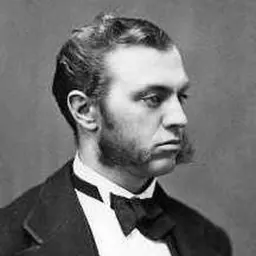
Lived 1885 – 1939 (aged 53). Karl Radek was a Polish and Russian politician, university teacher, journalist, revolutionary, political prisoner and communist.
Karl Berngardovich Radek (; ; 31 October 1885 – 19 May 1939) was a revolutionary and writer active in the Polish and German social democratic movements before World War I and a Communist International leader in the Soviet Union after the Russian Revolution.
Radek was born to a Jewish family in Lemberg, Austria-Hungary. He joined the Social Democracy of the Kingdom of Poland and Lithuania and took part in the 1905 Russian Revolution in Congress Poland. Two years later he was forced to flee to Germany, where he worked as a journalist for the Social Democratic Party of Germany. After the outbreak of World War I, Radek relocated to Switzerland and became an associate of Vladimir Lenin. Following the February Revolution, Radek helped organize the return of Lenin and other Russian revolutionaries to Russia, though he himself was denied entry until after the October Revolution. As Vice-Commissar for Foreign Affairs, he took part in the negotiations of the Treaty of Brest-Litovsk. He helped establish the Communist Party of Germany after the revolution began, and spent a year in prison for his role in the Spartacist uprising.
After returning to Russia, Radek became a member of the Comintern Executive Committee. The failure of the revolution in Germany, as well as his support for Leon Trotsky against Joseph Stalin, ultimately led to his fall from power and expulsion from the Party. He later recanted his views and was re-admitted to the Party. Nevertheless, during the Great Purge Radek was accused of treason and arrested. He was found guilty as a chief defendant at the in 1937 and sentenced to 10 years of penal labour. He died in labour camp in the Urals two years later.
Early life Radek was born Karol Sobelsohn in Lemberg in Austria-Hungary (present-day Lviv, Ukraine) to a Litvak (Lithuanian Jewish) family; his father, Bernhard, worked in the post office and died whilst Karl was young.
Comintern and the German Revolution
After being refused recognition as an official representative of the Bolshevik regime, After they were turned back at the border, Radek alone crossed the German border illegally in December 1918, arriving in Berlin on 19 or 20 December, where he participated in discussions and conferences leading to foundation of the Communist Party of Germany (KPD).
On his return to Russia Radek became the Secretary of the Comintern, taking the main responsibility for German issues. He was removed from this position after he supported the KPD in opposing inviting representatives of the Communist Workers' Party of Germany to attend the 2nd Congress of the Comintern, pitting him against the Comintern's executive and the Communist Party of the Soviet Union. In 1922, Radek sent Henk Sneevliet to China to advocate for what later became the First United Front.
In mid-1923, Radek made his controversial speech 'Leo Schlageter: The Wanderer into the Void' at an open session of the Executive Committee of the Communist International (ECCI).
At subsequent congresses of the Russian Communist Party and meetings of the ECCI, Radek and Brandler were made the scapegoats for the defeat of the revolution by Zinoviev, with Radek being removed from the ECCI at the Fifth Congress of the Comintern. shortly after Lenin's stroke in January of that year.
Radek was expelled from the Party in 1927 after helping to organise an independent demonstration on the 10th anniversary of the October Revolution with Grigory Zinoviev in Leningrad. and a few months later moved on to Tomsk. with Radek being held in particular disdain by oppositionist circles for his betrayal of Yakov Blumkin, who had been carrying a secret letter from Trotsky, in exile in Turkey, to Radek. However, he was re-admitted in 1930 and was one of the few former oppositionists to retain a prominent place within the party, heading the International Information Bureau of the Russian Communist Party Central Committee
Later in his life he adopted a position that the Soviet government should be close to Germany. In 1934 he was interviewed by a German politician, at which both of them deplored the hostile drift of their respective governments, and Radek made a controversial remark: "There are some fine lads in the SA and SS." In 1936 he congratulated General Ernst Köstring on the day Germany occupied the Rhineland, along with Mikhail Tukhachevsky. He helped to write the 1936 Soviet Constitution but, during the Great Purge of the 1930s, he was accused of treason and confessed, after two and a half months of interrogation, According to an investigation of the Central Committee of the CPSU and the KGB after the Khrushchev Thaw, his murder was organized under the Supervision of the senior NKVD operative .
Radek has been credited with originating a number of political jokes about Joseph Stalin. He was posthumously rehabilitated in 1988, under Mikhail Gorbachev.
Selected works Available in English "The Unity of the Working Class" (1909) "Marxism and the Problems of War" (1914) "The End of a Song" (1916) "The Development of Socialism from Science to Action" (1918) "Karl Liebknecht – At the Martyr’s Graveside" (1919) "Anti-Parliamentarism" (1920)
"The Labour Movement, Shop Committees and the Third International" (1920) "The Polish Question and the International" (1920) "England and the East" (1920) "Bertrand Russell’s Sentimental Journey" (1921) "Is the Russian Revolution a Bourgeois Revolution?" (1921) "The Downfall of Levi" (1921) "On the Trade Unions", Second Congress of the Communist International, response to the discussion (1921) "Outlines of World Politics" (1921)
"Foundation of the Two and a Half International" (1922) "Eve of Fusion of the Second and Two-and-a-Half International (1922) "From the Hague to Essen" (1922) "The Greek Revolution" (1922) "The Winding-Up of the Versailles Treaty", report to the IV. Congress of the Comintern (1922) "Leon Trotsky, Organizer of Victory" (1923) "Ruhr and Hamburg" (1923) "Lenin" (1923) "The International Outlook" (1923) "Leo Schlageter: The Wanderer into the Void" ("The Schlageter Speech") (1923) "Fascism and Communism" (1924) "Through Germany in the Sealed Coach" (1924)
"A Letter to Klara Zetkin" (1926) "Larisa Reisner" (1927) "Appeal for Trotsky" (1928) "Capitalist Slavery vs. Socialist Organisation of Labour" (1931) "Greetings to Romain Rolland" (1931) "The Revision of the Versaille Treaty" (Labour Monthly, 1933) "The Birth of the First International" (1934) "Fifteen Years of the Communist International" (pamphlet) (1934) "Contemporary World Literature and the Tasks of Proletarian Art", speech at the Soviet Writers Congress (1934) "Felix Dzerzhinski (1935)
Available in German Theorie und Praxis der 2 1/2 Internationale (Theory and Practice of 2 1/2 International) (1921)
Don’t just read it —
keep it.
Full-length biographies made to live with: read them, listen on the way to work, watch them tonight.
- E-book
- Audio
- Video
Instant download · yours to keep · every purchase keeps this site free
Important facts
Family & relationships
People in Karl Radek's life
Named in this biography and alive at the same time

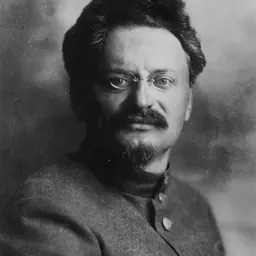
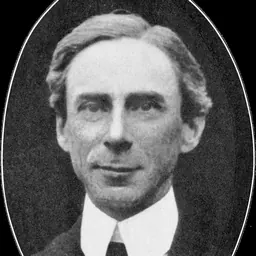
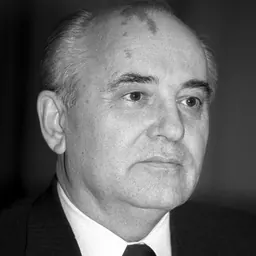

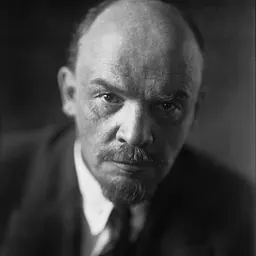
Related people
Same field, nearest in time





Contemporaries
People whose lives overlapped Karl Radek's



Frequently asked questions
Who was Karl Radek?
Russian revolutionary (1885-1939)
When was Karl Radek born?
Karl Radek was born on 31 October 1885 in Lviv.
When did Karl Radek die?
Karl Radek died on 19 May 1939 in Verkhneuralsk, Nerchinsk.
What was Karl Radek's occupation?
Karl Radek was a politician, university teacher, journalist, revolutionary, political prisoner and communist.
What nationality was Karl Radek?
Karl Radek was Polish and Russian.
Sources & further reading
Cite this page
APA: Biography.guide. (2026). Karl Radek. https://biography.guide/karl-radek/
MLA: "Karl Radek." Biography.guide, https://biography.guide/karl-radek/.
Chicago: "Karl Radek." Biography.guide. https://biography.guide/karl-radek/.
Data last updated: 2026-09-26 · Spot an error? Report a correction.
Page generated 2026-09-27 05:16 UTC