
About Luigi Ferdinando Casamorata
Lived 1807 – 1881 (aged 74). Luigi Ferdinando Casamorata was an Italian composer, writer, theorist and critic.
Luigi Ferdinando Casamorata (15 May 1807 – 24 September 1881) was an Italian composer and music critic.
Life Before 1849 Born in Würzburg in the Grand Duchy of Würzburg (now Bavaria), Casamorata was the son of the Grand Duke's inspector Luigi Giacomo Casamorata, who stayed with the Grand Duke Ferdinando III in exile in Germany. Already when he was seven years old, he moved to Florence and studied piano. In 1825, while he was attending law school at the university, he tried a competition for composition at the Accademia di Belle Arti with Ferdinando Giorgetti. was gonfalonier in Fiesole, and town counselor/representative in Florence.
Characteristics as a critic Casamorata was a very traditionalist critic, linked to formalist ideals. He was convinced that the main scope of music was to imitate nature, and that of the first representation in Italy, at the Pergola in 1843, of Der Freischütz by Carl Maria von Weber, judged as unbalanced between the wind instruments and strings.
The debate regarding sacred music He actively participated in the debate regarding the esthetics of sacred music, inaugurated by the Cecilian Movement (with which he actively collaborated in the writing of the Manifest of Sacred Music in 1877). At the beginning he was a permissive and interested observer of all types of church music, but over time he became harsher, almost to the point of intransigence. In fact, he defined the Stabat Mater by Rossini as "un-religious". In addition, he sought to organize stable orchestras and theatre schools in Florence.
Conservatory of Florence and the fame of the 1860s and 70s Casamorata joined the music faculty of the Accademia di Belle Arti di Firenze on 2 September 1841 in the post of maestro di cappella. The music school of that academy became the Florence Conservatory (then known as the Istituto Musicale) on 6 August 1849 by a decree from Leopold II, Grand Duke of Tuscany who split the music and art portions of the school into distinct branches of the same institution and appointed Giovanni Pacini the conservatory's first director. In 1859 Casamorata joined with Abramo Basevi and Girolamo Alessandro Biaggi to organize a plan to separate the school into its own separate institution. talented composers dedicated pieces of music to him (Ferruccio Busoni dedicated hi Op. 21 to him in 1880); publishers called him to revise scores (for example, Giovanni Gualberto Guidi employed him for the publication of the Stabat Mater by Pergolesi in 1877); and his experience was highly sought for the study of Italian operas (in 1874 the Conservatory of Paris turned to him in order to attribute an alleged Cimarosa's opera). He also wrote for the European Encyclopedia (starting in 1877 he collaborated with Arthur Pougin in order to update the Biographie universelle of François-Joseph Fétis. He handled the biographies of Tuscan artists. Today, the donated instruments are preserved in the Museum of Musical Instruments in the Galleria dell'Accademia in Florence.
a Magnificat dated 1842 a mass for three voices dated 1844 the second quartet for strings from 1858 a symphony from 1859 an Ave Maria for four voices from 1871 two antiphons for four voices dated 1878 At the Conservatory of Florence (some are also digitalized): a quartet for pianoforte, clarinet, horn and bassoon (printed by Boosey ); a Benedicta dated March 5, 1869 At the Accademia Filarmonica of Bologna: an Absolve Domine, maybe owned by Masseangelo Masseangeli, dated September 11, 1877
Manuscript copies Copies in Florence The institution that preserves the greatest number of manuscript copies of Casamorata's works is the Conservatory of Florence: the cantata that won the competition in 1825 a cantata, Beatrice, for the florentine celebration of Dante in 1865 the instrumental variations on the themes of Hummel, Meyerbeer, Bellini, Donizetti and Hummel concerts for flute and clarinet some pieces for oboe, with piano accompaniment or orchestra exercises for organ dated 1874 pieces that survived of his ballets chamber music (at least four quartets and one trio) orchestral pieces (preludes, the ouverture op. 2, symphony n. 3) dramatic studies (recitives and cavatine, dated from 1836 and 1866) collections of pieces by other celebrated composers that Casamorata arranged (or had arranged) for students of the conservatory a patriotic song "alla Patria e al Re" few religious pieces (a mass and some Armonie religiose to the text of Pietro Metastasio).
The current state of research does not permit us to establish that these copies are autographs with certainty, although we can hypothesize a consistent number, since the number of compositions carried out from the copies conforms with most of the noted works by Casamorata. a Salve Regina in Pistoia and some masses in the archive of the Sant'Antimo Church in Piombino, discovered by Musical Documentation Center of Tuscany, would indicate that the spread of his works is very large.
Printed editions He published in Florence (especially with Genesio Venturini and Angiolo Lucherini), Milan (with Giovanni Canti and Ricordi) and also with Parisian (Delanchy) and London-based publishers (Boosey). work that was published in the variation for harp by Ricordi. Other printed editions have been found at the Conservatory of Florence (the institution that preserves the greatest number), the Conservatory in Milan and in Brescia, the National Library of Florence, the Accademia di Santa Cecilia di Roma, the Accademia Filarmonica and the Museo Internazionale e Biblioteca della Musica di Bologna, and the Biblioteca Nazionale Marciana di Venezia.
Librettos The libretto of Iginia d'Asti, the only opera of his that exists today, The version by Della Volpe is at the Cini Foundation, at the Archiginnasio and the Conservatory of Bologna, at the Biblioteca Comunale Centrale of Milan, at the Saffi Library in Forlì, at the Library of Ravenna and at the Bayerische Staatsbibliothek in Munich.
Modern editions The Paideia publishers of Brescia and Bärenreiter of Kassel printed one of his complete masses, Messa completa, in 1981
Letters One of his letters to Ricordi from 1845 is preserved at the French National Library.
Recordings In July 1997, at the Brüdernkirche in Braunschweig, the organist Hans-Dieter Karras recorded, together with other pieces, a Complete Mass for organ by Casamorata for the recording label Prospect. In 2003, the organist Klemens Schnorr performed the same mass (together with other pieces) on the organ of the Cattedrale di Saragozza for a CD distributed by the recording label Motette (Harmonia Mundi) in 2006. In November 2014, in the Basilica di San Lorenzo in Florence, the organists Antonio Tronci, Filippo Tronci and Gabriele Giacomelli performed a concert for organ composed in Florence from the 16th century to 19th century, which also included two pieces by Casamorata. The concert was recorded and distributed as a CD by the recording label named Tactus in 2015.
Don’t just read it —
keep it.
Full-length biographies made to live with: read them, listen on the way to work, watch them tonight.
- E-book
- Audio
- Video
Instant download · yours to keep · every purchase keeps this site free
Important facts
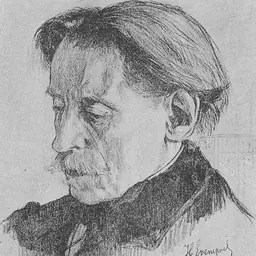
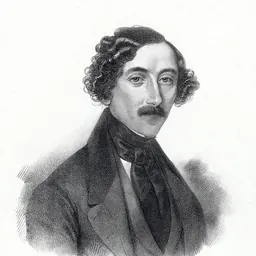
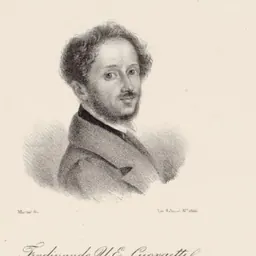
People in Luigi Ferdinando Casamorata's life
Named in this biography and alive at the same time




Related people
Same field, nearest in time
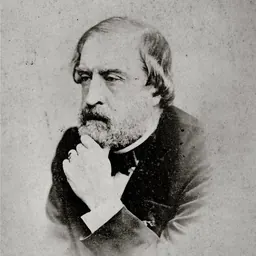
Contemporaries
People whose lives overlapped Luigi Ferdinando Casamorata's





Frequently asked questions
Who was Luigi Ferdinando Casamorata?
Italian composer and scholar
When was Luigi Ferdinando Casamorata born?
Luigi Ferdinando Casamorata was born on 15 May 1807 in Würzburg.
When did Luigi Ferdinando Casamorata die?
Luigi Ferdinando Casamorata died on 24 September 1881 in Florence.
What was Luigi Ferdinando Casamorata's occupation?
Luigi Ferdinando Casamorata was a composer, writer, theorist and critic.
What nationality was Luigi Ferdinando Casamorata?
Luigi Ferdinando Casamorata was Italian.
Sources & further reading
· Wikipedia: Luigi Ferdinando Casamorata
· DBpedia: Luigi Ferdinando Casamorata
Cite this page
APA: Biography.guide. (2026). Luigi Ferdinando Casamorata. https://biography.guide/luigi-ferdinando-casamorata/
MLA: "Luigi Ferdinando Casamorata." Biography.guide, https://biography.guide/luigi-ferdinando-casamorata/.
Chicago: "Luigi Ferdinando Casamorata." Biography.guide. https://biography.guide/luigi-ferdinando-casamorata/.
Data last updated: 2026-09-27 · Spot an error? Report a correction.
Page generated 2026-09-27 05:17 UTC