
About Carl Reinecke
Lived 1824 – 1910 (aged 85). Carl Reinecke was a German composer, pianist, conductor, music educator, university teacher and musicographer.
Carl Heinrich Carsten Reinecke (23 June 182410 March 1910) was a German composer, conductor, and pianist in the mid-Romantic era.
Biography
Reinecke was born in what is today the Hamburg district of Altona; technically he was born a Dane, as until 1864 the town was under Danish rule. He received all his musical instruction from his father, (Johann Peter) Rudolf Reinecke (22 November 179514 August 1883), a music teacher and writer on musical subjects. Carl first devoted himself to violin-playing, but later on turned his attention to the piano.
Overall, he wrote four concertos for his instrument (and many cadenzas for others' works, including a large set published as his Opus 87), as well as concertos for violin, cello, harp and flute. In the winter of 1850/51, Carl Schurz reports attending weekly "musical evenings" in Paris where Reinecke was in attendance.
In 1851, Reinecke became a professor at the Cologne Conservatory. In ensuing years he was appointed musical director in Barmen, and became the academic, musical director and conductor of the Singakademie at Breslau.
In 1860, Reinecke was appointed director of the Leipzig Gewandhaus Orchestra and professor of composition and piano at the Leipzig Conservatory. He led the orchestra for more than three decades, until 1895. He conducted premieres such as the full seven-movement version of Brahms's A German Requiem (1869). In 1865 the Gewandhaus-Quartett premiered his piano quintet, and in 1892 his D major string quartet.
Reinecke is best known for his flute sonata "Undine", but he is also remembered as one of the most influential and versatile musicians of his time. He served as a teacher for 35 years, until his retirement in 1902. His students included Edvard Grieg, Basil Harwood, Charles Villiers Stanford, Christian Sinding, Leoš Janáček, Isaac Albéniz, August Max Fiedler, Walter Niemann, Johan Svendsen, Richard Franck, Felix Weingartner, Max Bruch, Mikalojus Konstantinas Čiurlionis, Anna Diller Starbuck, Ernest Hutcheson, Felix Fox, Sofie Rohnstock, August Winding, Elisabeth Wintzer, Mykola Lysenko, and many others.
After retirement from the conservatory, Reinecke devoted his time to composition, resulting in almost three hundred published works. He wrote several operas (none of which are performed today) including König Manfred. During this time, he frequently made concert tours to England and elsewhere. His piano playing belonged to a school in which grace and neatness were characteristic, and at one time he was probably unrivaled as a Mozart player and an accompanist. In 1904 at the age of 80, he made recordings of seven works playing on piano roll for the Welte-Mignon company, making him the earliest-born pianist to have his playing preserved in any format. He subsequently made a further 14 for the Aeolian Company's "Autograph Metrostyle" piano roll visual marking system and an additional 20 for the Hupfeld DEA reproducing piano roll system.
Reinecke died in Leipzig at age 85.
Works
Ballade for flute and orchestra in D minor, Op. 288 (1908) (his last opus number) Flute Concerto in D major, Op. 283, 1908 Harp Concerto in E minor, Op. 182, 1884 Piano Concerto No. 1 in F-sharp minor, Op. 72, 1860 Piano Concerto No. 2 in E minor, Op. 120, 1872 Piano Concerto No. 3 in C major, Op. 144, 1877 Piano Concerto No. 4 in B minor, Op. 254, 1900 Violin Concerto in G minor, Op. 141, 1877 Serenade for strings in G minor, Op. 242, around 1898 Symphony No. 1 in A Major, Op. 79 Symphony No. 2 in C minor "Håkon Jarl", Op. 134, 1874 Symphony No. 3 in G minor, Op. 227 Sonata for flute (Sonata Undine), Op. 167, 1882 Organ Sonata, Op. 284 Piano Sonata for the left hand, Op. 179, 1884 Three sonatas for cello and piano (in A minor, Op. 42, 1847–8; in D major, Op. 89, 1866; and in G major, Op. 238, 1897) Drei Fantasiestücke für Viola und Klavier, Op. 43 (Three fantasy pieces for viola and piano) String Trio in C minor, Op. 249 Piano Trio, Op. 230 Trio for piano, oboe and horn in A minor, Op. 188, 1886 Trio for piano, clarinet and viola in A, Op. 264 Trio for piano, clarinet and horn in B-flat, Op. 274, 1905 Three light piano trios, Op. 159a Five string quartets (Op. 16 in E-flat, 1843; Op. 30 in F, 1851; Op. 132 in C, 1874; Op. 211 in D major, 1890; and Op. 287) Sextet for flute, oboe, clarinet, 2 horns and bassoon in B-flat, Op. 271 Octet for winds in B-flat, Op. 216, 1892 Music for the Fairy Tale ‘Schneewittchen (Snow White)’ for Soprano, Alto, Women's Chorus and Piano, Op. 133, 1874
Arrangement Arranged Ludwig van Beethoven's Triple Concerto into a piano trio
Media
Don’t just read it —
keep it.
Full-length biographies made to live with: read them, listen on the way to work, watch them tonight.
- E-book
- Audio
- Video
Instant download · yours to keep · every purchase keeps this site free
Important facts
People in Carl Reinecke's life
Named in this biography and alive at the same time
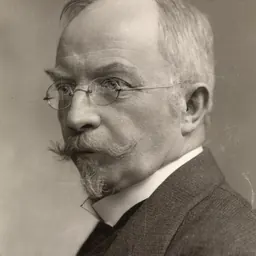
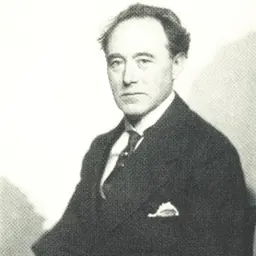


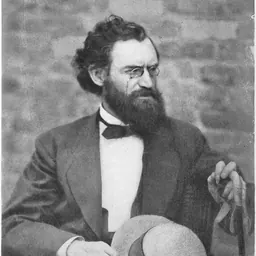
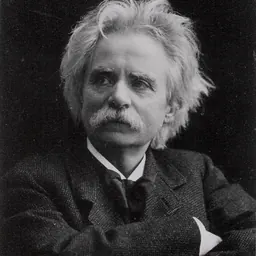


Related people
Same field, nearest in time


Contemporaries
People whose lives overlapped Carl Reinecke's



Frequently asked questions
Who was Carl Reinecke?
German composer, conductor and pianist (1824–1910)
When was Carl Reinecke born?
Carl Reinecke was born on 23 June 1824 in Altona.
When did Carl Reinecke die?
Carl Reinecke died on 10 March 1910 in Leipzig, Berlin.
What was Carl Reinecke's occupation?
Carl Reinecke was a composer, pianist, conductor, music educator, university teacher and musicographer.
What nationality was Carl Reinecke?
Carl Reinecke was German.
Sources & further reading
Cite this page
APA: Biography.guide. (2026). Carl Reinecke. https://biography.guide/carl-reinecke/
MLA: "Carl Reinecke." Biography.guide, https://biography.guide/carl-reinecke/.
Chicago: "Carl Reinecke." Biography.guide. https://biography.guide/carl-reinecke/.
Data last updated: 2026-09-20 · Spot an error? Report a correction.
Page generated 2026-09-27 05:34 UTC