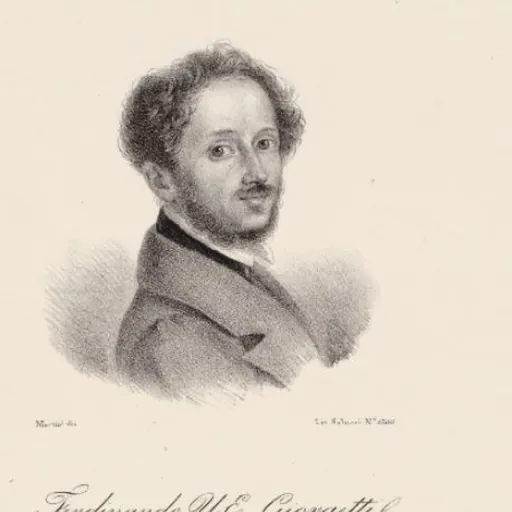
Ferdinando Giorgetti
Italian composer, violinist, publicist, musical teacher and conductor
About Ferdinando Giorgetti
Lived 1796 – 1867 (aged 70). Ferdinando Giorgetti was an Italian violinist, composer, music educator, pubblicista journalist, conductor and teacher.
Ferdinando Giorgetti (23 June 1796 in Florence, Italy – 23 March 1867 in Florence, Italy ) was a composer, violinist, educator and Italian publicist.
Life Child prodigy and royal teacher
Giorgetti, a child prodigy, started studying violin with Giovanni Francesco Giuliani at five years old and continued on this path for 9 years. However, nothing is known regarding his education of composition, so it is most probable that he was self-taught.
First soloist experiences and paralysis
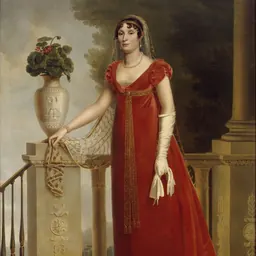
In 1811, Elisa Bonaparte hired him as her personal violinist («Chamber Violin of the Queen of Etruria»), Because of the loss of his job, and above all, his paralysis, he was forced to leave his career as a soloist and dedicate his efforts to composition, teaching, musical publicity, and the organization of events and performances. In 1827, on the frontispiece of Tre trj di una difficoltà progressiva (dedicated to Paganini) he indicates «first violin of the court of the Grand Duke of Tuscany», and thanks to the support of the court (members to which Giorgetti dedicated numerous compositions), he began promoting instrumental music and cultured European musical language, an activity to which he dedicated all of his energy as a composer, teacher and orchestral conductor.
Preference for the quartet
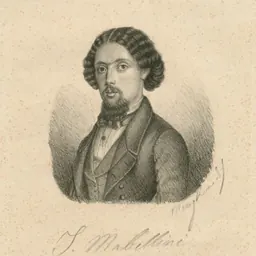
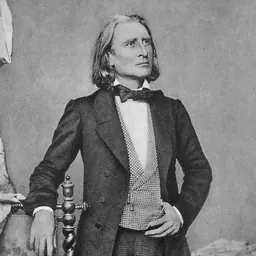
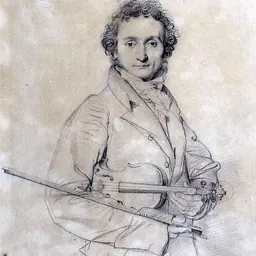
The quartet was a privileged object of interest in his work, and was, at that time, used infrequently by Italian composers. ). He promoted many performances of quartets (often for their first Italian performance ), as well as for private events organized by Giorgetti himself, which were often held at his house (in Via Ricasoli in Florence). In addition, he created incentives for popularized the genre with arrangements from the great German quartets, and he himself composed eight string quartets. However, Giorgetti didn’t disregard other genres of instrumental and symphonic music, and like many orchestral conductors (one of the last “director-violinists”, before becoming solely a conductor like Teodulo Mabellini, his compatriot and contemporary, and Angelo Mariani), performed sacred masterpieces by Haydn and Rossini in Florence in order to demonstrate that a same substance connected both German and Italian tradition. In addiction, Giorgetti rediscovered numerous composers of the past. to Giovanni Pacini, to Giuseppe Poniatowski, to whom Giorgetti dedicated works and offered hospitality in his villa in Via Ricasoli. He maintained sincere friendships with Niccolò Paganini, for whom he composed many pieces for violin, with Franz Liszt, who he met in Florence in 1838 and, above all, with Gioacchino Rossini. When he was a guest of Giorgetti’s in Florence, Rossini was at the mercy of his depression and nervous crises, which Giorgetti tried to help remedy by showing Rossini his own greater suffering caused by his paralysis.
Refusal of opera
The national tendency of the public, however, remained that of developing a passion for lyric opera instead of for instrumental music, which was a fact that threw Giorgetti into a rage. He stigmatized the exaggerated patronage of opera of his compatriots, and believed that the young Giuseppe Verdi was a corruptor of Italian musical traditions, and that Ricordi publishers was a guilty accomplice (in 1856 Giorgetti also interrupted his fine and at that point good relations with the Milanese publisher because of his operatic inclination).
The Rivista Musicale of Florence: influence on Basevi
In 1840, he founded the «Rivista Musicale di Firenze» (Musical Magazine of Florence), which was the first Italian periodical completely dedicated to music. He didn’t write critiques, but rather philosophical reflections of music, very similar to those of Giuseppe Mazzini expressed in Filosofia della musica (Philosophy of music) in 1836. Giorgetti’s opinions very much inspired the ideas of Abramo Basevi, one of the protagonists in the Florentine musical scene. Together, Giorgetti and Basevi created large instrumental organizations, among which were Mattinate beethoveniane (concerts that brought the Tuscan reception of Beethoven to the forefront and which were first performed in front of his house in Via Ricasoli, in 1859, and then at the Lemonnier Institute in via S. Egidio), Concerti popolari (created by Basevi and Teodulo Mabellini in 1863), and Società del quartetto (with the publisher Giovanni Gualberto Guidi), which in 1861 finally made Giorgetti’s dream of having a Florentine “house” for the quartet come true. In fact, he dedicated his last Settimo quartetto to the Società.
Last years
Getting weaker and weaker from his paralysis, he became interested in the destiny of old musicians. He donated many of his earning to institutions that offer assistance. His involvement as a teacher and publicist continued almost until his death, but he almost completely ceased to compose after 1862. He died in his house in Via Ricasoli in 1867. The Philharmonic Academy of Bologna preserves the autograph of the Gran quintetto, at one time dedicated by Giorgetti to the librarian Masseangelo Masseangeli, then published by Ricordi in 1847 and rededicated first to the students and then to Poniatowski. The Greggiati Collection in Ostiglia contains the autograph of the Ave Maria, op. 35 in a version arranged for orchestra (the autograph of the original version for piano, harp or quartet is at the Conservatory of Florence). The autograph of the seventh quartet for strings was only recently discovered at Carnegie Mellon University in Pittsburgh.
Manuscripts
The majority of the contemporary manuscripts of his work are at the Conservatory of Florence and the Hofburgkapelle in Vienna. After which, manuscripts are found at the Noseda Collection of the Conservatory of Milan, the Capitolary Archive in Pistoia, the Sasso Collection at the Accademia Santa Cecilia of Rome, the Paganini Conservatory of Genoa, A unique contemporary copy of Giorgetti’s works are preserved at the Biblioteca Nazionale Marciana in Venice, in the Greggiati Collection in Ostiglia, at the Biblioteca Statale in Cremona, at the Biblioteca Domenicini in Perugia, at the Conservatorio San Pietro a Majella in Naples, and, abroad, at the Abteilung Musik, Theater, Film della Universitätsbibliothek «Johann Christian Senckenberg» in Frankfurt, at the Sibley Music Library part of the Eastman School of Music of the University of Rochester (New York), and in the Galeazzi Collection at the Irving Gilmore Music Library at Yale University in New Haven (Connecticut). The Institute published the recording in 1989, and now is available on-line on the official site.
Don’t just read it —
keep it.
Full-length biographies made to live with: read them, listen on the way to work, watch them tonight.
- E-book
- Audio
- Video
Instant download · yours to keep · every purchase keeps this site free
Important facts
People in Ferdinando Giorgetti's life
Named in this biography and alive at the same time


Related people
Same field, nearest in time


Contemporaries
People whose lives overlapped Ferdinando Giorgetti's





Frequently asked questions
Who was Ferdinando Giorgetti?
Italian composer, violinist, publicist, musical teacher and conductor
When was Ferdinando Giorgetti born?
Ferdinando Giorgetti was born on 23 June 1796 in Florence.
When did Ferdinando Giorgetti die?
Ferdinando Giorgetti died on 23 March 1867 in Florence.
What was Ferdinando Giorgetti's occupation?
Ferdinando Giorgetti was a violinist, composer, music educator, pubblicista journalist, conductor and teacher.
What nationality was Ferdinando Giorgetti?
Ferdinando Giorgetti was Italian.
Sources & further reading
· Wikipedia: Ferdinando Giorgetti
· DBpedia: Ferdinando Giorgetti
Cite this page
APA: Biography.guide. (2026). Ferdinando Giorgetti. https://biography.guide/ferdinando-giorgetti/
MLA: "Ferdinando Giorgetti." Biography.guide, https://biography.guide/ferdinando-giorgetti/.
Chicago: "Ferdinando Giorgetti." Biography.guide. https://biography.guide/ferdinando-giorgetti/.
Data last updated: 2026-09-20 · Spot an error? Report a correction.
Portrait: Wikimedia Commons · author & licence
Page generated 2026-09-27 04:58 UTC