
About Li Rui
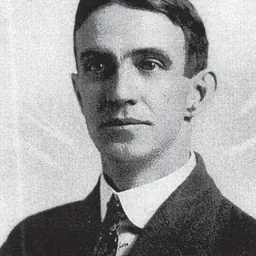
Lived 1917 – 2019 (aged 101). Li Rui was a Chinese politician, historian and functionary.
Li Rui (; 14 April 1917 – 16 February 2019) was a Chinese politician, historian and dissident Chinese Communist Party (CCP) member.
As a young student activist, Li joined the Communists in 1937 during the Chinese Civil War. By 1958, he had become the vice-minister of the Ministry of Water Resources. His vocal opposition to the proposed Three Gorges Dam brought him to the attention of the Chairman of the CCP, Mao Zedong. Li impressed Mao, who made him his personal secretary for industrial affairs. However, Li was known for his independence of thought, and defied Mao at the 1959 Lushan Conference. Li was expelled from the party and sent to a prison camp, beginning nearly twenty years of political exile. Denounced by his family for anti-Mao activities during the Great Leap Forward and Cultural Revolution, he spent eight years in solitary confinement at the Qincheng Prison.
After Mao's death, Li's party membership was restored. He regained an influential position in the CCP but, after only a few years, was forced to resign by Chen Yun for getting too close to Hu Yaobang. From the mid-1980s, shut out of formal power, Li wrote and commentated extensively, calling for freedom of speech, freedom of the press, and democracy within a socialist framework. He also wrote five books on Mao and early Communist Party history. Li remained a party member until his death, respected but isolated; his views were formally denounced and he was censored in the Chinese press. Li died in 2019, aged 101. He was described by The Guardian in 2005 as living a life "filled with rebellions, often at great personal cost, against those who abused their power". Li's father died in 1922, when Li was only five. In 1935, he helped lead a student protest against the failure of the Chinese government to oppose Japanese aggression. A dedicated activist, he was briefly jailed by the Republic of China's Kuomintang government for communist activities. He became the editor of domestic commentary for the Jiefang Daily in September 1941 and later the newspaper's head of the editorial bureau for areas under Communist control.
Secretary for Mao, labour camp and exile Mao hired Li as his personal secretary for industrial affairs in 1958, At a 1959 meeting in Lushan, Li insisted on opposing Mao's views.
Li was denounced as an anti-Mao conspirator and sent to a penal camp in Heilongjiang near the border with the Soviet Union. Li maintained his grip on sanity by writing poetry in the margins of Communist books using iodine pilfered from the prison's medical facilities. In 1982, he was elected to the Central Committee for a five-year term, and in April of the same year he became vice director of the Organisation Department of the CCP, an influential role focused on the promotion, demotion, and recruitment of senior officials. He was appointed by Chen Yun to counter the influence of Hu Yaobang. He was also head of the Youth Bureau. As a Youth Bureau official, Li sent Yan Huai on an inspection trip to find promising young officials; Li specifically asked Yan to prepare a report on Xi Jinping, a local official in Hebei at the time.
In 1983, under the direction of Song Renqiong and Xi Zhongxun, Li helped lead the second official investigation into the Guangxi Massacre. On 3 March 1984, he gathered offspring of senior officials, asking them whether a special document on them was necessary. The participants opposed such a document, which he agreed to, adding that he hoped that offsprings "will fight to excel". Their efforts were unsuccessful and the dam was approved in 1992, construction finishing in 2006. In 1989, Li personally witnessed the violent crackdown in the neighborhood of Beijing during the Tiananmen Square protests, strengthening his opposition to the party's authoritarian wing. He was an ally of prominent reformists such as Zhao Ziyang and Hu Yaobang.
quoted = true
After officially retiring in June 1995 at age 78, In November 2004, the party's Propaganda Department banned Li from being published in the media. His books on Mao were censored and banned in Mainland China. In 2006, he was a lead signatory to an open letter condemning the state's closure of the investigative newspaper Freezing Point . Ahead of the 17th Communist Party Congress in 2007, Li and retired academic Xie Tao published articles calling for the Communist Party to become a European-style socialist party, remarks that were condemned by the party propaganda apparatus. In October 2010, Li was the lead signatory to an open letter to the Standing Committee of the National People's Congress, calling for greater press freedom. In 2017, he failed to attend the 19th Party Congress, which was seen as an act of defiance against General Secretary Xi Jinping's elevation above collective leadership.
Li died of organ failure in Beijing on 16 February 2019, aged 101. As an early and senior member of the Communist Party, Li was given a state funeral and buried at the Babaoshan Revolutionary Cemetery, despite his desire to be interred with his parents in Hunan, his home province. A Beijing court ruled in favor of Zhang in 2019, but the case continued in the United States, and went to trial in 2024. Zhang's lawyers argued that the diary is personal to her and that she only wished the return of the original document, not any copies retained by Hoover; Li Nanyang's attorneys suggested that the Chinese government was behind Zhang's case, given her limited financial means. Zhang died during proceedings; a federal judge ruled in 2026 that the donation to Stanford was legal and had been carried out "in accordance with Li's wishes." The court also found that the Beijing ruling was unenforceable in the United States, resulting in the Hoover Institution retaining control over the diary and other documents.
Selected publications (1989) , English translation of title: Records of the Lushan Conference, (1998), English translation of title: The Diary of Li Rui, Visiting Papers, (1998), , English translation of title: To Put It Bluntly: Li Rui's Sixty Years of Worries and Thoughts, (1998), , English translation of title: Collection of Poems, (1999) , English translation of title: The Collected Works of Li Rui, Volume One: The True Faces of the Lushan Conference, (1999) , English translation of title: The Collected Works of Li Rui, Volume Two: The Tragedy of Mao Zedong's Later Years, (1999) , English translation of title: The Collected Works of Li Rui, Volume Three: My Experience of "The Great Leap Forward", (2005) , English translation of title: Li Rui on Mao Zedong, (2009) , English translation of title: Mao Zedong Before The Age of Thirty, (2013) English translation of title: Li Rui's Dictations of the Past, (2014) , English translation of title: Mao Zedong: Prosperous Years (1893–1923), (2015) , English translation of title: Mao Zedong's Early Reading Life,
Don’t just read it —
keep it.
Full-length biographies made to live with: read them, listen on the way to work, watch them tonight.
- E-book
- Audio
- Video
Instant download · yours to keep · every purchase keeps this site free
Important facts
People in Li Rui's life
Named in this biography and alive at the same time




Related people
Same field, nearest in time




Contemporaries
People whose lives overlapped Li Rui's

Frequently asked questions
Who was Li Rui?
Chinese politician (1917–2019)
When was Li Rui born?
Li Rui was born on 13 April 1917 in Pingjiang County.
When did Li Rui die?
Li Rui died on 16 February 2019 in Beijing.
What was Li Rui's occupation?
Li Rui was a politician, historian and functionary.
What nationality was Li Rui?
Li Rui was Chinese.
Sources & further reading
Cite this page
APA: Biography.guide. (2026). Li Rui. https://biography.guide/li-rui/
MLA: "Li Rui." Biography.guide, https://biography.guide/li-rui/.
Chicago: "Li Rui." Biography.guide. https://biography.guide/li-rui/.
Data last updated: 2026-09-20 · Spot an error? Report a correction.
Page generated 2026-09-27 05:25 UTC