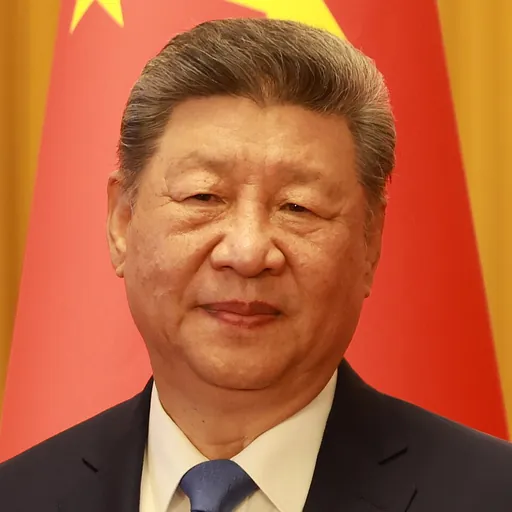
Xi Jinping
General Secretary of the Chinese Communist Party since 2012 (born 1953)
About Xi Jinping
Born 1953. Xi Jinping is a Chinese statesperson and politician.
Early political career
Central Military Commission After graduating in April 1979, Xi worked at the General Office of the State Council as one of the three secretaries of Geng Biao, who was the secretary-general of the Central Military Commission. Together with Lü Yulan, the other deputy party secretary of Zhengding, Xi wrote a letter to the central government addressing the excessive requisitions that burdened local farmers. Their efforts successfully convinced the central government to reduce the annual requisition amount by 14 million kilograms. Xi also set up a pilot project for the household responsibility system in one of the poorer communes despite reservations from some in the local leadership.
As the secretary of the CCP Zhengding County Committee in July 1983, Xi initiated several development projects, including the development of "Nine Articles of Zhengding talents", the construction of Changshan Park, the restoration of the Longxing Temple, the formation of a tourism company, and the establishment of the Rongguo Mansion and Zhengding Table Tennis Base. He also persuaded the China Teleplay Production Center to set the filming base of Dream of the Red Chamber in Zhengding and secured 3.5 million yuan to build Rongguo Mansion, which significantly boosted the county's tourism industry, generating 17.61 million yuan in revenue that year. Additionally, Xi invited prominent figures such as Hua Luogeng, Yu Guangyuan, Pan Chengxiao to visit Zhengding, which eventually led to the development of the county's "semi-urban" strategy, leveraging its proximity to Shijiazhuang for diverse business growth.
In September 1984, during a briefing session chaired by He Zai, the secretary-general of the CCP Central Organization Department, Xi's strategic vision and comprehensive understanding of Zhengding County's development were highlighted. He Zai, along with Wei Jianxing, deputy head of the CCP Central Organization Department, communicated these findings to Hu Yaobang, describing Xi as a leader with a strategic outlook and a strong alliance ideology between workers and peasants. In 1985, Xi participated in a study tour on corn processing and traveled to Iowa, the United States, to study agricultural production and corn processing technology. and prepared Xiamen Airlines, the Xiamen Economic Information Center, and the Xiamen Special Administrative Region Road Project. He then married Peng Liyuan in Xiamen. In September 1988, he was appointed as the secretary of Ningde before being elevated to head of the region. Ningde's economy was far worse at that time than that of Fuzhou and Xiamen. Xi condensed his work log and memories of his Ningde period into the book Getting out of Poverty, and led local poverty eradicating efforts and local CCP building projects. The CCP Fujian Provincial Committee decided in May 1990 to assign Xi to Fuzhou City as the Municipal Committee Secretary. In 1995, Xi Jinping was elevated to deputy secretary of the Fujian Provincial Committee of the Chinese Communist Party.
In September 1997, he was elected as an alternate member of the 15th CCP Central Committee by the 15th Party National Congress. In 1998, he became a member of the 9th National People's Congress. In 1999, he was promoted to the office of Vice Governor of Fujian, and became governor a year later. Xi proposed the concept of the Golden Triangle at Min River and oversaw the construction of the Fuzhou 3820 Project Master Plan, which outlines Fuzhou's growth strategy for 3, 8, and 20 years. He also championed the development of Fuzhou Changle International Airport, the Min River Water Transfer Project, the Fuzhou Telecommunication Hub, and Fuzhou Port, among others. He also focused on attracting Taiwanese and foreign investment, establishing Southwest TPV Electronics and Southeast Automobile in Fuzhou, and fostering Fuyao Glass, Newland Digital Technology and other manufacturing firms. He served as governor of Fujian from 1999 to 2002, during which he presented the notion of "Megalopolises" and advocated for the inter-island growth strategy of Fuzhou and Xiamen, which motivated local officials to swiftly overcome the repercussions of the Yuanhua smuggling case and adopt a new development strategy. Xi also oversaw the development of "Digital Fujian", including the province's complaint hotline into the "12345 Citizen Service Platform", so enhancing organizational efficiency.
Zhejiang In October 2002, Xi left Fujian and became the deputy governor, acting governor and deputy Party secretary of neighbouring Zhejiang. He eventually took over as provincial Party Committee secretary after the 16th Party National Congress, occupying a top provincial office for the first time in his career. In November 2002, he was elected a full member of the 16th Central Committee by the 16th Party National Congress, marking his ascension to the national stage. While in Zhejiang, Xi presided over reported growth rates averaging 14% per year. During this period, Zhejiang increasingly transitioned away from heavy industry. Xi's career in Zhejiang was marked by a tough and straightforward stance against corrupt officials. This earned him a name in the national media and drew the attention of China's top leaders. Between 2004 and 2007, Li Qiang acted as Xi's chief of staff through his position as secretary-general of the Zhejiang Party Committee, where they developed close mutual ties. During this period, Xi and Li drafted the Double Eight Strategy, which listed eight comparative advantages of Zhejiang and eight corresponding actions to improve the province.
Shanghai Following the dismissal of Shanghai Party secretary Chen Liangyu in September 2006 due to a social security fund scandal, Xi was transferred to Shanghai on 24 March 2007, where he was the party secretary there for seven months. While in Shanghai, he worked on preserving unity of the local party organisation. He pledged there would be no purges during his administration, despite the fact many local officials were thought to have been implicated in the Chen Liangyu corruption scandal. In Shanghai, Xi was known for supporting market based reforms. On most issues, Xi largely echoed the line of the central leadership. He developed a reputation in his early career for avoiding controversy and not making political opponents.
Vice presidency
Immediately after the 17th Party Congress, Xi was elected by the first plenary session of the 17th Central Committee to be the 6th-ranking member of the Politburo Standing Committee on 22 October 2007. In addition, Xi became a member of the 17th Secretariat. He also led the Central Leading Group for Party Building and the Central Hong Kong and Macau Affairs Leading Group, as well as being the deputy leader of the Central Foreign Affairs Leading Group. He was ranked above Li Keqiang in the PSC, an indication that he was going to succeed Hu Jintao as China's next leader. This assessment was further supported at the first session of the 11th National People's Congress in March 2008, when Xi was elected as vice president of China.
Following his elevation, Xi held a broad range of portfolios. He was put in charge of the comprehensive preparations for the 2008 Summer Olympics in Beijing, as well as being the central government's leading figure in Hong Kong and Macau affairs. In addition, he also became the president of the Central Party School, the CCP's cadre-training and ideological education school. In the wake of the 2008 Sichuan earthquake, Xi visited Shaanxi, which was also hit by the earthquake. After the Olympics, Xi was assigned the post of committee chair for the preparations of celebrations for the 60th anniversary of the People's Republic of China. He was also reportedly at the helm of a top-level CCP committee dubbed the 6521 Project, which was charged with ensuring social stability during a series of politically sensitive anniversaries in 2009. Following the July 2009 Ürümqi riots, Xi was put in charge to restore order, aided by security chief Zhou Yongkang. Xi also took active part in diplomacy, visiting various countries as vice president.
Xi's position as the apparent successor to become the paramount leader was threatened with the rapid rise of Bo Xilai, the party secretary of Chongqing at the time. Bo was expected to join the PSC after the 18th Party Congress, with most expecting that he would try to eventually maneuver himself into replacing Xi. Bo's policies in Chongqing inspired imitations throughout China and received praise from Xi himself during Xi's visit to Chongqing in 2010. Records of praises from Xi were later erased after he became paramount leader. Bo's downfall would come with the Wang Lijun incident, which opened the door for Xi to come to power without challengers. On 18 October 2010, at the fifth plenary session of the 17th Central Committee, Xi was elected to be a vice chairman of the CCP Central Military Commission, followed by his appointment as vice chairman of the state CMC on 28 October by the Standing Committee of the National People's Congress.
A few months before his ascendancy to the party leadership, Xi disappeared from official media coverage and cancelled meetings with foreign officials for several weeks beginning on 1 September 2012, causing rumors. On 15 November 2012, immediately after the 18th Party National Congress, Xi was elected by the first plenary session the 18th Central Committee to the posts of Party general secretary and chairman of the Party CMC. This made him both the CCP leader and, informally, China's paramount leader. The following day Xi led the new line-up of the PSC onto the stage in their first public appearance. The membership of the PSC was reduced from nine to seven, with Xi and Li Keqiang retaining their seats; the other five members were new. In December 2012, Xi visited Guangdong in his first trip outside Beijing since taking the general secretaryship. The overarching theme of the trip was to call for further economic reform and a strengthened military. Xi was elected president on 14 March 2013, in a confirmation vote during the first session of the 12th National People's Congress in Beijing. He received 2,952 for, one vote against, and three abstentions. Xi was also elected as the chairman of the state CMC. He subsequently nominated Li Keqiang to be the premier, who was then appointed by the NPC.
Leadership
Political developments
Political observers have called Xi the most powerful Chinese leader since Chairman Mao Zedong, especially since the ending of presidential two-term limits in 2018. Xi has departed from the CCP's previous collective leadership practices. Observers have said that Xi has seriously diluted the influence of the once-dominant Tuanpai, also called the Youth League Faction, which were CCP officials who rose through the Communist Youth League (CYLC). Xi has had a cult of personality constructed around himself since entering office with books, cartoons, pop songs and dance routines honouring his rule. Xi's cult of personality has been especially pronounced in Xinjiang. In 2016, the sixth plenary session of the 18th Central Committee officially announced Xi as the leadership core, making him the fourth leader to have been given this designation after Mao Zedong, Deng Xiaoping and Jiang Zemin; Hu Jintao was never given this designation.
Xi was re-elected as general secretary and CMC chairman by the 19th Central Committee after the 19th Party National Congress, held between 18 and 24 October 2017; the 19th Politburo was noted for containing no potential successor. In March 2018, the first session of the 13th National People's Congress passed constitutional amendments including removal of term limits for the president and vice president, the creation of a National Supervisory Commission, as well as codifying the leading role of the CCP. Xi was reappointed as president, now without term limits, while Li Keqiang was reappointed premier. In its sixth plenary session in November 2021, the 19th Central Committee adopted the Resolution on the Major Achievements and Historical Experience of the Party over the Past Century, which evaluated the party's historical legacy from its foundation in 1921 until its 100th anniversary in 2021. The third historical resolution after the ones adopted by Mao and Deng, Xi's one did not herald a major change in how the CCP evaluated its history in comparison. To accompany the resolution, the CCP promoted the terms Two Establishments and Two Upholds, calling the CCP to unite around and protect Xi's core status within the party.
The 20th Party National Congress, held between 16 and 22 October 2022, has overseen amendments in the CCP constitution, with the overall result of the Congress further strengthening Xi's power. Xi was subsequently re-elected as general secretary of the CCP and chairman of the CMC for a third term during the first plenary session of the 20th Central Committee held on 23 October 2022, held immediately after the Party Congress. Xi's re-election made him the first party leader since Mao Zedong to be chosen for a third term. The new Politburo Standing Committee elected by the Central Committee was filled almost completely with people close to Xi, with four out of the seven members of the previous PSC stepping down. Xi was unanimously re-elected as the president and chairman of the PRC Central Military Commission on 10 March 2023 during the first session of the 14th National People's Congress. At the same time, Xi ally Li Qiang succeeded Li Keqiang as the Premier.
Anti-corruption campaign
Xi called for a crackdown on corruption immediately after he ascended to power, starting an anti-corruption campaign. In his inaugural speech as general secretary, Xi mentioned that fighting corruption was one of the toughest challenges for the party. A few months into his term, Xi outlined the Eight-point Regulation, listing rules intended to curb corruption and waste during official party business; it aimed at stricter discipline on the conduct of officials. Xi vowed to root out "tigers and flies", that is, high-ranking officials and ordinary party functionaries. He also launched the Party's Mass Line Education and Practice Activities, aiming CCP cadres to use mass line and instill Party discipline. The campaign lasted from 2013 to 2014.
Xi's anti-corruption campaign has led to the downfall of prominent incumbent and retired CCP officials, including members of the PSC. Xi initiated cases against former CMC vice chairmen Xu Caihou and Guo Boxiong, former PSC member and security chief Zhou Yongkang and former CCP General Office director Ling Jihua. Xi has overseen significant reforms of the Central Commission for Discipline Inspection (CCDI), CCP's highest internal control institution. He and CCDI Secretary Wang Qishan further institutionalized CCDI's independence from the day-to-day operations of the CCP, improving its ability to function as a bona fide control body. In 2017, the campaign led to the downfall of Chongqing Party Secretary and Politburo member Sun Zhengcai. In March 2018, the National Supervisory Commission was established as the highest state supervisory and anti-corruption authority in an effort to aid the CCDI. In January 2018, Xi launched a three-year Special Campaign to Crack Down on Organized Crime and Eliminate Evil that lasted until 2020. After the special campaign exposed problems in the legal system, the CCP announced a campaign to educate and rectify the political and legal teams in July 2020. Especially since 2023, Xi has also overseen significant anti-corruption efforts in the military, with some targets involving those that rose to prominence under his leadership. Those targeted included former defense ministers Li Shangfu and Wei Fenghe, CMC vice chairmen He Weidong and Zhang Youxia, and CMC member Miao Hua. In addition, former Xinjiang Party Secretary and Politburo member Ma Xingrui was put under investigation in 2026. Bloomberg News estimated that as October 2025, at least 14 generals out of 79 appointed under Xi's leadership have been ousted. Xi has introduced stringent restrictions on naked officials, CCP officials with spouses or children residing abroad, eventually culminating in a 2025 campaign to require cadres of vice-ministerial rank or above being required to either repatriate family members or resign from office.
Media and censorship
Since Xi became general secretary, censorship has stepped up. Xi has overseen the increased coordination and consolidation of censorship authorities, raising their efficiency, and under his leadership censorship practices have tightened. Xi has called on for more positive energy at Chinese media, referring to the need for uplifting messages as opposed to critical or negative ones. In August 2013, he gave what became known as the August 19 speech, emphasizing the guiding role of ideology in propaganda. At the Symposium on News Reporting and Public Opinion in 2016, Xi stated that "party and government-owned media must hold the family name of the party" and that the state media "must embody the party's will, safeguard the party's authority".
Xi's administration has overseen more Internet restrictions imposed, and is described as being "stricter across the board" on speech than previous administrations. The SIIO also formulated the Seven Bottom Lines, which serve as the bottom lines that internet users and social media companies in China must adhere to. In September 2013, the Supreme People's Court authorized a three-year prison term for bloggers who shared more than 500 times any content considered "defamatory". It also launched Operation Qinglang campaigns since 2016 to "clean up" the Chinese internet. China under Xi has taken a strong stand to control internet usage inside China, including Google, Facebook and Wikipedia, advocating Internet censorship under the concept of internet sovereignty. Likewise, the situation for users of Weibo has been described as a change from fearing one's account would be deleted, to fear of arrest. The Provisions on the Governance of the Online Information Content Ecosystem, which came into effect in 2020, defined the scope of legal expression for service platforms and content creators. Under Xi's administration, China started enforcing an Internet real-name system for online platforms, requiring them to collect users' real names, ID numbers, and other information when providing services.
Reforms In November 2013, at the conclusion of the third plenum of the 18th Central Committee, the Communist Party adopted the Decision on Several Major Issues Concerning Comprehensively Deepening Reform, a far-reaching reform agenda that alluded to changes in both economic and social policy. Xi signaled at the plenum that he was consolidating control of the massive internal security organization that was formerly the domain of Zhou Yongkang. The Central Leading Group for Comprehensively Deepening Reforms—another ad hoc policy coordination body led by Xi upgraded to a commission in 2018—was also formed to oversee the implementation of the reform agenda. Termed "comprehensive deepening reforms", they were said to be the most significant since Deng Xiaoping's 1992 Southern Tour. The plenum also announced economic reforms and resolved to abolish the laogai system of "re-education through labour", which was largely seen as a blot on China's human rights record. The system has faced significant criticism for years from domestic critics and foreign observers. in 2021, at the 100th anniversary of the CCP, Xi declared that China achieved its goal of building a moderately prosperous society in all respects. In January 2016, a two-child policy replaced the one-child policy, which was in turn was replaced with a three-child policy in May 2021. In July 2021, all family size limits as well as penalties for exceeding them were removed. Since abandoning population control restrictions, China has pursued pro-natalist policies in an attempt to boost the birth rate.
Political reforms
Xi's administration enacted a number of changes to the structure of the CCP and state bodies, especially in a large overhaul in 2018. These reforms have been characterized by the integration of CCP and state bodies. Beginning in 2013, the CCP under Xi has created a series of Central Leading Groups: supra-ministerial steering committees, designed to bypass existing institutions when making decisions, and ostensibly make policy-making a more efficient process. Xi was also believed to have diluted the authority of premier Li Keqiang, taking authority over the economy which has generally been considered to be the domain of the premier. February 2014 oversaw the creation of the Central Leading Group for Cybersecurity and Informatization with Xi as its leader. The State Internet Information Office (SIIO), previously under the State Council Information Office (SCIO), was transferred to the central leading group and renamed in English into the Cyberspace Administration of China. As part of managing the financial system, the Financial Stability and Development Committee, a State Council body, was established in 2017. Chaired by vice premier Liu He during its existence, the committee was disestablished by the newly established Central Financial Commission during the 2023 Party and state reforms. Xi has increased the role of the Central Financial and Economic Affairs Commission at the expense of the State Council.
2018 has seen the deepening the reform of the Party and state institutions. In that year, several central leading groups including reform, cyberspace affairs, finance and economics, and foreign affairs were upgraded to commissions. The powers of the Central Publicity Department was strengthened, which now oversaw the newly established China Media Group (CMG). This included the creation of two CCP bodies for overseeing finance; the Central Financial Commission (CFC), as well as the revival of the Central Financial Work Commission (CFWC) that was previously dissolved in 2002. Several regulatory responsibilities were also transferred from the People's Bank of China (PBC) to another regulatory body, while the PBC reopened offices around the country that were closed in a previous reorganization. In 2024, the CCP's role was strengthened further with the Organic Law of the State Council amended to add a clause about following CCP ideology and policies.
Legal reforms
The party under Xi announced a raft of legal reforms at the fourth plenum held in the fall 2014, and he called for "Chinese socialistic rule of law" immediately afterwards. The party aimed to reform the legal system, which had been perceived as ineffective at delivering justice and affected by corruption, local government interference and lack of constitutional oversight. The plenum, while emphasizing the absolute leadership of the party, also called for a greater role of the constitution in the affairs of state and a strengthening of the role of the National People's Congress Standing Committee in interpreting the constitution. It also called for more transparency in legal proceedings, more involvement of ordinary citizens in the legislative process, and an overall "professionalization" of the legal workforce. The party also planned to institute cross-jurisdictional circuit legal tribunals as well as giving provinces consolidated administrative oversight over lower level legal resources, which is intended to reduce local government involvement in legal proceedings.
There have been several reforms to the court system under Xi, including transferring the authority over local court finance and personnel from local governments to the provincial-level, establishing a personnel quota system, emphasizing "lifetime accountability" for judges for their judicial decisions, and specification of case transferring procedures between various courts. In 2014, China started efforts to pass a unified Civil Code, which was eventually adopted in 2020. In 2015, Xi's administration oversaw the establishment of two circuit courts under the Supreme People's Court, followed by four other circuit courts being established in 2016. Hangzhou Internet Court was established as a court of special jurisdiction in 2017, followed by the establishment of Beijing Internet Court and Guangzhou Internet Court. Shanghai Financial Court was established in 2018 as a specialized financial court. Under Xi, an increasing share of laws passed by the NPC explicitly affirmed the leadership of the CCP, with the share increasing from 4% in 2018 to nearly 70% in 2024.
Military reforms Since taking power in 2012, Xi has undertaken an overhaul of the People's Liberation Army, including both political reform and its modernization. Military-civil fusion has advanced under Xi. Xi has been active in his participation in military affairs, taking a direct hands-on approach to military reform. In addition to being the chairman of the CMC and leader of the Central Leading Group for Military Reform founded in 2014 to oversee comprehensive military reforms, Xi has delivered numerous high-profile pronouncements vowing to clean up malfeasance and complacency in the military. Xi has repeatedly warned that the depoliticization of the PLA from the CCP would lead to a collapse similar to that of the Soviet Union. Xi held the New Gutian Conference in 2014, gathering China's top military officers, re-emphasizing the principle of "the party has absolute control over the army" first established by Mao at the 1929 Gutian Congress. Xi's tenure saw an emphasis on the chairman responsibility system, highlighting the CMC chairman's absolute leadership over the Central Military Commission and the military.
At the 2015 China Victory Day Parade, Xi announced a reduction of 300,000 troops from the PLA, bringing its size to 2 million troops. Xi described this as a gesture of peace, while analysts have said that the cut was done to reduce costs as well as to modernize the PLA. In November 2015, the Central Leading Group for Military Reform announced extensive reforms in the PLA called Deepening National Defense and Military Reform. In 2016, Xi reduced the number of theater commands of the PLA from seven to five. He also abolished the four autonomous general departments of the PLA, replacing them with 15 agencies directly reporting to the CMC. and the Joint Logistics Support Force. PLA Second Artillery Corps was upgraded to the PLA Rocket Force. In March 2016, the CMC announced the abolishment of paid services by the PLA and the People's Armed Police (PAP) by 2019, meaning activities like military-run hospitals and hotels open to the public. On 21 April 2016, Xi was named commander-in-chief of the country's new CMC Joint Operations Command Center. In 2018, the PAP was placed under the sole control of the CMC; it was previously under the joint command of the CMC and the State Council through the Ministry of Public Security. The PLA went through further extensive reforms in 2024; the Strategic Support Force was dissolved and the Aerospace Force, the Cyberspace Force and the Information Support Force was established as arms of the PLA, joining the Joint Logistics Support Force.
Under Xi, China's official military budget has more than doubled, reaching a record $282 billion in 2026. Though predating Xi, his administration has taken a more assertive stance towards maritime affairs, and has boosted CCP control over the maritime security forces. The PLA Navy has grown rapidly under Xi, with China adding more warships, submarines, support ships and major amphibious vessels from 2014 to 2019 than the entire number of ships serving in the United Kingdom's fleet. Aircraft carriers Shandong and Fujian entered into service under Xi in 2019 and 2025 respectively. In 2017, China established the navy's first overseas base in Djibouti. Xi has also undertaken an expansion of China's nuclear arsenal, with him calling China to "establish a strong system of strategic deterrence." The Federation of American Scientists (FAS) has estimated China's total nuclear arsenal to be 600 in 2025, with the US Department of Defense estimating that China's arsenal could reach 1,000 by 2030.
Economy and technology
The Decision of the third plenary session of the 18th Central Committee announced "market forces" would begin to play a "decisive" role in allocating resources. In 2015, the Chinese stock market bubble popped, which led Xi to use state forces to fix it. China's economy has grown under Xi, more than doubling from CN¥54.8 trillion (US$8.7 trillion) in 2012 to CN¥140.2 trillion (US$20.1 trillion) in 2025, while China's nominal GDP per capita increased from CN¥40,431 (US$6,408) in 2012 to CN¥99,665 (US$14,318) in 2025, surpassing the world average in 2021, though growth has slowed from 7.9% in 2012 to 5% in 2025.
Xi has increased state control over the economy, voicing support for SOEs, while also supporting the private sector. CCP control of SOEs has increased, while limited steps towards market liberalization, such as increasing mixed ownership of SOEs were undertaken. Under Xi, an increasing number of private companies have established Party branches. From 2012 to 2022, the share of the market value of private sector firms in China's top listed companies increased from 10% to over 40%. He has overseen the relaxation of restrictions on foreign direct investment (FDI) and increased cross-border holdings of stocks and bonds. Xi launched the Shanghai Free-Trade Zone in 2013. In 2018, Xi announced the Shanghai Stock Exchange STAR Market, which opened in 2019. He also led the establishment of the Hainan Free Trade Port. In 2020, The Wall Street Journal reported that Xi ordered a halt to Ant Group's initial public offering (IPO), in reaction to its founder Jack Ma criticizing government regulation in finance. Under Xi, government guidance funds, public-private investment funds set up by or for government bodies, have raised more than $900 billion for early funding to companies that work in sectors the government deems as strategic. Xi's administration has overseen a decrease in offshore IPOs by Chinese companies, with most Chinese IPOs taking place either in Shanghai or Shenzhen , and has increasingly directed funding to IPOs of companies that works in sectors it deems as strategic, including electric vehicles, biotechnology, renewable energy, artificial intelligence, semiconductors and other high-technology manufacturing. He has stated China has abandoned a growth-at-all-costs strategy which Xi refers to as "GDP heroism". Instead, Xi said other social issues such as environmental protection are important. Xi has made eradicating extreme poverty through targeted poverty alleviation a key goal. In 2015, he launched the battle against poverty. The campaign concluded by 2021, when Xi declared a "complete victory" over extreme poverty, saying nearly 100 million have been lifted out of poverty under his tenure, though some experts said China's poverty threshold was lower than that of the World Bank. In 2020, premier Li Keqiang, citing the National Bureau of Statistics (NBS) said that China still had 600 million people living with less than 1000 yuan ($140) a month, although The Economist said the methodology NBS used was flawed. When Xi took office in 2012, 58% of people in China were living on less than $8.30 per day, in 2022 this had fallen to 21%. At the 19th Party Congress in 2017, Xi stated the primary contradiction of China's conditions in the new era as "the contradiction between the people's ever-growing need for a better life and unbalanced and inadequate development." In this context, "unbalanced" refers to rural-urban inequalities, regional inequalities, inequalities between the rich and poor, and structural imbalances in the economy. "Inadequate" refers to household income share.
Xi has overseen regional economic development initiatives within China such as the Coordinated Development of the Beijing-Tianjin-Hebei Region, Strategy for Integrated Development of the Yangtze River Delta and the Guangdong–Hong Kong–Macao Greater Bay Area. Additionally, Xi's administration has accelerated efforts to further integrate border regions such as Tibet and Xinjiang with the rest of China. Xi supports dual circulation, a reorientation of the economy towards domestic consumption while remaining open to foreign trade and investment. Xi has prioritised boosting productivity. Xi has attempted to reform the property sector to combat the steep increase in prices and cut the economy's dependence on it. In the 19th CCP National Congress, Xi declared "houses are for living, not for speculation." In 2020, Xi's government formulated the "three red lines" policy that aimed to deleverage the heavily indebted property sector. Xi has supported a property tax, for which he has faced resistance from members of the CCP. His administration pursued a debt-deleveraging campaign, seeking to slow and cut the unsustainable amount of debt China has accrued during its growth. Since 2021, China has faced a property sector crisis, with decreasing house prices, shrinking of the real estate sector and bankruptcies of many property developers, partially as a result of Xi's efforts to decrease the sector's role in the Chinese economy.
Xi has heavily emphasized the role of advanced manufacturing and technology development to drive China's future economic growth. Since shortly after taking office as General Secretary, Xi emphasised the use of industrial policy to increase domestic innovation and reduce reliance on foreign technology. In 2015, Xi's administration launched the Double First-Class Construction, a higher education development and sponsorship scheme intended to replace the previous programs Project 211 and Project 985. Xi's administration has promoted Made in China 2025 plan that aims to make China self-reliant in key technologies; although publicly China de-emphasised this plan due to the outbreak of a China–United States trade war, majority of its goals were considered achieved by 2024. Since the outbreak of the trade war in 2018, Xi has further pushed calls for "self-reliance", especially on technology. China's domestic spending on R&D has significantly increased, surpassing the European Union (EU) and reaching a record $564 billion in 2020. In 2023, Xi put forward new productive forces, this refers to a new form of productive forces derived from continuous sci-tech breakthroughs and innovation that drive strategic emerging and future industries in a more intelligent information era. Under Xi, China made rapid advances in key technological areas, becoming a world leader in tech such as electric vehicles, lithium batteries and solar panels,
Xi supports a socialist artistic revival, including the promotion of patriotic art and red classics. Since the 18th Party Congress, Xi has emphasized utilizing red resources, telling red stories, and inheriting red genes. On 15 October 2014, Xi emulated the Yan'an Forum with his 'Speech at the Forum on Literature and Art.' Consistent with Mao's view in the Yan'an Talks, Xi believes works of art should be judged by political criteria. In 2021, Xi quoted the Yan'an Talks during the opening ceremony of the 11th National Congress of the China Federation of Literary and Art Circles and the 10th National Congress of the Chinese Writers Association. According to Xi, art should be judged by political criteria. This view rejects the concept of art-for-art's-sake and contends that art should serve the goal of national rejuvenation. Xi criticizes market-driven art which he deems sensationalist, particularly works which "exaggerate society's dark side" for profit. He ordered the arts industry to "tell China's stories and spread Chinese voices to strengthen the country's international communication capacity." Xi states that Chinese writers should follow the Party's leadership, serve the cause of socialism, and "let people see the good, feel hope, [and] have dreams". Xi is a proponent of the "Sinicization of Chinese religion". At the 19th Party Congress, Xi stated, "We will fully implement the Party's basic policy on religious affairs, uphold the principle that religions in China must be Chinese in orientation and provide active guidance to religions so that they can adapt themselves to a socialist society."
Ideology
Xi has said that "only socialism can save China." Xi has also declared socialism with Chinese characteristics to be the "only correct path to realize national rejuvenation." According to BBC News, while the CCP was perceived to have abandoned its communist ideology since it initiated economic reforms in the 1970s, Xi is believed by some observers to be more believing in the "idea of a communist project", and was described as a Marxist–Leninist by former Australian prime minister Kevin Rudd. Xi's emphasis on prioritizing ideology has included re-asserting the Party's goal of eventually realizing communism and reprimanding those who dismiss communism as impractical or irrelevant. Xi described the communist ideal as the "calcium" in a Party member's spine, without which the Party member would suffer the "osteoporosis" of political decay and be unable to stand upright.
Xi supports stronger Party leadership, saying "government, the military, society and schools, north, south, east and west – the party leads them all." During the 100th anniversary of the CCP in 2021, he said that "without the Communist Party of China, there would be no new China and no national rejuvenation," and that "the leadership of the Party is the defining feature of socialism with Chinese characteristics and constitutes the greatest strength of this system." Xi has said that China, despite many setbacks, has achieved great progress under the CCP, saying that "socialism with Chinese characteristics has become the standard-bearer of 21st-century socialist development." However, he also warned that it will take a long time for China under the CCP to complete its rejuvenation, and during this timeframe, party members must be vigilant to not let CCP rule collapse. Xi has said that "our party is so large, and our country, so huge–it is such that if the Party Central lacks the sole authority to make decisions, nothing can be achieved", comparing the Party Central to the CCP's "cerebrum" and the "central nervous system", and said it "should have the sole authority in making decisions".
Xi has spoken out against "historical nihilism", meaning historical viewpoints that challenge the official line of the CCP. Xi said that one of the reasons for the collapse of the Soviet Union has been historical nihilism. Subscribing to the view that socialism will eventually triumph over capitalism, Xi has said "Marx and Engels's analysis of the basic contradictions of capitalist society is not outdated, nor is the historical materialist view that capitalism is bound to die out and socialism bound to win." Xi has called for the further Sinicization of Marxism, referring to adapting Marxism to the Chinese context. In July 2021, he formulated the Two Integrations, calling for integrating Marxism with China's specific conditions and China's traditional culture. Xi has called on CCP members to "remain true to our original aspiration", meaning to work for the happiness and well-being of the Chinese people and the rejuvenation of China, and launched an educational campaign for that goal from 2019 to 2020. Xi has said that the "feeling of devotion and sense of attachment to our motherland is a duty and responsibility of every Chinese", while adding "In contemporary China, the essence of patriotism is loving the country, the Party and socialism all at the same time".
China's success proves that socialism is not dead. It is thriving. Just imagine this: had socialism failed in China, had our communist party collapsed like the party in the Soviet Union, then global socialism would lapse into a long dark age. And communism, like Karl Marx once said, would be a haunting spectre lingering in limbo. — Xi Jinping during a speech in 2018 However, Xi considers China to be a democracy, saying that "China's socialist democracy is the most comprehensive, genuine and effective democracy." China's definition of democracy is different from liberal democracies and is rooted in Marxism–Leninism, and is based on the phrases people's democratic dictatorship and democratic centralism. Foreign analysts and observers have widely disputed that China is a democracy, saying that it is a one-party authoritarian state and Xi an authoritarian leader. Xi has sometimes referred to as "traditionalist" or "neo-authoritarian".
Xi Jinping Thought
In January 2013, Politburo Standing Committee member Liu Yunshan referred to Xi's speech for the 18th Party National Congress as the "General Secretary Xi Jinping's Series of Important Speeches". In October 2017, the CCP Central Committee announced that Xi's political philosophies were developed into the "Xi Jinping Thought on Socialism with Chinese Characteristics for a New Era". Xi first made mention of the "Thought on Socialism with Chinese Characteristics for a New Era" in his opening day speech delivered to the 19th Party Congress in October 2017. His Politburo Standing Committee colleagues, in their own reviews of Xi's keynote address at the Congress, prepended the name "Xi Jinping" in front of "Thought". On 24 October 2017, at its closing session, the 19th Party Congress approved the incorporation of Xi Jinping Thought into the Constitution of the CCP, while in March 2018, the National People's Congress amended the state constitution to include Xi Jinping Thought.
Xi himself has described the Thought as part of the broad framework created around socialism with Chinese characteristics, a term coined by Deng Xiaoping that places China in the primary stage of socialism. The thought's main elements are summarized in the ten affirmations, the fourteen commitments, and the thirteen areas of achievements. In official party documentation and pronouncements by Xi's colleagues, the Thought is said to be a continuation of Marxism–Leninism, Mao Zedong Thought, Deng Xiaoping Theory, the Three Represents, and the Scientific Outlook on Development, as part of a series of guiding ideologies that embody "Marxism adopted to Chinese conditions" and contemporary considerations. Xuexi Qiangguo, an app for teaching Xi Jinping Thought had become the most popular smartphone app in China in 2019, as the CCP launched a new campaign that calls on its cadres to immerse themselves in the political doctrine every day.
Personal life Family
Xi's first marriage was to Ke Lingling, the daughter of Ke Hua, China's ambassador to the United Kingdom in the early 1980s. They divorced within a few years. The two were said to fight "almost every day," and after the divorce, Ke moved to the UK. Xi and Peng were introduced by friends as many Chinese couples were in the 1980s. Peng had gained fame in the 1980s and remained far better known in China than Xi until the latter emerged as a likely successor in the late 2000s. The couple frequently lived apart due largely to their separate professional lives. Peng has played a much more visible role as China's "first lady" compared to her predecessors; for example, Peng hosted U.S. First Lady Michelle Obama on her high-profile visit to China in March 2014. Xi and Peng have a daughter named Xi Mingze, who graduated from Harvard University in the spring of 2015. While at Harvard, she used a pseudonym and studied Psychology and English. Xi's family has a home in Jade Spring Hill, a garden and residential area in north-western Beijing run by the CMC.
In June 2012, the Bloomberg News reported that members of Xi's extended family including his sister Qi Qiaoqiao have substantial business interests, although there was no evidence he had intervened to assist them. The Bloomberg News website was blocked in mainland China in response to the article about his family's wealth and the sales of Bloomberg Terminals in China slowed, while access to the files of Qinchuan Dadi, which was Qi's investment vehicle, was shut down. Relatives of highly placed Chinese officials, including seven current and former members of the Politburo, have been named in the Panama Papers, including Deng Jiagui, Xi's brother-in-law. Deng had two shell companies in the British Virgin Islands while Xi was a member of the Politburo Standing Committee, which became dormant by the time Xi became CCP general secretary in 2012. According to The New York Times in 2012, after coming to power, Xi told his family to get out of their investments and that Qi Qiaoqiao and Deng Jiagui had divested their investments in at least 10 companies. In 2015, Wang Jianlin, the leader of the company Dalian Wanda, defended Qi and Deng, saying that they sold their shares in the company two months before the IPO in October 2014. The New York Times commented that this information is conflicted with official documents, which state that Qi and Deng transferred the ownership of the holding company to one of their employees in October 2013.
Personality Peng described Xi as hardworking and down-to-earth: "When he comes home, I've never felt as if there's some leader in the house. In my eyes, he's just my husband." In 1992, The Washington Post journalist Lena H. Sun had an interview with Xi, then CCP secretary of Fuzhou; Sun described Xi as considerably more at ease and confident than many officials his age, and said that he talked without consulting notes. He was described in a 2011 The Washington Post article by those who know him as "pragmatic, serious, cautious, hard-working, down to earth and low-key." He was described as a good hand at problem solving and "seemingly uninterested in the trappings of high office." The Chinese state media has also cast him as a fatherly figure and a man of the people, determined to stand up for Chinese interests. Xi reportedly invoked What Is to Be Done? by Nikolay Chernyshevsky as a guide during the 16th BRICS summit. Xi is reported to also like films and TV shows such as Saving Private Ryan, Sleepless in Seattle, The Godfather, and Game of Thrones, and he has praised Chinese independent film-maker Jia Zhangke. Xi is also known to be an avid football fan.
Public image It is hard to gauge the opinion of the Chinese public on Xi, as no independent surveys exist in China and mentions of his name in social media are heavily censored. However, he is believed to be widely popular in the country. According to a 2014 poll co-sponsored by the Harvard Kennedy School's Ash Center for Democratic Governance and Innovation, Xi ranked 9 out of 10 in domestic approval ratings. A YouGov poll released in July 2019 found that about 22% of people in mainland China list Xi as the person they admire the most, a plurality, although this figure was less than 5% for residents of Hong Kong.
In the spring of 2026, the Pew Research Center made a survey on confidence on Xi among 36 countries, which indicated that a median 34% have confidence in Xi to do the right thing regarding world affairs, meanwhile a median of 53% have no confidence; these numbers are higher than those of Russian President Vladimir Putin (31% confidence, 65% no confidence) and United States President Donald Trump (23% confidence, 76% no confidence).
In 2017, The Economist named him the most powerful person in the world. In 2018, Forbes ranked him as the most powerful and influential person in the world, replacing Russian President Vladimir Putin, who had been ranked so for five consecutive years. In 2022, Time also named Xi as the world's most powerful person, writing Xi "is the first among 1.4 billion people. If not among 7.7 billion." Since 2013, Reporters Without Borders, an international non-profit and non-governmental organization with the stated aim of safeguarding the right to freedom of information, included Xi among the list of press freedom predators.
Honours
Xi has received state honours from several countries, including the Order of the Golden Eagle from Kazakhstan and the Order of the Crown from Tajikistan.
Select works
Don’t just read it —
keep it.
Full-length biographies made to live with: read them, listen on the way to work, watch them tonight.
- E-book
- Audio
- Video
Instant download · yours to keep · every purchase keeps this site free
Important facts
Family & relationships
People in Xi Jinping's life
Named in this biography and alive at the same time





Related people
Same field, nearest in time



Contemporaries
People whose lives overlapped Xi Jinping's

Frequently asked questions
Who is Xi Jinping?
General Secretary of the Chinese Communist Party since 2012 (born 1953)
When was Xi Jinping born?
Xi Jinping was born on 15 June 1953 in Beijing.
What is Xi Jinping's occupation?
Xi Jinping is a statesperson and politician.
What nationality is Xi Jinping?
Xi Jinping is Chinese.
Sources & further reading
Cite this page
APA: Biography.guide. (2026). Xi Jinping. https://biography.guide/xi-jinping/
MLA: "Xi Jinping." Biography.guide, https://biography.guide/xi-jinping/.
Chicago: "Xi Jinping." Biography.guide. https://biography.guide/xi-jinping/.
Data last updated: 2026-09-22 · Spot an error? Report a correction.
Portrait: Wikimedia Commons · author & licence
Page generated 2026-09-27 05:02 UTC