
About Chen Yun
Lived 1905 – 1995 (aged 89). Chen Yun was a Chinese politician.
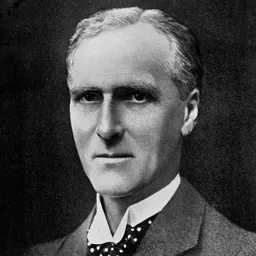
Chen Yun (13 June 1905 – 10 April 1995) was a statesman of the Chinese Communist Party and the People's Republic of China. He was one of the most prominent leaders during the periods when China was governed by Mao Zedong and later by Deng Xiaoping. In the 1980s, Chen was considered the second most powerful figure in China, ranking only behind Deng Xiaoping. Chen Yun was also known as Liao Chenyun , as he took his uncle's (Liao Wenguang; ) family name when he was adopted by him after his parents died.
A major Chinese Communist Party (CCP) political figure before the establishment of the PRC, Chen first joined the CCP Central Committee in 1931, and the Politburo in 1934. He became the head of the CCP's Organization Department in 1937, and became one of CCP leader Mao Zedong's close advisors. He played an important role in the Yan'an Rectification Movement of 1942, and started becoming responsible for economic affairs that year, ultimately heading the Central Finance and Economic Commission from 1949.
After the establishment of the PRC, Chen was a key figure in moderating many of Mao's radical economic ideas and participated in the drafting of the First five-year plan. Chen was instrumental in China's economic reconstruction following the disastrous Great Leap Forward (1958–1960) along with Deng Xiaoping and Zhou Enlai, advocating for a "bird cage" economy in which the market economy should be allowed to play a role but kept contained like a "bird in a cage". Chen was demoted during the Cultural Revolution though he returned to power after Mao's death in 1976.
After Deng Xiaoping's rehabilitation, Chen voiced his criticism of Maoist policies, decrying China's lack of economic policies, and later became one of the architects of Deng's reform and opening up policy. During the 1980s and the 1990s, Chen was regarded as the second-most powerful person in China after Deng and was later recognized as one of the Eight Elders of the Chinese Communist Party. Initially a strong advocate for the reform and opening up, Chen increasingly became conservative towards the reforms as they progressed, becoming a key figure in slowing many reforms and becoming the leader of CCP's conservative factions. Chen resigned from the Central Committee in 1987 though keeping his influence as the chairman of the Central Advisory Commission until 1992, when he fully retired from politics.
Early life Chen was born in Qingpu, Jiangsu (now part of Shanghai) in 1905. Chen was a typesetter for the famous Commercial Press of Shanghai, which printed revolutionary books and even Protestant Bibles. He played a prominent role as a younger organizer in the labor movement during the early and mid-1920s. Chen joined the Chinese Communist Party (CCP) in 1925. Following the May Thirtieth Movement of 1925, Chen was an important organizer under Zhou Enlai and Liu Shaoqi. For a time, Zhou and Yun resided at a Church of Christ in Changting which was the site of a revolutionary committee. After Chiang Kai-shek turned against the CCP in 1927, Chen fled to his hometown, but soon returned to Shanghai and secretly continued his work as a labor unionist.
Chen was one of the few Communist Party organizers from an urban working-class background; he worked underground as a union organizer in the late 1920s, participated in the Long March, and served on the Central Committee from 1931 to 1987. He became a member of the Politburo Standing Committee in 1933. Members of the presidium of the Sixth Plenary Session of the Sixth Central Committee in 1938. (From left to right in the front row: Kang Sheng, Mao Zedong, Wang Jiaxiang, Zhu De, Xiang Ying, Wang Ming; from left to right in the back row: Chen Yun, Bo Gu, Peng Dehuai, Liu Shaoqi, Zhou Enlai, Zhang Wentian) In 1937 Chen returned to China as an adviser to the Xinjiang leader Sheng Shicai. Chen later joined Mao in Yan'an, probably before the end of 1937. In November 1937 he became director of the Party's Organization Department, serving in that capacity until 1944, and by the early 1940s was in the inner circle of Mao's advisers. His writings on organization, ideology, and cadre training were included in the important study materials for the Yan'an Rectification Movement of 1942, a campaign of political persecutions which consolidated Mao's power within the Party. During this time, it is known that he protected some comrades accused of being Trotskyites, and criticized the exaggerations of the campaign in the Shandong base area. The Northeast Administrative Commission formed the Northeastern Economic Planning Committee (the primary bureaucratic body responsible for economic planning in Manchuria region), with Chen as the committee's head.
In July 1958, Chen, Nie Rongzhen, and Bo Yibo were assigned to a "three persons" group to oversee China's nuclear weapons development program.
Economic management
In the 1950s, Chen was the CCP's leading economic planner. Around that time, both Mao and Chen had come to believe that the economic system, modeled on that of the Soviet Union, was overly centralized, but had different ideas about what to do about it. Chen believed that markets should have a larger economic role but remain subject to a state-controlled plan. Chen used the metaphor of a caged bird to describe the socialist economy. If the cage was too small, the bird would not survive. If the cage was left open, the bird would fly away. Chen was made the head of the finance group.
Role in the reform and opening up
Though Deng Xiaoping is credited as the architect of modern China's reform and opening up, Chen Yun contributed much to the strategy adopted by Deng, and Chen was more directly involved in the details of its planning and construction. A key feature of the reform was to use the market to allocate resources, within the scope of an overall plan. The reforms of the early 1980s were, in effect, the implementation, finally, of the program Chen had outlined in the mid-1950s. Chen called this the "birdcage economy". According to Chen, "the cage is the plan, and it may be large or small. But within the cage the bird [the economy] is free to fly as he wishes." Ultimately, Chen's view was that economic planning was most important.
The government's first response to inflation was to issue bonuses to workers in state-owned enterprises, to help make up for the price increases. Chen Yun argued that, if there were to be such bonuses, they should be gauged to increased productivity. In practice, the bonuses were universal throughout the state sector and had the same economic effect as if the government had simply printed more money. Because Chinese farmers were not eligible for bonuses since they were not technically state employees, China's agricultural sector, which had prospered in the first stage of the reform, was especially damaged by inflation.
Chen's theory had been that the market should supplement the plan. In the context of radical Maoism this made him seem like a social democratic proponent of market socialism. It turned out, however, that Chen meant exactly what he had said. He was much less enthusiastic about the market than Deng and his supporters. Although in his "secret" pronouncements of 1979 Chen had shown an unusual personal disdain for Mao, he also indicated he shared the late chairman's worries that China would abandon socialism and revert back to capitalism. Chen was skeptical regarding the establishment of special economic zones (SEZ), viewing them as a non-socialist experiment and vulnerable to foreign influences. Chen viewed the development of a socialist market economy as unscientific and unrealistic.
Although Zhao Ziyang's promotion of political and economic reform made Zhao one of Chen's main political rivals, Chen was one of the Party elders active in the 1980s who Zhao respected most. In Zhao's autobiography, Chen was one of the few elders who Zhao referred to regularly as a "comrade". Before implementing new policies, Zhao made a habit of visiting Chen, in order to solicit Chen's advice and attempt to gain Chen's approval. In the event that Zhao failed to gain Chen's approval, Zhao would then normally attempt to fall back on the favor of Deng Xiaoping in order to promote reforms. Despite Zhao's overtures to Chen, Chen was skeptical towards Zhao, and instead supported ideologue Deng Liqun, who as head of the Propaganda Department had spearheaded ideological campaigns to target and purge liberal intellectuals, as a conservative alternative to Deng's choice of Zhao as the new General Secretary replacing Hu.
Tiananmen Square protests In 1989, Chen, alongside Deng Xiaoping, Li Peng, and others, was among the Party elders responsible for making the key decisions concerning the student-led Tiananmen Square protests. While initially seemingly reluctant about the use of lethal military force, Chen ultimately backed the People's Liberation Army crackdown on the reformist protests to preserve the Party's authority. Chen agreed that Zhao Ziyang should be replaced as the formal head of the Party, and he endorsed Li Xiannian's nomination of Jiang Zemin as the new Party General Secretary.
Chen, a hardliner, attributed the unrest not merely to student idealism but to an ideological vacuum resulting from diminished emphasis on socialist principles and class struggle that fostered "bourgeois liberalization" and elite-instigated chaos led by Zhao that threatened the party's foundational control and the stability enabling prior economic gains.
Retirement and death Chen Yun's cinerarium in Babaoshan Revolutionary Cemetery on the fifth anniversary of his death.
After the 13th Party Congress in November 1987, Chen ended his 56 year–long political career as a member of the CCP Central Committee, also leaving the Politburo Standing Committee, along with both Deng Xiaoping and Li Xiannian. However, Chen succeeded Deng as the Chairman of the Central Advisory Committee. During Chen's term, the Central Advisory Committee has become a leading force of the conservative faction within the Chinese Communist Party.
After the Tiananmen Square incident in June 1989, Chen Yun's influence grew within the party due to the removal of reformists Zhao Ziyang and Hu Qili from the Politburo Standing Committee. Chen's supporters in the Politburo delayed wholesale privatization by embedding veto points in central planning bodies, ensuring state enterprises retained over 70% of industrial output into the 1990s and blocking rapid asset sales. However, after Deng Xiaoping's southern tour in early 1992 and his rallying of provincial leaders to deepen reforms, Chen Yun and the conservative faction's influence within the party waned significantly.
In October 1992 at the age of 87, Chen retired from politics along with other party elders at the 14th Party Congress when the Central Advisory Committee was also abolished. Many main figures of the conservative faction led by Chen such as Yao Yilin, Song Ping, and Deng Liqun also retired after 14th Party Congress.
Chen's health drastically deteriorated in 1994. He was hospitalized on the 25th of May 1994, due to pneumonia, and remained in hospital until his death. Chen died on 12 April 1995, at the age of 89. He was cremated at Babaoshan Revolutionary Cemetery.
Chen Yun was known for his foundational role in spearheading the reform and opening up alongside Deng Xiaoping. During Deng's term, Chen Yun was the second most powerful person in China. Chen was praised for implementing many of the reforms that made the new generation of Chinese richer, but was also admired for striking a balance between too much laissez-faire economics and retaining state control over key areas of the market. He was liberal in the beginning, but later more cautious and conservative, especially in his last years. He was widely admired by the Chinese populace, known for his wide-sweeping economic strategic planning, morality and incorruptibility.
Chen's political perspective is generally viewed as reformist until about 1980, but conservative after about 1984. Chen Yun remains one of China's most powerful and influential leaders, especially in the PRC's first 50 years, as he was a central decision-maker for the CCP, serving on the Central Committee and Politburo for over 40 years.
In cultural affairs, Chen promoted and protected pingtan, a form of ballad singing which was culturally important in the lower Yangzi area and which was sometimes politically criticized as being "feudal". As his political prominence increased after Mao's death, Chen published 40 articles on ballad singing in which he commented on specific ballads and urged Chinese to study the art form, publish more old texts about it, and train a new generation of ballad singers.
Chen's eldest son, Chen Yuan, is the founding Governor of the China Development Bank and the former Vice Chairman of the National Committee of the Chinese People's Political Consultative Conference.
Works
Don’t just read it —
keep it.
Full-length biographies made to live with: read them, listen on the way to work, watch them tonight.
- E-book
- Audio
- Video
Instant download · yours to keep · every purchase keeps this site free
Important facts
Family & relationships
People in Chen Yun's life
Named in this biography and alive at the same time

Related people
Same field, nearest in time






Contemporaries
People whose lives overlapped Chen Yun's


Frequently asked questions
Who was Chen Yun?
Elder of the Chinese Communist Party (1905-1995)
When was Chen Yun born?
Chen Yun was born on 13 June 1905 in Qingpu.
When did Chen Yun die?
Chen Yun died on 10 April 1995 in Beijing.
What was Chen Yun's occupation?
Chen Yun was a politician.
What nationality was Chen Yun?
Chen Yun was Chinese.
Sources & further reading
Cite this page
APA: Biography.guide. (2026). Chen Yun. https://biography.guide/chen-yun/
MLA: "Chen Yun." Biography.guide, https://biography.guide/chen-yun/.
Chicago: "Chen Yun." Biography.guide. https://biography.guide/chen-yun/.
Data last updated: 2026-09-20 · Spot an error? Report a correction.
Page generated 2026-09-27 05:27 UTC