
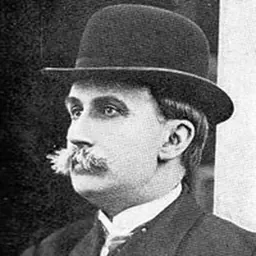
Kurt Huber
German folk song researcher, professor at the Ludwig-Maximilians-Universität (LMU) in Munich, member of the White Rose
About Kurt Huber
Lived 1893 – 1943 (aged 49). Kurt Huber was a psychologist, musicologist, university teacher, resistance fighter, editor and music arranger, known for White Rose.
Kurt Huber (24 October 1893 – 13 July 1943) was a German university professor, philosopher, and resistance fighter with the anti-Nazi group White Rose. For his involvement, he was imprisoned and guillotined.
Early life
Huber was born in Chur, Switzerland, to German parents. He was raised in Stuttgart and later, after his father's death, in Munich. As a young child, he had suffered acute diphtheria. His larynx had been slit to save his life, but he never completely recovered. For the rest of his life, he walked with a heavy limp and had trouble speaking. Regardless of this, Huber, who showed an aptitude for such subjects as music, philosophy and psychology, became a professor of psychology and music in 1926 at the Ludwig-Maximilians-Universität München. Huber never let his disabilities stop him. During his teaching, he was known for teaching classes that did not push Nazi ideology, which made him a favourite with the university students.
Resistance Huber was appalled by the rise of the Nazi Party and decided that Adolf Hitler and his government had to be removed from power. He came into contact with the White Rose movement through some students who attended his lectures, Hans Scholl and Alexander Schmorell. In January 1943, Huber helped edit the fifth White Rose leaflet. He wrote the White Rose's sixth leaflet calling for an end to National Socialism. It was the last leaflet to be published (Christoph Probst wrote an unpublished seventh leaflet). The sixth leaflet was published in its entirety, except for a paragraph praising the Luftwaffe. Schmorell and Scholl scratched the line, as they believed that it was wrong to support any branch of the army in Nazi Germany. Disgruntled, Huber walked out of the meeting. It was the last time that he saw Hans Scholl.
Arrest Huber's political activities came to the attention of the Gestapo, and he was arrested on 27 February 1943. By coincidence, composer Carl Orff came to visit the next day. Huber's distraught wife, Clara (née Schlickenrieder, 1908–1998), hoped Orff would use his influence to help her husband, but he said that he feared he was "ruined." Clara Huber later said she never saw Orff again, but there is documentary evidence that they had further contact. After the war, she asked Orff to contribute to a memorial volume for her husband; he contributed an emotional letter written directly to Huber. Orff's Die Bernauerin, a project which he completed in 1946 and which he had discussed with Huber before the latter's execution, is dedicated to Huber's memory. The final scene of this work, which is about the wrongful execution of Agnes Bernauer, depicts a guilt-ridden chorus begging not to be implicated in the title character's death.
Trial and execution Huber was brought before the People's Court on 19 April. In a brief show trial, Chief Justice Roland Freisler subjected Huber to a humiliating verbal attack. After the war, a memorial volume with contributions from his friends and colleagues, including the 1946 letter from Carl Orff, was published by his widow.
Don’t just read it —
keep it.
Full-length biographies made to live with: read them, listen on the way to work, watch them tonight.
- E-book
- Audio
- Video
Instant download · yours to keep · every purchase keeps this site free
Important facts
People in Kurt Huber's life
Named in this biography and alive at the same time


Related people
Same field, nearest in time


Contemporaries
People whose lives overlapped Kurt Huber's


Frequently asked questions
Who was Kurt Huber?
German folk song researcher, professor at the Ludwig-Maximilians-Universität (LMU) in Munich, member of the White Rose (1893-1943)
When was Kurt Huber born?
Kurt Huber was born on 24 October 1893 in Chur.
When did Kurt Huber die?
Kurt Huber died on 13 July 1943 in Munich Prison, Munich.
What was Kurt Huber's occupation?
Kurt Huber was a psychologist, musicologist, university teacher, resistance fighter, editor and music arranger.
What was Kurt Huber known for?
Kurt Huber was known for White Rose.
What nationality was Kurt Huber?
Kurt Huber's recorded nationality: German Reich, German people.
Sources & further reading
Cite this page
APA: Biography.guide. (2026). Kurt Huber. https://biography.guide/kurt-huber/
MLA: "Kurt Huber." Biography.guide, https://biography.guide/kurt-huber/.
Chicago: "Kurt Huber." Biography.guide. https://biography.guide/kurt-huber/.
Data last updated: 2026-09-20 · Spot an error? Report a correction.
Page generated 2026-09-27 05:30 UTC