
About Khalifa Abdul Hakim
Lived 1893 – 1959 (aged 65). Khalifa Abdul Hakim was an Indian and Pakistani university teacher, philosopher, poet, critic, translator and writer.
Khalifa Abdul Hakeem (1 July 1893 – 30 January 1959) was a Pakistani philosopher, poet, critic, researcher, philologist, translator, and former professor of philosophy at Osmania University. He was a former director of Islamic Culture Institute, Lahore.
Biography
Family background Khalifa belonged to the Lahori branch of the Dar family. The name was Abdul Hakeem, while Khalifa was used in the Kashmiri Dar family for a scholar or an able man, about which Munshi Muhammad Din Fauq wrote that: In the beginning, pashmina and duri baghi work was done frequently in this family and a fair number of people regularly acquired this art from this family. The elders of the family came to be called by the name of Khalifa, meaning teacher. This word "Khalifa" was the first part of the name of the members of this family. Khalifa Abdul Hakim's grandfather, Khalifa Ramzan Dar, was the owner of a small factory. Khalifa Abdul Hakim's father, Khalifa Abdul Rahman, was a staunch religious man of the old style. Khalifa Abd al-Rahman Salim al-Tabb, was a man of few words, modest, principled and believed in a clean society. He used to study Gulestan-i Saadi and Bustan-i Saadi extensively and used to recite the instructive parts of the books to his children. Therefore, this is why Khalifa Abdul Hakim was very young, but because he was brought up in this environment, he developed an attachment to Persian literature from his childhood. Munshi Muhammad Deen Fawq in History of the Nations of Kashmir and Mian Shamsuddin Sahib in his interview have stated his date of birth as 12 July 1894.
Education and literary career Khalifa Abd al-Hakim had not yet embarked on higher education when his father Khalifa Abd al-Rahman died. After your father's death, your father's brothers refused to give the inheritance to Hakim Chacha and other uncles and aunts, due to which they all had to live in poverty for years.That is the time when family moved to Lahore. After losing his father's love, the responsibility of educating Khalifa Abdul Hakim fell on his mother alone. She was a patient, tolerant and wise woman. Due to poor financial conditions, mother started the old work of removing the husk from the paddy and did not leave any deficiency in the training of her children. At the same time he also started writing poetry, according to Munshi Muhammad Deen Fawq, Khalifa Abdul Hakeem's first poem was published in Kashmiri Magazine, Lahore. He was leading in the literary activities of the school. He was a good teacher and during this period his passion for studying Urdu literature and Persian literature reached its peak.
In the days when Khalifa Sahib passed his matriculation, there was a lot of interest and commitment to the educational movement of Sir Syed Ahmad Khan in Punjab and most of the elders of that time tried to educate their children in Aligarh. But on the contrary, probably due to financial difficulties, he enrolled in Forman Christian College, Lahore after matriculation and chose science subjects under the guidance of his brother-in-law Attaullah Butt, but he had no interest in science, that's why. After a few months you left the college and then moved to Aligarh. Selected Arts (Arts and Literature) subjects for first year examinations in Aligarh. After just five minutes of preparation in the first-year class, he became president of the debating union with a speech called "Fei al-Badihah."
After doing his FA from Aligarh, he joined St. Stephen's College, Delhi in mid-1912. Professor Hameed Ahmad Khan has stated that in 1913, he came to Delhi after graduating from Allahabad University because at that time Aligarh College was affiliated to Allahabad University and Aligarh was given the status of a Muslim University. His philosophy teacher was Mr. Sain (who later became the registrar), he was an admirer of his intelligence and there were only five or six boys in the philosophy class, so he often visited Khalifa Sahib to teach the small class. He used to visit the residence and teach. In 1915, Khalifa Abdul Hakeem obtained his BA degree and set a record by coming first in philosophy at Punjab University, Lahore.
Professional career In August 1919, on the recommendation of Allama Muhammad Iqbal, he became Assistant Professor of Philosophy at the newly established Osmania University in the Hyderabad, Deccan. In 1922, he went to Germany and in 1925 he received his doctorate in philosophy from the University of Heidelberg. His research paper was titled Metaphysics of Rumi. After completing his PhD, he returned to Hyderabad Deccan and was appointed as a professor of philosophy and head of the department at Osmania University. In 1943, he moved to Kashmir to become the principal of Amar Singh College, Srinagar, where he was later appointed as the director of education. He resigned in 1947 and came back to Hyderabad Deccan where he was appointed as the Dean Faculty of Arts in Osmania University. He moved to Lahore in 1949 after the Indian occupation of Hyderabad Deccan. In February 1950, with the efforts of Dr. Khalifa Abdul Hakeem, Institute of Islamic Culture was established in Lahore and he was appointed as its first founder director.
Death Dr. Khalifa Abdul Hakeem died of cardiac arrest on 30 January 1959 in Karachi. He is buried in Miani Sahib Cemetery.
Books
English
Urdu +YearTitle (Urdu)Title (English translation)Description1942اقبال اور ملاIqbal and the Orthodox ScholarsDiscusses Iqbal's thought in contrast to traditionalist religious scholars. 1945افکارِ اقبالThe Thoughts of IqbalA study of Allama Iqbal's philosophical and poetic ideas. 1950مبادیٔ تعلیمPrinciples of EducationA treatise on the aims and philosophy of education from an Islamic perspective.1954فلسفۂ اقبالPhilosophy of IqbalA detailed examination of Iqbal's philosophical system and intellectual contributions.1955اقبال کا علمِ کلامIqbal's TheologyFocuses on Iqbal's contributions to Islamic theology and his reinterpretation of kalām (Islamic scholastic theology).
Don’t just read it —
keep it.
Full-length biographies made to live with: read them, listen on the way to work, watch them tonight.
- E-book
- Audio
- Video
Instant download · yours to keep · every purchase keeps this site free
Important facts
People in Khalifa Abdul Hakim's life
Named in this biography and alive at the same time

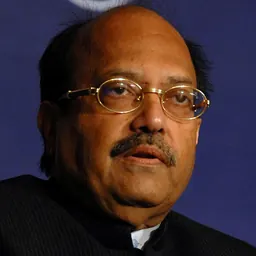
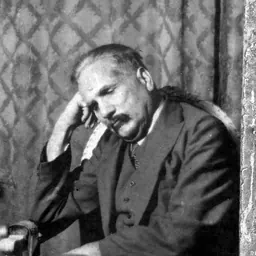

Related people
Same field, nearest in time
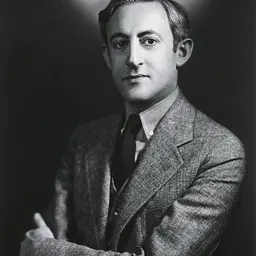

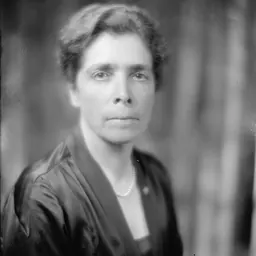
Contemporaries
People whose lives overlapped Khalifa Abdul Hakim's





Frequently asked questions
Who was Khalifa Abdul Hakim?
Pakistani philosopher
When was Khalifa Abdul Hakim born?
Khalifa Abdul Hakim was born on 1 July 1893 in Lahore, British Raj.
When did Khalifa Abdul Hakim die?
Khalifa Abdul Hakim died on 30 January 1959 in Karachi.
What was Khalifa Abdul Hakim's occupation?
Khalifa Abdul Hakim was a university teacher, philosopher, poet, critic, translator and writer.
What nationality was Khalifa Abdul Hakim?
Khalifa Abdul Hakim was Indian and Pakistani.
Sources & further reading
· Wikipedia: Khalifa Abdul Hakim
· DBpedia: Khalifa Abdul Hakim
Cite this page
APA: Biography.guide. (2026). Khalifa Abdul Hakim. https://biography.guide/khalifa-abdul-hakim/
MLA: "Khalifa Abdul Hakim." Biography.guide, https://biography.guide/khalifa-abdul-hakim/.
Chicago: "Khalifa Abdul Hakim." Biography.guide. https://biography.guide/khalifa-abdul-hakim/.
Data last updated: 2026-09-20 · Spot an error? Report a correction.
Page generated 2026-09-27 05:30 UTC