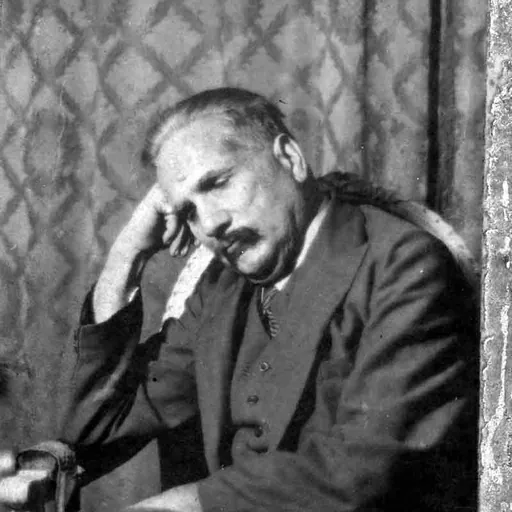
Muhammad Iqbal
British-Indian Islamic philosopher, poet and politician
About Muhammad Iqbal
Lived 1877 – 1938 (aged 60). Muhammad Iqbal was an Indian philosopher, poet, children's writer, politician, lawyer and jurist.
Sir Muhammad Iqbal (9 November 187721 April 1938) was an Islamic philosopher and poet. His poetry in Urdu is considered among the greatest of the 20th century, and his vision of a cultural and political ideal for the Muslims of British India is widely regarded as having animated the impulse behind the Pakistan Movement. The honorific commonly refers to him as Allamah and is widely considered one of the most important and influential Muslim thinkers and Islamic religious philosophers of the 20th century.
Iqbal was born and raised in Sialkot, Punjab, British India and studied at Scotch Mission College in Sialkot and Government College University in Lahore. He taught Arabic at the Oriental College, Lahore, from 1899 until 1903, during which time he wrote prolifically. Notable among his Urdu poems from this period are "Parinde Ki Faryad" ("A Bird's Prayer"), an early contemplation on animal rights, and "Tarana-e-Hindi" ("Anthem of the Indians"), a patriotic poem—both composed for children. In 1905, he departed from India to pursue further education in Europe, first in England and later in Germany. In England, he earned a second BA at Trinity College, Cambridge, and subsequently qualified as a barrister at Lincoln's Inn. In Germany, he obtained a PhD in philosophy at the Ludwig-Maximilians-Universität München (LMU), with his thesis focusing on "The Development of Metaphysics in Persia" in 1908. Upon his return to Lahore in 1908, Iqbal established a law practice but primarily focused on producing scholarly works on politics, economics, history, philosophy, and religion. He is most renowned for his poetic compositions, including "Asrar-e-Khudi", "Rumuz-e-Bekhudi", and "Bang-e-Dara". His literary works in the Persian language garnered him recognition in Iran.
An ardent proponent of the political and spiritual revival of the Muslim world, particularly of the Muslims in the Indian subcontinent, the series of lectures Iqbal delivered to this effect were published as The Reconstruction of Religious Thought in Islam in 1930. He was elected to the Punjab Legislative Council in 1927 and held several positions in the All-India Muslim League. In his Allahabad Address, delivered at the League's annual assembly in 1930, he formulated a political framework for the Muslim-majority regions spanning northwestern India, spurring the League's pursuit of the two-nation theory.
In August 1947, nine years after Iqbal's death, the partition of India gave way to the establishment of Pakistan, a newly independent Islamic state in which Iqbal was honoured as the national poet. He is also known in Pakistani society as and as . The anniversary of his birth (Youm-e Weladat-e Muḥammad Iqbal), 9 November, is observed as a public holiday in Pakistan.
Early life and family
Iqbal was born on 9 November 1877 in Sialkot, Punjab Province, British India (now in Pakistan). A Punjabi of Kashmiri ancestry, his family traced their ancestry back to the Sapru clan of Kashmiri Pandits who were from a south Kashmiri village in Kulgam and converted to Islam in the 15th-century. Iqbal's mother-tongue was Punjabi, and he conversed mostly in Punjabi and Urdu in his daily life. In the 19th century, when the Sikh Empire was conquering Kashmir, his grandfather's family migrated to Punjab. Iqbal's grandfather was an eighth cousin of Sir Tej Bahadur Sapru, an important lawyer and freedom fighter who would eventually become an admirer of Iqbal. Iqbal often mentioned and commemorated his Kashmiri lineage in his writings. According to scholar Annemarie Schimmel, Iqbal often wrote about his being "a son of Kashmiri-Brahmans but (being) acquainted with the wisdom of Rumi and Tabrizi".
Iqbal's father, Sheikh Noor Muhammad (died 1930), was a tailor, not formally educated, but a religious man. Iqbal's mother Imam Bibi, a Kashmiri from Sambrial, was described as a polite and humble woman who helped the poor and her neighbours with their problems. She died on 9 November 1914 in Sialkot. Iqbal loved his mother, and on her death he expressed his feelings of pathos in an elegy: He learned the Arabic and Persian languages from his teacher, Syed Mir Hassan, the head of the madrasa and professor of Arabic at Scotch Mission College in Sialkot, where he matriculated in 1893. He stood first in grade one and had started versifying under the pen-name of Iqbal while still in class nine, being published in literary journals as a teenager. He received an intermediate level with the Faculty of Arts diploma in 1895. The same year he enrolled at Government College, Lahore, where in 1897 he obtained his Bachelor of Arts degree in philosophy, English literature, and Arabic, and won the Khan Bahadurddin F.S. Jalaluddin medal for his performance in Arabic. His first marriage was in 1895 when he was 18 years old. His bride, Karim Bibi, was the daughter of Khan Bahadur Ata Muhammad Khan, a leading civil surgeon and fellow Punjabi-Kashmiri based in Gujrat. Her sister was the mother of director and music composer Khwaja Khurshid Anwar. Their families arranged the marriage, and the couple had two children; a daughter, Miraj Begum (1895–1915), and a son, Aftab Iqbal (1899–1979), who became a barrister. Aftab's son Azad Iqbal is himself a barrister as well a writer and musician, being a singer-composer in both jazz and ghazal genres. Another son is said to have died after birth in 1901. Iqbal and Karim Bibi separated somewhere between 1910 and 1913. Despite this, he continued to financially support her till his death.
Iqbal's second marriage took place on 26 August 1910 with the niece of Hakim Noor-ud-Din. Iqbal's third marriage was with Mukhtar Begum, and it was held in December 1914, shortly after the death of Iqbal's mother the previous November. In 1905, he travelled to England for that purpose, as Sir Thomas Arnold had advised him to specifically study neo-Hegelian philosophy and law at Cambridge. While already acquainted with Friedrich Nietzsche and Henri Bergson, Iqbal would discover Rumi slightly before his departure to England, and he would teach the Masnavi-e-Ma'navi to his friend Swami Rama Tirtha, who in return would teach him Sanskrit. Iqbal was awarded a scholarship at Trinity College, Cambridge, and in 1906 he graduated Bachelor of Arts there. In the same year, he was called to the bar as a barrister (or advocate) from Lincoln's Inn. In 1907, Iqbal moved to Germany to complete his doctoral studies under the supervision of Friedrich Hommel, and on 4 November 1907 he graduated as a Doctor of Philosophy from the Ludwig-Maximilians-Universität München (LMU) with a doctoral thesis entitled The Development of Metaphysics in Persia. This was published in London in 1908. Among his fellow students in Munich was Hans-Hasso von Veltheim, who later happened to visit Iqbal the day before Iqbal died.
In 1907, he had a close friendship with the writer Atiya Fyzee in both Britain and Germany. Atiya would later publish their correspondence. While Iqbal was in Heidelberg in 1907, his German professor Emma Wegenast taught him about Goethe's Faust, Heine and Nietzsche. A street in Heidelberg has been named in his memory, "Iqbal Ufer". During his study in Europe, Iqbal began to write poetry in Persian. He preferred to write in this language because doing so made it easier to express his thoughts. He would write continuously in Persian throughout his life. In the same period Iqbal began practising law at the Chief Court of Lahore, but he soon quit law practice and devoted himself to literary works, becoming an active member of Anjuman-e-Himayat-e-Islam.
The poetry and philosophy of Rumi strongly influenced Iqbal. Deeply grounded in religion since childhood, Iqbal began concentrating intensely on the study of Islam, the culture and history of Islamic civilization and its political future, while embracing Rumi as "his guide". Upon the publication of Asrar-i-Khudi, Iqbal was honoured with a British knighthood.
Legal career
Iqbal was not only a prolific writer but also a known advocate. He appeared before the Lahore High Court in both civil and criminal matters. There are more than 100 reported judgements to his name.
Final years and death
In 1933, after returning from a trip to Spain and Afghanistan, Iqbal suffered from a mysterious throat illness. He spent his final years helping Chaudhry Niaz Ali Khan to establish the Dar ul Islam Trust Institute at a Jamalpur, Pakistan estate near Pathankot, where there were plans to subsidize studies in classical Islam and contemporary social science. He also advocated for an independent Muslim state. Iqbal ceased practising law in 1934 and was granted a pension by the Nawab of Bhopal. In his final years, he frequently visited the Dargah of famous Sufi Ali Hujwiri in Lahore for spiritual guidance. After suffering for months from his illness, Iqbal died in Lahore on 21 April 1938. His tomb is located in Hazuri Bagh, the enclosed garden between the entrance of the Badshahi Mosque and the Lahore Fort, and official guards are provided by the Government of Pakistan.
Efforts and influences Political
(L to R): M. Iqbal (third), Syed Zafarul Hasan (sixth) at Aligarh Muslim University.
Iqbal first became interested in national affairs in his youth. He received considerable recognition from the Punjabi elite after his return from England in 1908, and he was closely associated with Mian Muhammad Shafi. When the All-India Muslim League was expanded to the provincial level, and Shafi received a significant role in the structural organization of the Punjab Muslim League, Iqbal was made one of the first three joint secretaries along with Shaikh Abdul Aziz and Maulvi Mahbub Alam. While dividing his time between law practice and poetry, Iqbal remained active in the Muslim League. He did not support Indian involvement in World War I and stayed in close touch with Muslim political leaders such as Mohammad Ali Jouhar and Muhammad Ali Jinnah. He was a critic of the mainstream Indian National Congress, which he regarded as dominated by Hindus, and was disappointed with the League when, during the 1920s, it was absorbed in factional divides between the pro-British group led by Shafi and the centrist group led by Jinnah.
In November 1926, with the encouragement of friends and supporters, Iqbal contested the election for a seat in the Punjab Legislative Assembly from the Muslim district of Lahore, and defeated his opponent by a margin of 3,177 votes.
Iqbal, Jinnah, and the concept of "Pakistan" Ideologically separated from Congress Muslim leaders, Iqbal had also been disillusioned with the politicians of the Muslim League, owing to the factional conflict that plagued the League in the 1920s. Discontented with factional leaders like Shafi and Fazl-ur-Rahman, Iqbal came to believe that only Jinnah was a political leader capable of preserving unity and fulfilling the League's objectives of Muslim political empowerment. Building a strong, personal correspondence with Jinnah, Iqbal was influential in convincing Jinnah to end his self-imposed exile in London, return to India and take charge of the League. Iqbal firmly believed that Jinnah was the only leader capable of drawing Indian Muslims to the League and maintaining party unity before the British and the Congress:
In his speech, Iqbal emphasised that, unlike Christianity, Islam came with "legal concepts" with "civic significance", with its "religious ideals" considered as inseparable from social order: "Therefore, if it means a displacement of the Islamic principle of solidarity, the construction of a policy on national lines, is simply unthinkable to a Muslim." Iqbal thus stressed not only the need for the political unity of Muslim communities but the undesirability of blending the Muslim population into a wider society not based on Islamic principles.
Even as he rejected secularism and nationalism he would not elucidate or specify if his ideal Islamic state would be a theocracy, and criticized the "intellectual attitudes" of Islamic scholars (ulema) as having "reduced the Law of Islam practically to the state of immobility".
The latter part of Iqbal's life was concentrated on political activity. He travelled across Europe and West Asia to garner political and financial support for the League. He reiterated the ideas of his 1932 address, and, during the third Round Table Conference, he opposed the Congress and proposals for transfer of power without considerable autonomy for Muslim provinces.
He would serve as president of the Punjab Muslim League, and would deliver speeches and publish articles in an attempt to rally Muslims across India as a single political entity. Iqbal consistently criticised feudal classes in Punjab as well as Muslim politicians opposed to the League. Many accounts of Iqbal's frustration toward Congress leadership were also pivotal in providing a vision for the two-nation theory.
Patron of Tolu-e-Islam
Iqbal was the first patron of Tolu-e-Islam, an historical, political, religious and cultural journal of the Muslims of British India. For a long time, Iqbal wanted a journal to propagate his ideas and the aims and objectives of the All India Muslim League. In 1935, according to his instructions, Syed Nazeer Niazi initiated and edited the journal, named after Iqbal's poem "Tulu'i Islam". Niazi dedicated the first issue of the journal to Iqbal. The journal would play an important role in the Pakistan movement. Later, the journal was continued by Ghulam Ahmed Pervez, who had contributed many articles in its early editions.
Literary work
Persian Iqbal's poetic works are written primarily in Persian rather than Urdu. Among his 12,000 verses of poetry, about 7,000 verses are in Persian. The poems emphasise the spirit and self from a religious perspective. Many critics have called this Iqbal's finest poetic work. In Asrar-i-Khudi, Iqbal explains his philosophy of "Khudi", or "Self". When the Self is made strong by Love It rules the whole world from above Even the Sage who adorned the night skies Plucks celestial buds from the Self’s sighs Its hand becomes God’s Hand The moon is split by the Self’s command The Self is the judge of all worldly disputes Its decree even Darius and Jamshid cannot refuse
The remaining chapters go on to enforce further moral and religious ethical lessons through the use of parables, symbols and examples. He uses opposites to draw clear distinctions between the polished Self and the lost, egotistical and hypocritical nature of the Self. In chapter thirteen, Iqbal creates a dialogue between a diamond and a coal, and in chapter fourteen, the Sheikh and a Brahman are brought together, as well as the Ganges and the Himalaya. In one of the longest chapters, ‘On the true nature of poetry and the reformation of Islamic literature, Iqbal expresses significant reservations about poetry, and his own role as a poet. In a letter dated 1936, two years before his death, he writes: ‘I do not consider myself a poet. If I am presented in this role, I feel embarrassed. My ancestors belonged to the Sapru family of Kashmiri Brahmins who never composed poetry. I have no aptitude for music and painting either. Unfortunately, I had to take refuge in poetry to express my thoughts. Perhaps I would have been more successful in another field. In his book The Reconstruction of Religious Thought in Islam, he is openly critical of poetry that served only decorative or escapist purposes. He saw much of contemporary poetry, as well as classical, Persian and Urdu poetry, as promoting fatalism, passivity, and mythical escapism, which were antithetical to his philosophy of ‘Khudi’ (Selfhood). He believed true art should have a higher purpose. In this sense, he was against poetry as mere entertainment or idle ornamentation. In the introduction to the Secrets of the Self, he writes: Mere poetry is not the aim of this Masnavi Nor devotion to beauty, or love’s fanatic ecstasy I am of Hind, Persian is not native to me I am like the crescent moon, my cup is not full, you see Do not seek from me wit and a charming tongue Do not seek from me Khansar and Isfahan Though Urdu is refined and sweet The sweetness of Persian it cannot beat Its wondrous beauty enchanted my mind Out of the Burning Bush my pen was designed In such high places are my ideas caught That Persian alone captures my thoughts
In his Rumuz-i-Bekhudi (Hints of Selflessness), Iqbal seeks to prove the Islamic way of life is the best code of conduct for a nation's viability. A person must keep his characteristics intact, he asserts, but once this is achieved, he should sacrifice his ambitions for the needs of the nation. Man cannot realise the "Self" outside of society. Published in 1917, this group of poems has as its main themes the ideal community,
This can be translated as:
Even though in euphonious Hindi is sugar – (But) the rhyme method in Dari is sweeter.
usually means 'bliss', 'delight', 'sweetness'; in language, literature and poetry, also means 'euphonious' or 'melodic'.
Throughout his life, Iqbal preferred writing in Persian as he believed it allowed him to fully express philosophical concepts, and it gave him a wider audience.
Urdu
Muhammad Iqbal's The Call of the Marching Bell (, bang-e-dara), his first collection of Urdu poetry, was published in 1924. It was written in three distinct phases of his life. The second set of poems date from 1905 to 1908, when Iqbal studied in Europe, and dwell upon the nature of European society, which he emphasised had lost spiritual and religious values. This inspired Iqbal to write poems on the historical and cultural heritage of Islam and the Muslim community, with a global perspective. Iqbal urges the entire Muslim community, addressed as the Ummah, to define personal, social and political existence by the values and teachings of Islam.
Iqbal's works were in Persian for most of his career, but after 1930 his works were mainly in Urdu. His works in this period were often specifically directed at the Muslim masses of India, with an even stronger emphasis on Islam and Muslim spiritual and political reawakening. Published in 1935, Bal-e-Jibril (Wings of Gabriel) is considered by many critics as his finest Urdu poetry and was inspired by his visit to Spain, where he visited the monuments and legacy of the kingdom of the Moors. It consists of ghazals, miscellaneous poems, quatrains and epigrams and carries a strong sense of religious passion.
Zarb-i-Kalim (or The Rod of Moses) is another book of philosophical poetry by Allama Iqbal in Urdu published in 1936, two years before his death, which he described as his political manifesto. It was published with the subtitle "A Declaration of War Against the Present Times". Muhammad Iqbal argues that modern problems are due to the godlessness, materialism, and injustice of modern civilization, which feeds on the subjugation and exploitation of weak nations, especially the Indian Muslims.
Iqbal's final work was Armughan-e-Hijaz (The Gift of Hijaz), published posthumously in 1938. The first part contains quatrains in Persian, and the second part contains some poems and epigrams in Urdu. The Persian quatrains convey the impression that the poet is travelling through the Hijaz in his imagination. The profundity of ideas and intensity of passion are the salient features of these short poems.
Iqbal's vision of mystical experience is clear in one of his Urdu ghazals, which was written in London during his student days. Some verses of that ghazal are: Completion of Your Love is what I desire Look at my sincerity, what little I desire It may be oppression or the promise of unveiling Something testing my perseverance I desire May the pious be happy with this paradise To be in Your company, that’s all I desire Though I am but a small heart, I exhibit such boldness To hear the same, ‘I cannot be seen’1 I desire O assembly’s companions! I exist for a speck I am the dawn’s candle, I am about to be extinguished I have divulged the secret to the packed assembly I am very insolent; punishment I desire.
English Iqbal wrote two books, The Development of Metaphysics in Persia (1908) and The Reconstruction of Religious Thought in Islam (1930), and many letters in the English language. He also wrote a book on Economics that is now rare. In these, he revealed his thoughts regarding Persian ideology and Islamic Sufism – in particular, his beliefs that Islamic Sufism activates the searching soul to a superior perception of life. He also discussed philosophy, God and the meaning of prayer, human spirit and Muslim culture, as well as other political, social and religious problems.
Iqbal was deeply influenced by Punjabi Sufis. Once a comrade recited a poem by Bulleh Shah and he was "so much touched and overwhelmed ... that tears rolled down his cheeks".
Modern reputation
"Poet of the East"
Iqbal has been referred to as the "Poet of the East" by academics, institutions and the media. He is often known by the title "Allama" within Pakistan.
The Vice-Chancellor of Quaid-e-Azam University, Dr. Masoom Yasinzai, stated in a seminar addressing a distinguished gathering of educators and intellectuals that Iqbal is not only a poet of the East but is a universal poet. Moreover, Iqbal is not restricted to any specific segment of the world community, but he is for all humanity.
Yet it should also be borne in mind that while dedicating his Eastern Divan to Goethe, the cultural icon par excellence, Iqbal's Payam-i-Mashriq constituted both a reply as well as a corrective to the Western Divan of Goethe. For by stylizing himself as the representative of the East, Iqbal endeavored to talk on equal terms to Goethe as the representative of West.
The Urdu world is very familiar with Iqbal as the "Poet of the East".
By the early 1950s, Iqbal became known among the intelligentsia of Iran. Iranian poet laureate Muhammad Taqi Bahar universalized Iqbal in Iran. He highly praised the work of Iqbal in Persian.
In 1952, Iranian Prime Minister Mohammad Mossadeq, a national hero because of his oil nationalization policy, broadcast a special radio message on Iqbal Day and praised his role in the struggle of the Indian Muslims against British imperialism. At the end of the 1950s, Iranians published the complete Persian works. In the 1960s, Iqbal's thesis on Persian philosophy was translated from English to Persian. Ali Shariati, a Sorbonne-educated sociologist, supported Iqbal as his role model as Iqbal had Rumi. An example of the admiration and appreciation of Iran for Iqbal is that he received a place of honour in the pantheon of the Persian elegy writers.
Iqbal became even more popular in Iran in the 1970s. His verses appeared on banners, and his poetry was recited at meetings of intellectuals. Iqbal inspired many intellectuals, including Ali Shariati, Mehdi Bazargan and Abdulkarim Soroush. His book The Reconstruction of Religious Thought in Islam was translated by Mohammad Masud Noruzi.
Key Iranian thinkers and leaders who were influenced by Iqbal's poetry during the rise of the Iranian revolution include Khamenei, Shariati and Soroush, although much of the revolutionary guard was familiar with Iqbal's poetry. At the inauguration of the First Iqbal Summit in Tehran (1986), Khamenei stated that in its "conviction that the Quran and Islam are to be made the basis of all revolutions and movements", Iran was "exactly following the path that was shown to us by Iqbal".
More recent admirers of Iqbal from Iran include former President Mahmoud Ahmadinejad and Gholam-Ali Haddad-Adel, a former Speaker of Parliament and writer.
Turkey Mehmet Akif Ersoy, considered the national poet of Turkey for having composed its national anthem, was directly influenced by Iqbal.
In 2016, Turkey's Minister for Culture and Tourism Nabi Avcı presented the Dost Award to Walid Iqbal, the grandson of Iqbal, in order to honour Iqbal's "services to Islam", the ceremony being held in Konya, the resting place of Rumi.
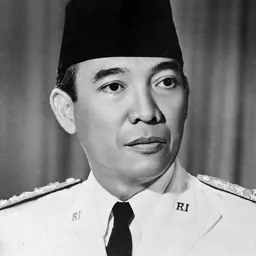
Indonesia Amongst the admirers of Iqbal was Indonesian revolutionary and president Sukarno who considered Iqbal "a hero of philosophy, literature, and religion".
Numerous religious and political figures of Indonesia have been impacted by Iqbal, including Mohammad Natsir, who had served as the country's prime minister and who, in a speech, honoured Iqbal as a pivotal figure in Islamic intellectual history who rejuvenated Muslim self-consciousness through poetic and philosophical works. He emphasises Iqbal’s concept of khudi (selfhood) and how Iqbal critiqued the separation of religion and state, his opposition to Western materialism, capitalism, socialism, and his advocacy for an Islamic state grounded in spiritual values.
Arab world Iqbal has an audience in the Arab world, and in Egypt one of his poems has been sung by Umm Kulthum, the most famous modern Egyptian artist, while among his modern admirers there are influential literary figures such as Farouk Shousha. In Saudi Arabia, among the important personalities who were influenced by Iqbal there was Abdullah bin Faisal Al Saud, a member of the Saudi royal family and himself a poet.
Western countries
Iqbal's views on the Western world have been applauded by Westerners, including United States Supreme Court Associate Justice William O. Douglas, who said that Iqbal's beliefs had "universal appeal". Critics of Abbot's viewpoint note that Iqbal was raised and educated in the European way of life, and spent enough time there to grasp the general concepts of Western civilization. Apart from Urdu, he is also recognized as a leading Persian poet and one of the foremost Islamic philosophers of the modern era. Iqbal is widely commemorated in Pakistan, where he is regarded as the ideological founder of the state. Iqbal is the namesake of many public institutions, including the Allama Iqbal Campus Punjab University in Lahore, the Allama Iqbal Medical College in Lahore, Iqbal Stadium in Faisalabad, Allama Iqbal Open University in Pakistan, Iqbal Memorial Institute in Srinagar, Allama Iqbal Library in the University of Kashmir, the Allama Iqbal International Airport in Lahore, Iqbal Hostel in Government College University, Lahore, the Allama Iqbal Hall at Nishtar Medical College in Multan, Gulshan-e-Iqbal Town in Karachi, Allama Iqbal Town in Lahore, Allama Iqbal Hall at Aligarh Muslim University, Allama Iqbal Hostel at Jamia Millia Islamia in New Delhi and Iqbal Hall at the University of Engineering and Technology, Lahore. Iqbal Hostel at Patna College in Bihar. Allama Iqbal College in Biharsharif. Allama Iqbal Unani Medical U.G. & P.G. College & ACN Hospital in Muzaffarnagar. Allama Iqbal Institute of Management in Kerala. Iqbal Academy Lahore has published magazines on Iqbal in Persian, English and Urdu.
In India, his song "Tarana-e-Hind" is frequently played as a patriotic song speaking of communal harmony. Dr. Mohammad Iqbal, an Indian documentary film directed by K.A. Abbas and written by Ali Sardar Jafri was released in 1978. It was produced by Government of India's Films Division.
The Government of Madhya Pradesh in India awards the Iqbal Samman, named in honour of the poet, every year at the Bharat Bhavan to Indian writers for their contributions to Urdu literature and poetry.
The Pakistani government and public organizations have sponsored the establishment of educational institutions, colleges, and schools dedicated to Iqbal and have established the Iqbal Academy Pakistan to research, teach and preserve his works, literature and philosophy. The Allama Iqbal Stamps Society was established for the promotion of Iqbal in philately and in other hobbies. His son Javed Iqbal served as a justice of the Supreme Court of Pakistan. Javaid Manzil was Iqbal's last residence.
In Bangladesh, Sir Iqbal Road in Khulna named after him.
Gallery
Don’t just read it —
keep it.
Full-length biographies made to live with: read them, listen on the way to work, watch them tonight.
- E-book
- Audio
- Video
Instant download · yours to keep · every purchase keeps this site free
Important facts
People in Muhammad Iqbal's life
Named in this biography and alive at the same time


Related people
Same field, nearest in time


Contemporaries
People whose lives overlapped Muhammad Iqbal's




Frequently asked questions
Who was Muhammad Iqbal?
British-Indian Islamic philosopher, poet and politician (1877-1938)
When was Muhammad Iqbal born?
Muhammad Iqbal was born on 9 November 1877 in Sialkot.
When did Muhammad Iqbal die?
Muhammad Iqbal died on 21 April 1938 in Lahore.
What was Muhammad Iqbal's occupation?
Muhammad Iqbal was a philosopher, poet, children's writer, politician, lawyer and jurist.
What nationality was Muhammad Iqbal?
Muhammad Iqbal was Indian.
Sources & further reading
Cite this page
APA: Biography.guide. (2026). Muhammad Iqbal. https://biography.guide/muhammad-iqbal-philosopher/
MLA: "Muhammad Iqbal." Biography.guide, https://biography.guide/muhammad-iqbal-philosopher/.
Chicago: "Muhammad Iqbal." Biography.guide. https://biography.guide/muhammad-iqbal-philosopher/.
Data last updated: 2026-09-23 · Spot an error? Report a correction.
Portrait: Wikimedia Commons · author & licence
Page generated 2026-09-27 05:06 UTC