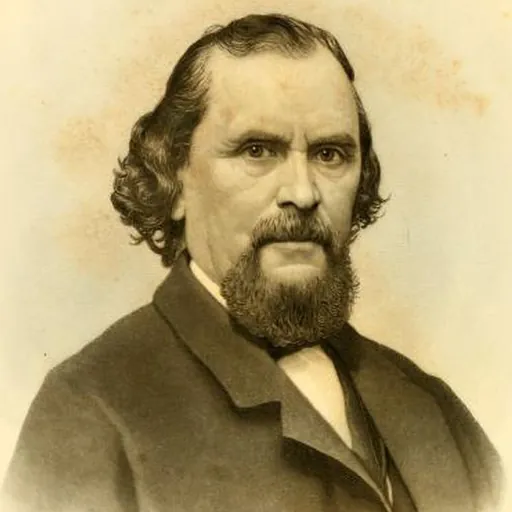
About Joseph Harrison
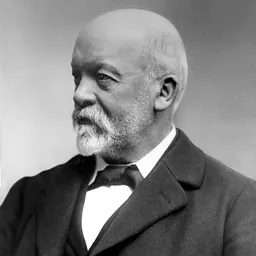
Lived 1810 – 1874 (aged 63–64). Joseph Harrison was an American engineer, designer, businessperson and art collector.
Joseph Harrison Jr. (September 20, 1810 – March 27, 1874) was an American mechanical engineer, financier, and art collector. He made a fortune building locomotives for Russia, and was decorated by Czar Nicholas I for completing the Saint Petersburg-Moscow Railway.
Harrison made important innovations to locomotives and steam boilers, but he may be best remembered for the art collection he amassed, that included "supreme icons of American art." He had little formal schooling, and was apprenticed to a steam engine manufacturer at age 15.
Career Harrison worked as a journeyman in machinery firms in the late 1820s and early 1830s, and was hired as foreman of the Philadelphia locomotive firm Garrett & Eastwick in 1835. Attempts to double their tractive power by adding a second pair of driving wheels were unsuccessful, because of uneven distribution of the load between the axles. The 162 locomotives and 2,500 freight cars were to be manufactured by Russian workers in Saint Petersburg. Architect Samuel Sloan designed him a lavish mansion at 18th and Locust Streets, inspired by Pavlovsk Palace in Saint Petersburg, Russia. Also part of the project were ten luxurious rowhouses faced with stone (rental properties), that lined the north side of Locust Street and shared the rear garden with the mansion. Construction began in 1855 and was completed in 1857. This was demolished in 1901 for construction of the Torresdale Water Treatment Plant.
Harrison Steam Boiler
Harrison invented a new type of steam boiler, based upon the power of a hollow cast-iron sphere to withstand pressure. Composed of 4-sphere units that could be replaced if any individual unit was damaged, his boilers were also readily expandable.
"Early in his engineering life, Mr. Harrison's attention was directed to the means of improving steam generation, more particularly with a view of making this powerful agent less dangerous, and less liable to explosion. Mr. Harrison's first patent for the Harrison Boiler is dated October 4th, 1859, though improvements on the original idea have been the subject of several patents in this country and in Europe. At the International Exhibition, held in London in 1862, the highest class medal was awarded to this boiler, for originality of design and general merit." The American Academy of Arts and Sciences awarded Harrison its 1871 Rumford Gold Medal for his safety improvements to steam boilers. President Lincoln and his family attended on June 16.
Harrison served as one of the ten original members of the Fairmount Park Commission, Many of the most important American works in his art collection came to the Pennsylvania Academy of the Fine Arts in 1878, and more came following Sarah Poulton Harrison's death, on July 21, 1906.
Benjamin Franklin Harrison's personal hero was Benjamin Franklin, another inventor and self-made man, and the art collector purchased multiple portraits of the Founding Father. Robert Whitechurch, 1859 engraving after Christian Schussele, Benjamin Franklin Appearing before the Privy Council (1857). On January 29, 1774, Franklin attempted to present a petition to King George III's Privy Council demanding that the Massachusetts governor and lieutenant governor be replaced. Private correspondence had leaked in which those officials discussed suspending civil liberties in the colony. Instead of a reasonable negotiation, Franklin was met with a vicious diatribe by M.P. Alexander Wedderburn, ridiculing him and attacking his character. Franklin stoically withstood the insults for more than an hour, until Wedderburn announced that he was ready to cross-examine the witness. Franklin declared that he chose not to be cross-examined, and walked out. This deliberate humiliation was a major turning point in Franklin's life, convincing him that reconciliation between America and England was impossible. Both lectures were published in The Journal of the Franklin Institute.
Art collection
Harrison's first major art purchases were the original Vaugh Portrait of George Washington (1795), Gilbert Stuart's first life portrait of the President, and a Portrait of Benjamin Franklin (1782) by Joseph Wright, after a 1778 portrait by Joseph Duplessis. That same year, the estate of Granville Penn (great-grandson of William Penn) put Benjamin West's Penn's Treaty with the Indians (c.1772) up for auction at Sotheby's, London, where Harrison bought it for £500 ($2,175). In 1830, he accompanied Superintendent of Indian Affairs William Clark (of Lewis & Clark fame) on a diplomatic mission through the upper Mississippi, painting oil sketches of Indian life and portraits. Catlin made five additional trips over the next eight years, visiting more than fifty tribes. ($55), both by Charles Willson Peale; Peale's 1795 Staircase Group, a double portrait of his sons Raphaelle and Titian ($175); along with Rembrandt Peale's portraits of Jean-Antoine Houdon ($10) ($10).
Harrison's art collection exceeded 400 paintings and sculptures (excluding the Indian Gallery), and he privately published an 1870 catalogue. He had written earlier about feeling a "sense of duty" to create a permanent collection for his native city. (postponed from February 26, because of weather). The 1912 sale featured the most important paintings and sculptures, and ended with a surprise.
The star attraction of the 1912 sale was Gilbert Stuart's 1795 Vaughn portrait of George Washington. Stuart was introduced to President Washington in December 1794, John Vaughn was a British-born Philadelphia businessman, one of at least thirty-two subscribers who had ordered portraits of Washington from Stuart. "The Stuart painting was characterized by Rembrandt Peale as the best portrait of Washington ever made." "Bidding was started, at $1,000, by Percy Sabin, a New York dealer, and leaped upward in $1,000 bounds. Sabin dropped out after $10,000 had been offered, but other dealers forced the price $6,000 higher. Mr. Clarke met every rise with another, apparently determined to gain possession of the noted canvas at any cost. When he finally was successful, rival bidders loudly applauded, and scores of persons crowded around him to offer congratulations." Clarke and his heirs owned the Vaughn Portrait from 1912 to 1936, when his Estate sold it to Andrew Mellon, for the National Gallery of Art.
It was based on a rabbinical legend about dedication day of King Solomon's Temple. The King has invited the artisans who have built and decorated the Temple to sit with him—the architect, the surveyor, the chief carpenter, the chief mason, etc. As the King and the richly dressed artisans approach the throne, they encounter a bare-chested iron worker. When each artisan angrily demands that the iron worker leave, he quietly asks, "Who made the tools that made your work possible?" The King listens as each artisan answers, "The iron worker." When all have answered, King Solomon agrees that the iron worker has made a major contribution to the Temple, and invites him to sit at his right hand.
In late 1860, Harrison commissioned Christian Schussele to paint a major work based on the legend. The lesson he hoped to instill in his family members was respect for the craftsman — "the value of what is but too frequently thought to be very humble labor." She calls him "the leading Philadelphia art collector from the 1850s until his death at sixty-three in 1874." Her conclusion about the painting? "It is an allegorical portrait of Harrison: Harrison is the Iron Worker."
Artworks formerly in the Harrison Collection
Don’t just read it —
keep it.
Full-length biographies made to live with: read them, listen on the way to work, watch them tonight.
- E-book
- Audio
- Video
Instant download · yours to keep · every purchase keeps this site free
Important facts
People in Joseph Harrison's life
Named in this biography and alive at the same time



Related people
Same field, nearest in time

Contemporaries
People whose lives overlapped Joseph Harrison's





Frequently asked questions
Who was Joseph Harrison?
engineer
When was Joseph Harrison born?
Joseph Harrison was born in 1810.
When did Joseph Harrison die?
Joseph Harrison died in 1874.
What was Joseph Harrison's occupation?
Joseph Harrison was an engineer, designer, businessperson and art collector.
What nationality was Joseph Harrison?
Joseph Harrison was American.
Sources & further reading
· DBpedia: Joseph Harrison Jr.
Cite this page
APA: Biography.guide. (2026). Joseph Harrison. https://biography.guide/joseph-harrison-engineer/
MLA: "Joseph Harrison." Biography.guide, https://biography.guide/joseph-harrison-engineer/.
Chicago: "Joseph Harrison." Biography.guide. https://biography.guide/joseph-harrison-engineer/.
Data last updated: 2026-09-22 · Spot an error? Report a correction.
Portrait: Wikimedia Commons · author & licence
Page generated 2026-09-27 05:02 UTC