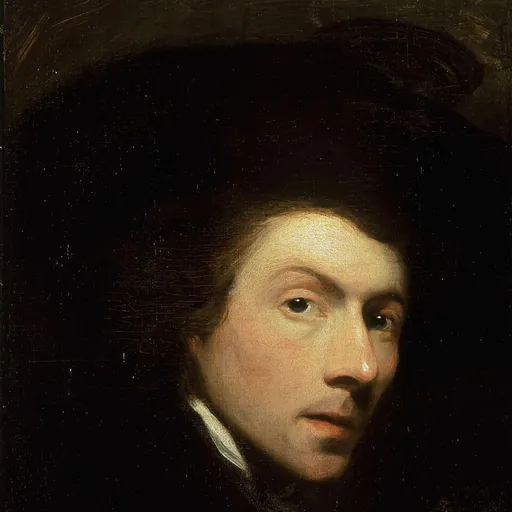
About Gilbert Stuart
Lived 1755 – 1828 (aged 72). Gilbert Stuart was an American painter, portraitist, artist, portrait painter and organist.
Gilbert Stuart ( Stewart; December 3, 1755 – July 9, 1828) was an American painter born in the Rhode Island Colony who is widely considered one of America's foremost portraitists. and on various postage stamps of the 19th century and early 20th century.
Stuart produced portraits of about 1,000 people, including the first six Presidents. His work can be found today at art museums throughout the United States and the United Kingdom, including the Metropolitan Museum of Art and Frick Collection in New York City, the National Gallery of Art in Washington, D.C., the Philadelphia Museum of Art in Philadelphia, the National Portrait Gallery in Washington D.C., the National Portrait Gallery in London, England, the Worcester Art Museum in Worcester, Massachusetts, and the Boston Museum of Fine Arts.
Biography Early life alt=Simple, two-story wooden house. The two doors open directly on to the front lawn.
Stuart was born on December 3, 1755, in Saunderstown, a village of North Kingstown in the Colony of Rhode Island and Providence Plantations, and he was baptized at Old Narragansett Church on April 11, 1756. He was the third child of Gilbert Stuart, a Scottish immigrant employed in the snuff-making industry, and Elizabeth Anthony Stuart, a member of a prominent land-owning family from Middletown, Rhode Island.
Stuart moved to Newport, Rhode Island, at the age of six, where his father pursued work in the merchant field. In Newport, he first began to show great promise as a painter. In 1770, he made the acquaintance of Scottish artist Cosmo Alexander, a visitor to the colonies who made portraits of local patrons and who became a tutor to Stuart. Under the guidance of Alexander, Stuart painted the portrait Dr. Hunter's Spaniels when he was 14; it hangs today in the Hunter House Mansion in Newport.
England and Ireland alt=A well dressed young man taking graceful steps, arms folded. Stuart's prospects as a portraitist were jeopardized by the onset of the American Revolution and its social disruptions. Although he was a patriot, he departed for England in 1775 following the example set by John Singleton Copley. His painting style during this period began to develop beyond the relatively hard-edged and linear style that he had learned from Alexander. He was unsuccessful at first in pursuit of his vocation, but he became a protégé of Benjamin West in 1777 and studied with him for the next six years. The relationship was beneficial, with Stuart exhibiting for the first time at the Royal Academy in spring of 1777.
By 1782, Stuart had met with success, largely due to acclaim for The Skater, a portrait of Sir William Grant. It was Stuart's first full-length portrait and, according to a rival, it belied the prevailing opinion that Stuart "made a tolerable likeness of a face, but as to the figure, he could not get below the fifth button'". Stuart said that he was "suddenly lifted into fame by a single picture".
The prices for his pictures were exceeded only by those of renowned English artists Joshua Reynolds and Thomas Gainsborough. Despite his many commissions, however, he was habitually neglectful of finances and was in danger of being sent to debtors' prison. In 1787, he fled to Dublin, Ireland where he painted and accumulated debt with equal vigor.
New York City and Philadelphia Stuart ended his 18-year stay in Britain and Ireland in 1793, leaving behind numerous unfinished paintings. He returned to the United States with a particular goal of painting a portrait of George Washington and having an engraver reproduce it and provide for his family through the engraving's sale. He settled briefly in New York City and pursued portrait commissions from influential people who could bring him to Washington's attention. and Washington posed for him later that year. The most famous and celebrated of these likenesses, the Athenaeum portrait, is portrayed on the United States one-dollar bill. Stuart painted about 50 reproductions of it. However, he avoided completing the original version. After finishing Washington's face, he kept it to make copies which he sold for $100 each. Thus, the original portrait remained in its unfinished state at the time of his death in 1828. An engraver at the US Bureau of Engraving and Printing, George Frederick Cumming Smillie, made an etching of the painting which was used on multiple banknotes. A vignette of the portrait appears on the 1899 2-dollar silver certificate, and the one dollar note of (1918 to 2023). United States one-dollar bills featured the image for decades (1918 to 2023).
The painting was jointly purchased by the National Portrait Gallery and Museum of Fine Arts, Boston in 1980, and is generally on display in the National Portrait Gallery.
Another celebrated image of Washington is the full-length Lansdowne portrait, now in the National Portrait Gallery. Its historical importance is almost matched by an early forgery based on it which was purchased for the White House. This painting was rescued during the Burning of Washington in the War of 1812 thanks to the efforts of First Lady Dolley Madison and Paul Jennings, one of President James Madison's slaves. Three replicas of the original portrait are accepted as by Stuart. Additional copies were painted by other artists. In 1803, Stuart opened a studio in Washington, D. C.
In 1800, Thomas Jefferson paid Stuart $100.00 for a portrait but never received it, because in 1805, Stuart painted another portrait of Jefferson over the 1800 portrait. In 1821, Stuart sent a copy of the 1805 so called "Edgehill" portrait to Jefferson. The original 1805 portrait became part of Jane Stuart collection until it was damaged in a fire in 1853. In 1937, Orland Campbell acquired the 1805 portrait and discovered the truth. In June 1959, Campbell had an exhibit at Amherst College of the 1800/1805 portrait and his reconstruction of the "lost" 1800 portrait. Campbell also published an account "The Lost Portraits of Thomas Jefferson Painted by Gilbert Stuart Recovered and Studied by Orland and Courtney Campbell" (1959).
Boston, 1805–1828 Stuart moved to Devonshire Street in Boston in 1805, continuing in both critical acclaim and financial troubles. He exhibited works locally at Doggett's Repository and Julien Hall. Predictably, he was sought out for advice by other American artists, such as John Trumbull, Thomas Sully, Washington Allston, and John Vanderlyn. They had 12 children, five of whom died by 1815 and two others of whom died in their youth. Their daughter Jane (1812–1888) was also a painter. She sold many of his paintings and her replicas of them from her studios in Boston and Newport, Rhode Island. In 2011, she was inducted into the Rhode Island Heritage Hall of Fame. He was buried in the Central Burial Ground at Boston Common.
Stuart left his family deeply in debt, and his wife and daughters were unable to purchase a grave site. He was, therefore, buried in an unmarked grave which was purchased cheaply from Benjamin Howland, a local carpenter. His family recovered from their financial troubles 10 years later, and they planned to move his body to a family cemetery in Newport. However, they could not remember the exact location of his body, and it was never moved. There is a monument for Stuart, his wife, and their children at the Common Burying Ground in Newport.
Legacy
By the end of his career, Gilbert Stuart had painted the likenesses of more than 1,000 American political and social figures. He was praised for the vitality and naturalness of his portraits, and his subjects found his company agreeable. John Adams said:
Stuart was known for working without the aid of sketches, beginning directly upon the canvas. His approach is suggested by the advice which he gave to his pupil Matthew Harris Jouett: "Never be sparing of colour, load your pictures, but keep your colours as separate as you can. No blending, tis destruction to clear & beatiful effect." Although uneven, he could produce astonishingly strong likenesses.
John Henri Isaac Browere created a life mask of Stuart around 1825. In 1940, the U.S. Post Office issued a series of postage stamps called the "Famous Americans Series" commemorating famous artists, authors, inventors, scientists, poets, educators, and musicians. Gilbert Stuart is found on the 1 cent issue in the artists category, along with James McNeill Whistler, Augustus Saint-Gaudens, Daniel Chester French, and Frederic Remington.
Today, Stuart's birthplace in Saunderstown, Rhode Island, is open to the public as the Gilbert Stuart Birthplace and Museum. The birthplace consists of the original house where he was born, with copies of his paintings hanging throughout the house, as well as a separate art gallery in which are displayed several original paintings by both Gilbert Stuart and his daughter Jane. The museum opened in 1931.
Gilbert Stuart's paintings of Washington, Jefferson, and others have served as models for dozens of U.S. postage stamps. Washington's image from the famous portrait The Athenaeum is probably the most noted example of Stuart's work on postage.
Notable people painted
This is a partial list of portraits painted by Stuart. Abigail Adams – Second First Lady of the United States, wife of John Adams John Adams – Second President of the United States John Quincy Adams – Sixth President of the United States Charles Humphrey Atherton – United States Representative from New Hampshire from 1815 to 1817 John Jacob Astor – First American multi-millionaire, fur trader, art patron John Bannister – Owner of Bannister's Wharf in Newport, Rhode Island Commodore John Barry – Father of the American Navy Commodore Oliver Hazard Perry – Hero of the Battle of Lake Erie in 1814.
Horace Binney – Prominent Philadelphia lawyer Elizabeth Bowdoin, Lady Temple – wife of Sir John Temple, first British consul general to United States, 1785 Hugh Henry Brackenridge – early American writer, Pennsylvania Supreme Court justice, and founder of the University of Pittsburgh Jean Baptiste Casmiere Breschard – Performer and theatrical impresario Rosalie Stier Calvert – Belgian-born heiress and mother of Charles Benedict Calvert Mary Willing Clymer – Philadelphia socialite John Singleton Copley – American colonial portraitist Thomas Dawes – Early American architect, builder, military leader, politician Horatio Gates – American Revolutionary War general King George III – King of United Kingdom of Great Britain and Ireland, 1760–1820 King George IV – King of United Kingdom of Great Britain and Ireland, 1820–30 John Jay – First Chief Justice of the United States Supreme Court Thomas Jefferson – Third President of the United States Rufus King – a signer of United States Constitution Robert Kingsmill – Admiral in Royal Navy during American and French Revolutionary Wars King Louis XVI – King of France, 1774–92 James Madison – Fourth President of the United States Samuel Miles – Revolutionary War General and Philadelphia mayor James Monroe – Fifth President of the United States Daniel Pinckney Parker – Prominent Boston merchant John Randolph of Roanoke – Virginia congressman and senator
Portrait gallery
Don’t just read it —
keep it.
Full-length biographies made to live with: read them, listen on the way to work, watch them tonight.
- E-book
- Audio
- Video
Instant download · yours to keep · every purchase keeps this site free
Important facts
more
American Stewart, StuartPeople in Gilbert Stuart's life
Named in this biography and alive at the same time
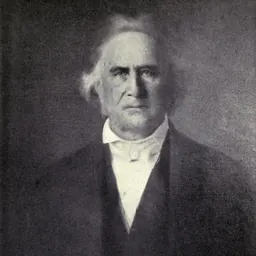
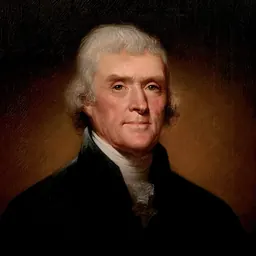

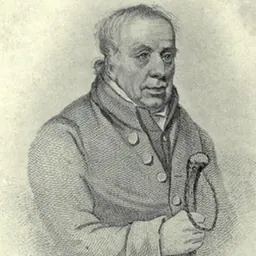
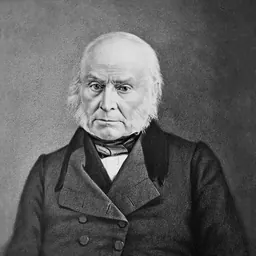
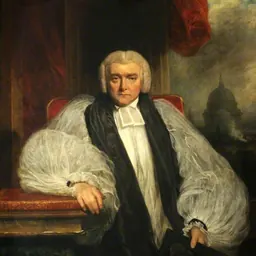

Related people
Same field, nearest in time
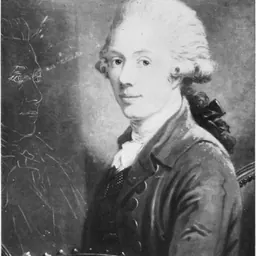




Contemporaries
People whose lives overlapped Gilbert Stuart's




Frequently asked questions
Who was Gilbert Stuart?
American painter (1755–1828)
When was Gilbert Stuart born?
Gilbert Stuart was born on 3 December 1755 in North Kingstown.
When did Gilbert Stuart die?
Gilbert Stuart died on 9 July 1828 in Boston.
What was Gilbert Stuart's occupation?
Gilbert Stuart was a painter, portraitist, artist, portrait painter and organist.
What nationality was Gilbert Stuart?
Gilbert Stuart was American.
Sources & further reading
Cite this page
APA: Biography.guide. (2026). Gilbert Stuart. https://biography.guide/gilbert-stuart/
MLA: "Gilbert Stuart." Biography.guide, https://biography.guide/gilbert-stuart/.
Chicago: "Gilbert Stuart." Biography.guide. https://biography.guide/gilbert-stuart/.
Data last updated: 2026-09-22 · Spot an error? Report a correction.
Portrait: Wikimedia Commons · author & licence
Page generated 2026-09-27 05:04 UTC