
About John Fox Burgoyne
Lived 1782 – 1871 (aged 89). John Fox Burgoyne was a British engineer, military personnel and military officer.
Field Marshal Sir John Fox Burgoyne, 1st Baronet, (24 July 1782 – 7 October 1871) was a British Army officer. After taking part in the Siege of Malta during the French Revolutionary Wars, he saw action under Sir John Moore and then under the Duke of Wellington in numerous battles of the Peninsular War, including the Siege of Badajoz and the Battle of Vitoria. He served under Sir Edward Pakenham as chief engineer during the War of 1812. He went on to act as official advisor to Lord Raglan during the Crimean War advocating the Bay of Kalamita as the point of disembarkation for allied forces and recommending a Siege of Sevastopol from the south side rather than a coup de main, so consigning the allied forces to a winter in the field in 1854.
Military career Born the illegitimate son of General John Burgoyne and the opera singer Susan Caulfield, Burgoyne was brought up by the 12th Earl of Derby (a nephew of his father's late wife) following his father's early death. Educated at Eton College and the Royal Military Academy, Woolwich, he was commissioned as a second lieutenant in the Royal Engineers on 29 August 1798. Promoted to lieutenant on 1 July 1800, he took part in the Siege of Malta in Autumn 1800 during the French Revolutionary Wars before becoming aide-de-camp to General Henry Fox. he took part in the capture of Alexandria in February 1807 and the subsequent occupation of Rosetta in April 1807. Burgoyne became engineer officer for the 3rd Division, in which role he took part in the Battle of Bussaco in September 1810, the Second Siege of Badajoz in June 1811 and the Siege of Ciudad Rodrigo in January 1812. he led the storming parties at the Siege of Badajoz in March 1812. he took part in the Battle of Salamanca in July 1812, the Siege of Burgos in September 1812 and the Battle of Vitoria in June 1813 before going on to be present at the Siege of San Sebastián in August 1813, the Battle of Nivelle in November 1813 and the Battle of the Nive in December 1813. In the closing stages of the War he was also present at the crossing of the River Adour in February 1814 and the Battle of Bayonne in April 1814. and to the rank of major-general on 28 June 1838, Burgoyne was advanced to Knight Commander of the Order of the Bath on 19 July 1838 and became Inspector-General of Fortifications in 1845. He was promoted to lieutenant general on 11 November 1851 and advanced to Knight Grand Cross of the Order of the Bath on 31 March 1852. and, following his recall to England in February 1855, he was promoted to full general on 5 September 1855. and awarded the French Legion of Honour, 2nd Class on 2 August 1856. He was appointed one of the Colonels Commandant of the Royal Engineers in 1854, and also served as honorary colonel of 1st Middlesex Engineer Volunteer Corps and of the 1st Lancashire Engineer Volunteer Corps.
Burgoyne was appointed Constable of the Tower in April 1865 and promoted to field marshal on his retirement on 1 January 1868. He died at 5, Pembridge Square, Bayswater, Kensington in London on 7 October 1871 and was buried at the Church of St Peter ad Vincula. Castle Hill Fort in Dover was renamed Fort Burgoyne in memory of him.
Family In 1821 Burgoyne married Charlotte Rose; they had a son, (Captain Hugh Talbot Burgoyne VC), and seven daughters.
Don’t just read it —
keep it.
Full-length biographies made to live with: read them, listen on the way to work, watch them tonight.
- E-book
- Audio
- Video
Instant download · yours to keep · every purchase keeps this site free
Important facts
People in John Fox Burgoyne's life
Named in this biography and alive at the same time


Related people
Same field, nearest in time
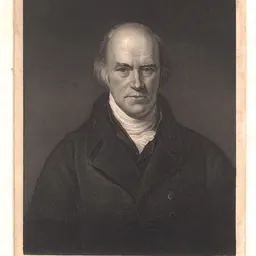
Contemporaries
People whose lives overlapped John Fox Burgoyne's



Frequently asked questions
Who was John Fox Burgoyne?
British Army officer
When was John Fox Burgoyne born?
John Fox Burgoyne was born on 24 July 1782 in London.
When did John Fox Burgoyne die?
John Fox Burgoyne died on 7 October 1871 in Kensington.
What was John Fox Burgoyne's occupation?
John Fox Burgoyne was an engineer, military personnel and military officer.
What nationality was John Fox Burgoyne?
John Fox Burgoyne was British.
Sources & further reading
· Wikipedia: John Fox Burgoyne
Cite this page
APA: Biography.guide. (2026). John Fox Burgoyne. https://biography.guide/john-fox-burgoyne/
MLA: "John Fox Burgoyne." Biography.guide, https://biography.guide/john-fox-burgoyne/.
Chicago: "John Fox Burgoyne." Biography.guide. https://biography.guide/john-fox-burgoyne/.
Data last updated: 2026-09-20 · Spot an error? Report a correction.
Page generated 2026-09-27 05:27 UTC