
About Eugenio Berríos
Lived 1947 – 1995 (aged 47–48). Eugenio Berríos was a Chilean biochemist and chemist.
Eugenio Berríos Sagredo (14 November 1947 –) was a Chilean biochemist and member of the Dirección de Inteligencia Nacional (DINA), who produced sarin as part of Proyecto Andrea.
Aided by La Cofradía (the successor of Operation Condor), Berríos fled to Uruguay in October 1991 to avoid testifying about the assassination of Orlando Letelier. On 15 November 1992, Berríos was disappeared and subsequently murdered by Chilean and Uruguayan intelligence agencies. Berríos' remains were found at a beach in El Pinar in April 1995.
In 1978, Townley, in a sworn but confidential declaration, stated that sarin gas was produced by the DINA under Berríos' direction. He added that it was used to assassinate the real state archives custodian Renato León Zenteno and the Chilean Army Corporal Manuel Leyton.
Berríos also allegedly produced cocaine for Pinochet, who then sold it to Europe and the United States. According to La Nación, Berríos also worked with drug traffickers and Drug Enforcement Administration agents.
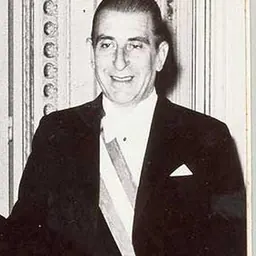
Frei Montalva Questioned in March 2005 by Judge Alejandro Madrid about ex-Chilean Christian Democrat President Eduardo Frei Montalva's death, DINA agent Michael Townley acknowledged links between Colonia Dignidad, led by alleged ex-Nazi Paul Schäfer, and DINA on one hand, and the Laboratorio de Guerra Bacteriológica del Ejército (Army Biological Warfare Laboratory) on the other hand. It is suspected that the toxin that supposedly killed Frei Montalva in Santiago's Santa Maria clinic in 1982 was created there. This new laboratory in Colonia Dignidad would have been, according to him, the continuation of the laboratory that the DINA had in Via Naranja de lo Curro, where he worked with Eugenio Berríos in the clandestine unit Quetropillán. Townley would also have testified on biological experiments made upon the prisoners in Colonia Dignidad with the help of the two above-mentioned laboratories. However, Townley, who answered personally to DINA head Manuel Contreras, left Chile in April 1978 after he agreed to surrender to U.S. authorities for his role in the Orlando Letelier-Ronnie Monfitt assassination that occurred on U.S. soil. though he would be released from prison in 1981, Townley remained in U.S. custody as a member of the U.S. Witness Protection Program. Townley also previously acknowledged in a secret "confession" letter in 1978 that the laboratory where he personally produced the toxins which he used when he carried out some assassinations on behalf of DINA was in fact in the basement at his mansion in the upper-class Lo Curro neighborhood of Santiago. In 2019, six people were convicted for allegedly murdering Frei Montalva. However, the convictions were overturned in 2021, as it was determined that Frei Montalva's death was not a homicide.
Escape, death and trial On October 26, 1991, a year before the "terror archives" were found in Paraguay, Eugenio Berríos was escorted from Chile to Uruguay by the Special Unity of the DINE (Direccion de Inteligencia del Ejército, Army's Intelligence agency), in order to avoid him testifying before the Chilean court regarding the Letelier case and the case concerning the 1976 assassination of the Spanish diplomat and CEPAL civil servant Carmelo Soria. He had just been indicted by the magistrate Adolfo Bañados in charge of the Letelier case. In September of that same year Carlos Herrera Jiménez, who killed trade-unionist Tucapel Jiménez, left the country. Berríos, however, escaped imprisonment on November 15, 1992, asking for sanctuary next door at a retired navy officer's residence who, along with his wife, decided to escort him to the closest police station, Seccional 24 Parque del Plata. There, Berríos claimed that he had been kidnapped by Chilean and Uruguayan military officials, that Gen. Pinochet intended to kill him and asking to be taken into custody since he had entered the country using fake documentation.
In February 1993, Pinochet travelled to Uruguay, and officer Casella was appointed as his aide-de-camp. On June 6, 1993, Lacalle immediately dismissed the police chief of Canelones, Ramón Rivas, on charges of not having informed him of what had occurred. Three days later official investigations were initiated concerning the Berríos case. On June 9, 1993, 14 Army Generals met with the Minister of Defence Mariano Brito, and two days later, General Mario Aguerrondo was dismissed. That same June, after the details of the facts surrounding Berríos' murder leaked, Casella, Radaelli and Wellington Sarli (another Uruguayan military officer) travelled to Chile to allegedly attend an Intelligence course which, according to Casella, was later cancelled since intelligence officers from several other countries were unable to attend. They spent a day in Santiago, and were later flown to Osorno so they could spend some days at the Termas de Puyehue, with all expends covered.
Three Uruguayan military officers (Tomas Casella, Washington Sarli and Eduardo Radaelli In October 2006, the Court of Appeal of Santiago stripped Pinochet's parliamentary immunity (who was, in 1992, head of the Chilean military), opening up the way for his judgment concerning the homicide of Berríos. Hernán Ramírez Rurange, sentenced to twenty years, shot and killed himself two days later.
Allegations concerning Berríos' disappearance In July 2006, after having denounced Augusto Pinochet's involvement in the cocaine trade, former DINA director Manuel Contreras asserted in a judicial document handed to Judge Claudio Pavez, presiding over the investigation concerning the 1992 assassination of Colonel Gerardo Huber, that Berríos was in fact alive and now worked for the DEA.
Film The Uruguayan film director Esteban Schroeder produced a movie, Matar a todos, loosely based on Berríos' murder. The movie was adapted from the book 99 por ciento asesinado written by the Uruguayan writer Pablo Vierci, and was presented in the San Sebastián International Film Festival.
Don’t just read it —
keep it.
Full-length biographies made to live with: read them, listen on the way to work, watch them tonight.
- E-book
- Audio
- Video
Instant download · yours to keep · every purchase keeps this site free
Important facts
People in Eugenio Berríos's life
Named in this biography and alive at the same time


Related people
Same field, nearest in time



Contemporaries
People whose lives overlapped Eugenio Berríos's



Frequently asked questions
Who was Eugenio Berríos?
Chilean biochemist
When was Eugenio Berríos born?
Eugenio Berríos was born on 14 November 1947 in Santiago.
When did Eugenio Berríos die?
Eugenio Berríos died in 1995 in Montevideo.
What was Eugenio Berríos's occupation?
Eugenio Berríos was a biochemist and chemist.
What nationality was Eugenio Berríos?
Eugenio Berríos was Chilean.
Sources & further reading
Cite this page
APA: Biography.guide. (2026). Eugenio Berríos. https://biography.guide/eugenio-berrios/
MLA: "Eugenio Berríos." Biography.guide, https://biography.guide/eugenio-berrios/.
Chicago: "Eugenio Berríos." Biography.guide. https://biography.guide/eugenio-berrios/.
Data last updated: 2026-09-20 · Spot an error? Report a correction.
Page generated 2026-09-27 05:11 UTC