
About Emeryk August Hutten-Czapski
Lived 1897 – 1979 (aged 81). Emeryk August Hutten-Czapski was a Polish politician and diplomat.
Emeryk August, Count Hutten-Czapski (21 August 1897 – 31 January 1979) was a Polish aristocrat, politician, military officer, diplomat and Bailiff of the Polish Sovereign Military Order of Malta.
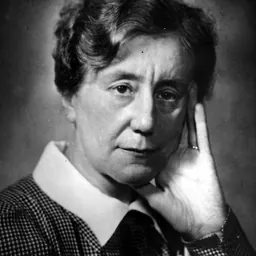
Emeryk August Hutten-Czapski, descended from a long line of nobles who contributed much to Poland's political and cultural life. His father was Count Karol Hutten-Czapski (1860–1904), President of Minsk, and his mother was Maria Leontyna Pusłowska (1870–1965). His grandfather was Count Emeryk Hutten-Czapski, renowned collector and numismatist, founder of The Emeryk Hutten-Czapski Museum in Kraków. Emeryk was adopted by a second cousin twice removed, Count Bogdan Hutten-Czapski, who had no issue, was very wealthy, and was a prominent and controversial figure in Polish politics. Józef Czapski, the painter, and Maria Czapska, the writer, were his first cousins. Emeryk had two sisters: Elżbieta (1895–1930) married to Count Aleksander Piotr Mohl, and Fabianna (1895–1974), married to Józef Godlewski.
Life before the War
Hutten-Czapski lost his father in 1904, when he was seven years old. He was sent to boarding school at the Benedictine boarding school in Ettal, Bavaria, Germany. After graduation he studied law at the university in St Petersburg. In 1919 he worked for the Hoover Food Mission of the American Relief Administration in Warsaw, and in 1920 he was placed in charge of the religious and ethnic affairs of Minsk. In 1922 three bombs were thrown into his bedroom, only one exploded, and he survived the assassination attempt. for two terms, between 1930 and 1935. He was involved in various other associations and economic trade delegations and commissions. He was accepted into the Polish Knights of Malta in 1932.
Activities During the War When the Russians invaded Poland on September 17, 1939, Hutten-Czapski fled to France, and worked with the Polish Government in Angers. In 1943 he was transferred to London, to work for the Polish Ministry of Foreign Affairs. In 1944 he was promoted to lieutenant colonel in the army, and transferred as political adviser, to the Supreme Headquarters Allied Expeditionary Force. In 1945 he was embedded with the 2nd Regiment of the 1st Armoured Division (Poland) under the command of general Stanisław Maczek which fought in the Falaise Pocket and crossed the Rhine into Germany. He was part of the patrol that liberated the Polish women of the Home Army who had fought in the Warsaw Uprising, and were interned in the Oberlangen prison camp. For participating in this action he was awarded the Cross of Valour (Poland). He visited the Dachau, and the Mauthausen-Gusen concentration camps, and informed the Cardinal Primate, August Hlond, of the clergy that had survived. In Nuremberg he located the famous Veit Stoss altarpiece in Kraków, that had been stolen by the Germans from the St. Mary's Basilica, Kraków. He was named delegate to General Władysław Anders High Commission
Rome Hutten-Czapski helped many Polish soldiers, stranded in Italy, to get to England. In 1948, and until 1975, he served as President of the Polish Knights of Malta. He also served as Bailiff (chivalric orders), as well as Chancellor of the World Organization of the Order of Malta. Since 1968 he administered the Hospice of the Knights of Malta in Rome. He was chairman of a foundation which granted scholarships to Polish academics in the field of science. Czapski regularly attended mass at Santo Stanislao dei Polacchi.
Like his grandfather, Hutten-Czapski was a great collector of Polonica. He constantly travelled around Europe visiting auction houses and antiquarians. He collected many items, principally related to Poland, and his passion was books, old maps and city views. He became a recognized collector, and he bequeathed to the Czpaski Museum in Cracow a collection of precious books and maps. Czapski made a two volume catalogue of his Polish map collection in 1978. After his death, his heirs sold his remaining collection of maps to the Polish state.
Decorations Gold Cross of Merit (Poland) (1944) Gold Cross of Merit with Swords (Poland) Bailiff Grand Cross Honor and Devotion, Order of Malta (1946) Bailiff Knights Grand Cross in Obedience of the Order of Malta (1968) Grand Cross of the Order of St. Gregory the Great (Holy See, 1978) Sacred Military Constantinian Order of Saint George 1st class, Moroccan Order of Ouissam Alaouite Grand Officer Nischan-el-Iftikhar Order of Glory (Tunisia)
Don’t just read it —
keep it.
Full-length biographies made to live with: read them, listen on the way to work, watch them tonight.
- E-book
- Audio
- Video
Instant download · yours to keep · every purchase keeps this site free
Important facts
People in Emeryk August Hutten-Czapski's life
Named in this biography and alive at the same time




Related people
Same field, nearest in time




Contemporaries
People whose lives overlapped Emeryk August Hutten-Czapski's


Frequently asked questions
Who was Emeryk August Hutten-Czapski?
Polish aristocrat, politician (1897–1979)
When was Emeryk August Hutten-Czapski born?
Emeryk August Hutten-Czapski was born on 21 August 1897 in Stańkava.
When did Emeryk August Hutten-Czapski die?
Emeryk August Hutten-Czapski died on 31 January 1979 in Rome.
What was Emeryk August Hutten-Czapski's occupation?
Emeryk August Hutten-Czapski was a politician and diplomat.
What nationality was Emeryk August Hutten-Czapski?
Emeryk August Hutten-Czapski was Polish.
Sources & further reading
· Wikipedia: Emeryk August Hutten-Czapski
· DBpedia: Emeryk August Hutten-Czapski
Cite this page
APA: Biography.guide. (2026). Emeryk August Hutten-Czapski. https://biography.guide/emeryk-august-hutten-czapski/
MLA: "Emeryk August Hutten-Czapski." Biography.guide, https://biography.guide/emeryk-august-hutten-czapski/.
Chicago: "Emeryk August Hutten-Czapski." Biography.guide. https://biography.guide/emeryk-august-hutten-czapski/.
Data last updated: 2026-09-20 · Spot an error? Report a correction.
Page generated 2026-09-27 05:20 UTC