
Karol Hutten-Czapski
Polish philanthropist and politician
About Karol Hutten-Czapski
Lived 1860 – 1904 (aged 43). Karol Hutten-Czapski was a Russian city head.
Count Karol Jan Alexander Hutten-Czapski (Belarusian: Karaĺ Emierykavič Čápski; 15 August 1860 – 30 January 1904) was a Polish philanthropist. He was Mayor of Minsk between 1890 and 1901.
Family Karol Czapski came from an important aristocratic Polish family. He was the eldest son of Count Emeryk Hutten-Czapski, a well-known collector and numismatist, and Baroness Elizabeth Meyendorff. He was the great-grandson of Franciszek Stanisław Hutten-Czapski, the last governor of Chełmno during the First Republic, who inherited parts of the Radziwiłł property in Belarus and in Volhynia and moved there from the former Royal Prussia. Karol's mother was the daughter of Baron Georges Conrad Walter von Meyendorff (1795–1863) and Countess Sophie Stackelberg (1806–1891). Her father, at the service of Tsar Alexander I, participated in the Napoleonic war as a Colonel, and as a diplomat and explorer, travelling extensively to Central Asia, publishing a book: "Voyage d’Orenbourg à Boukhara fait en 1820". Paris, 1826.
Early life and career Karol was taught at the Stankava family estate near Minsk (now in the Dzyarzhynsk District of Belarus), and then was enrolled in the German grammar school Annenschule in Saint Petersburg, where he graduated in 1878. He studied political economics and statistics at the University of Tartu and graduated in 1882. His father Emeric worked in the Russian civil service and also was organizing and cataloging his large numismatic collection, so Karol at age twenty two began administrating the family properties, one of the largest in the province of Minsk. The properties included 40,000 hectares of agricultural land, forests, mills, wood distilleries, distilleries of alcohol, brickyards, and orchards. They also owned a large brewery which continues active today. In 1886 he started working in the Ministry of Finance as a collegiate secretary, rising to the rank of court counsellor in 1900.
Second mandate (1893-1897) During his second mandate, he renounced his state salary and continued his reforms. He created various schools, approved a new plan for the city (which began a period of rapid expansion), built a maternity ward, and created a credit institution for mortgages. He established insurance for agriculture, and the creation of a municipal slaughterhouse. He improved the sewer systems. He created a modern urban water supply system. In commemoration of the installation of the water supply, a fountain featuring a boy with a sawn was created. He established pawn shops, so that the poor were able to raise credit. He established a sports society and created a bicycle track around the main park.
Third mandate (1897-1901) He began his third and last mandate, with a new urban plan. He opened a second school for women. In 1900 the Minsk Public Library was inaugurated. He improved the roads and pavements. He founded two newspapers, the "Minsk Provincial Newspaper" and the "Minsk Paper". In 1896 the brewery was distinguished with a medal at a Russian Fair in Novgorod. and an exhibition was held that hosted the Czapski Cup featuring historic beer labels and corks from private collections.
Private life In July 1894 he married Maria ("Marichette") Leontyna Pusłowska (1870–1965). They had four children: Fabianna, Elzbieta, Emeryk August Hutten-Czapski, (Member of Parliament 1930–1938), and Wojciech.
Decorations Russian Imperial Order of St. Anna, Third Class (1895) Order of Saint Stanislaus (House of Romanov), Second Class(1896)
Don’t just read it —
keep it.
Full-length biographies made to live with: read them, listen on the way to work, watch them tonight.
- E-book
- Audio
- Video
Instant download · yours to keep · every purchase keeps this site free
Important facts
People in Karol Hutten-Czapski's life
Named in this biography and alive at the same time

Related people
Same field, nearest in time
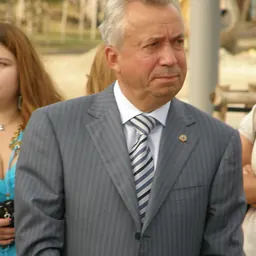
Contemporaries
People whose lives overlapped Karol Hutten-Czapski's



Frequently asked questions
Who was Karol Hutten-Czapski?
Polish philanthropist and politician (1860–1904)
When was Karol Hutten-Czapski born?
Karol Hutten-Czapski was born on 15 August 1860 in Stańkava.
When did Karol Hutten-Czapski die?
Karol Hutten-Czapski died on 17 January 1904 in Frankfurt.
What was Karol Hutten-Czapski's occupation?
Karol Hutten-Czapski was a city head.
What nationality was Karol Hutten-Czapski?
Karol Hutten-Czapski was Russian.
Sources & further reading
· Wikipedia: Karol Hutten-Czapski
· DBpedia: Karol Hutten-Czapski
Cite this page
APA: Biography.guide. (2026). Karol Hutten-Czapski. https://biography.guide/karol-hutten-czapski/
MLA: "Karol Hutten-Czapski." Biography.guide, https://biography.guide/karol-hutten-czapski/.
Chicago: "Karol Hutten-Czapski." Biography.guide. https://biography.guide/karol-hutten-czapski/.
Data last updated: 2026-09-25 · Spot an error? Report a correction.
Page generated 2026-09-27 05:12 UTC