
About Christian Fürchtegott Gellert
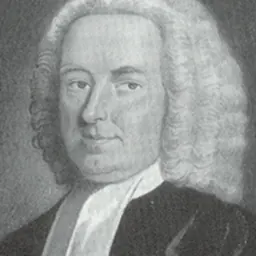
Lived 1715 – 1769 (aged 54). Christian Fürchtegott Gellert was a German poet, university teacher, hymnwriter, philosopher, writer and librettist.
Christian Fürchtegott Gellert (4 July 171513 December 1769) was a German poet, novelist, and popular moralistic writer, one of the forerunners of the golden age of German literature that was ushered in by Lessing.
Biography Gellert was born at Hainichen in Saxony, on 4 July 1715 at the foot of the Erzgebirge. After attending the school of St. Afra in Meissen, he entered Leipzig University in 1734 as a student of theology, but in 1738 Gellert broke off his studies as his family could no longer afford to support him and became a private tutor for a few years. Returning to Leipzig in 1741, he contributed to the Bremer Beiträge, a periodical founded by former disciples of Johann Christoph Gottsched who had revolted against the pedantry of his school. Owing to shyness and poor health, Gellert gave up the idea of entering the ministry. However, he finally completed his magister degree in 1743 and qualified as a university lecturer in 1744. In 1751 he was appointed extraordinary professor of philosophy, He wrote in order to raise the religious and moral character of the people, and to this end employed language which, though at times prolix, was always correct and clear. He thus became one of the most popular German authors, and some of his poems enjoyed a celebrity out of proportion to their literary value. It contained hymns such as "Herr, stärke mich, dein Leiden zu bedenken", a Passion hymn written to the tune of "Herzliebster Jesu".
Not a little of Gellert's fame is due to the time when he lived and wrote. The German literature of the period was dominated by Gottsched's school. A band of high-spirited youths, of whom Gellert was one, resolved to free themselves from what were seen as the conventional trammels of such pedants, and began a revolution which was finally consummated by Schiller and Goethe. Karl Philipp Moritz, in the context of his travels in England in 1782, remarked: "Among us Germans ... I can think of no poet's name beyond Gellert's which comes readily into the minds of the common people [in London]."
The fables, for which Gellert took La Fontaine as his model, are simple and didactic. His religious poems were adopted as hymns by Catholics and Protestants alike. His novel Leben der schwedischen Gräfin von G. (1746), a weak imitation of Samuel Richardson's Pamela, is remarkable for being the first German attempt at a psychological novel. Regarded by many correspondents as a teacher also of good writing style,
Fables and Tales by the German Aesop, C. F. Gellert (1715–1769). Translated by John W. Van Cleve (Lewiston and Lampeter: Mellen, 2013, ).
"Jesus Lives! The Victory's Won" is a translation of Gellert's "Jesu lebt, mit ihm auch ich" (Jesus lives, I with him") from Geistliche Oden und Lieder. It is set to the tune of "Jesus, meine Zuversicht".
Legacy Beethoven set to music six of Gellert's poems as Sechs Lieder Gellerts am Klavier zu singen (1803); the poems were all from Geistliche Oden und Lieder, including "Die Ehre Gottes aus der Natur".
Don’t just read it —
keep it.
Full-length biographies made to live with: read them, listen on the way to work, watch them tonight.
- E-book
- Audio
- Video
Instant download · yours to keep · every purchase keeps this site free
Important facts
People in Christian Fürchtegott Gellert's life
Named in this biography and alive at the same time

Related people
Same field, nearest in time


Contemporaries
People whose lives overlapped Christian Fürchtegott Gellert's





Frequently asked questions
Who was Christian Fürchtegott Gellert?
German poet
When was Christian Fürchtegott Gellert born?
Christian Fürchtegott Gellert was born on 4 July 1715 in Hainichen.
When did Christian Fürchtegott Gellert die?
Christian Fürchtegott Gellert died on 13 December 1769 in Leipzig.
What was Christian Fürchtegott Gellert's occupation?
Christian Fürchtegott Gellert was a poet, university teacher, hymnwriter, philosopher, writer and librettist.
What nationality was Christian Fürchtegott Gellert?
Christian Fürchtegott Gellert was German.
Sources & further reading
· Wikipedia: Christian Fürchtegott Gellert
· DBpedia: Christian Fürchtegott Gellert
Cite this page
APA: Biography.guide. (2026). Christian Fürchtegott Gellert. https://biography.guide/christian-furchtegott-gellert/
MLA: "Christian Fürchtegott Gellert." Biography.guide, https://biography.guide/christian-furchtegott-gellert/.
Chicago: "Christian Fürchtegott Gellert." Biography.guide. https://biography.guide/christian-furchtegott-gellert/.
Data last updated: 2026-09-20 · Spot an error? Report a correction.
Page generated 2026-09-27 05:29 UTC