
About Samuel Richardson
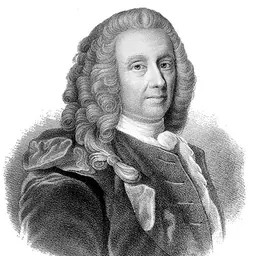
Lived 1689 – 1761 (aged 71). Samuel Richardson was a British and English writer, novelist, prose writer, book printer and printer (publisher).
Samuel Richardson (baptised 19 August 1689 – 4 July 1761 ) was an English writer and printer known for three epistolary novels: Pamela; or, Virtue Rewarded, Clarissa; or, The History of a Young Lady (1748) and The History of Sir Charles Grandison (1753). He printed almost 500 works, including journals and magazines, working periodically with the London bookseller Andrew Millar.
Richardson had been apprenticed to the printer John Wilde, whose daughter Martha he eventually married. All six of their children died in infancy or childbirth, with Martha herself dying in childbirth in 1731. In 1733, he married Elizabeth Leake, daughter of printer John Leake. Together they had six more children, of whom four daughters reached adulthood.
Richardson's first novel, Pamela, was penned at the age of 51 and was an instant success. Leading acquaintances included Samuel Johnson and Sarah Fielding, the physician and Behmenist George Cheyne, and the theologian and writer William Law, whose books he printed. At Law's request, Richardson printed some poems by John Byrom. In literature, he rivalled Henry Fielding; the two responded to each other's literary styles.
Biography Richardson, one of nine children, was probably born in 1689 in Mackworth, Derbyshire, to Samuel and Elizabeth Richardson. It is unsure where in Derbyshire he was born because Richardson always concealed the location, but it has recently been discovered that Richardson probably lived in poverty as a child.
However, this conflicts with Richardson's nephew's account that "'it is certain that [Richardson] was never sent to a more respectable seminary' than 'a private grammar school' located in Derbyshire".
I served a diligent seven years to it; to a master who grudged every hour to me that tended not to his profit, even of those times of leisure and diversion, which the refractoriness of my fellow-servants obliged him to allow them, and were usually allowed by other masters to their apprentices. I stole from the hours of rest and relaxation, my reading times for improvement of my mind; and, being engaged in correspondence with a gentleman, greatly my superior in degree, and of ample fortune, who, had he lived, intended high things for me; these were all the opportunities I had in my apprenticeship to carry it on. But this little incident I may mention; I took care that even my candle was of my own purchasing, that I might not, in the most trifling instance, make my master a sufferer (and who used to call me the pillar of his house) and not to disable myself by watching or sitting-up, to perform my duty to him in the day time. — Samuel Richardson on his time with John Wilde.
Over their ten years of marriage, Martha and Samuel Richardson had five sons and one daughter – three of the boys were successively named Samuel after their father, but all three died as infants. Martha died in childbirth on 23 January 1731, and their youngest son, Samuel, succumbed to illness in 1732. In 1733, Richardson married Elizabeth Leake, the daughter of printer John Leake. Samuel and Elizabeth had six children (five daughters and one son). Four of their daughters, Mary, Martha, Anne, and Sarah, reached adulthood. The work was intended to "create the perfect apprentice". This compelled Richardson to write a sequel to the novel, Pamela in her Exalted Condition, in December 1741. By 1748, Richardson was so impressed with Collier that he accepted her as the governess to his daughters. In 1753, she wrote An Essay on the Art of Ingeniously Tormenting with the help of Sarah Fielding and possibly James Harris or Richardson, in part or in full, for instance by the abbé Antoine François Prévost, as well as into German. The Dutch translator of Clarissa was the distinguished Mennonite preacher, Johannes Stinstra (1708–1790), who as a champion of Socinianism had been suspended from the ministry in 1742. This gave him sufficient leisure to translate Clarissa, which was published in eight volumes between 1752–1755. However, Stinstra later wrote in a letter to Richardson of 24 December 1753 that the translation had been "a burden too heavy for [his] shoulders". In England there was particular emphasis on Richardson's "natural creativity" and his ability to incorporate daily life experience into the novel.
Others wanted Lovelace to be reformed and for him and Clarissa to marry, but Richardson would not allow a "reformed rake" to be her husband, and was unwilling to change the ending. However, he was continually prompted by various friends and admirers to continue to write along with suggested topics. He wanted to keep the press in his family, but after the death of his four sons and a nephew, his printing press would be left in his will to his only surviving male heir, a second nephew.
Epistolary novels Richardson was a skilled letter writer and his talent traces back to his childhood. These epistolary novels were a "moral project" as well as a literary one; Susan Whyman writes that Richardson's "goal was not only to reform reading practices but to reform lives as well." By the time Richardson writes Grandison, he transforms the letter writing from telling of personal insights and explaining feelings into a means for people to communicate their thoughts on the actions of others and for the public to celebrate virtue. The letters are no longer written for a few people, but are passed along in order for all to see. The characters of Pamela, Clarissa, and Grandison are revealed in a personal way, with the first two using the epistolary form for "dramatic" purposes, and the last for "celebratory" purposes.
Works
Novels Pamela; or, Virtue Rewarded (1740–1761) – revised through 8 editions (1st edition: November 1740, 2nd edition: 14 February 1741, 3rd edition: 12 March 1741, 4th edition: 05 May 1741, 5th edition: 22 September 1741, 6th edition: 10 May 1742, 7th edition: 1754, and posthumous 8th edition: 28 October 1761) Pamela in her Exalted Condition (1741–174[6?]) – the sequel to Pamela, usually published together in 4 Volumes – revised through 4 editions (1st edition: 07 December 1741, 2nd edition: between December 1741 and May 1742, 3rd edition: 10 May 1742, and 4th edition: 18 October 174[6?]) Clarissa, or, the History of a Young Lady (1747–59) – revised through 4 editions - 1st edition: 1747-48, revised 2nd edition: 1749 (volumes 1-4 only), revised 3rd edition: 1750, and revised 4th edition: 1751 and 1759 Letters and Passages Restored to Clarissa (in the revised 4th edition: 1751) The History of Sir Charles Grandison (1753–1761) – restored and corrected through 4 editions (1st edition: 1753-54, 2nd edition: 1754, 3rd edition: 1754, and 4th edition: 1756 (volume 7 only) and all volumes posthumously in 1762) The History of Mrs. Beaumont – A Fragment – an unfinished manuscript which was actually a part of The History of Sir Charles Grandison but later conceived as a separate novel which was partially published posthumously in the Correspondence of Samuel Richardson Selected from the Original Manuscripts Bequeathed by him to his Family (volume 5) edited by Anna Laetitia Barbauld (1804). The full manuscript is still unpublished.
Supplements A Reply to the Criticism of Clarissa (1749) Meditations on Clarissa (1751) The Case of Samuel Richardson (1753) An Address to the Public (1754) 2 Letters Concerning Sir Charles Grandison (1754) A Collection of Moral Sentiments (1755) Conjectures on Original Composition in a Letter to the Author 1st and 2nd editions (1759) (with Edward Young)
As editor Aesop's Fables – 1st, 2nd, and 3rd editions (1739–1753) The Negotiations of Thomas Roe (1740) A Tour through Great Britain (4 Volumes) by Daniel Defoe – 3rd, 4th, 5th, and 6th editions (1742–1761) The Life of Sir William Harrington (knight) by Anna Meades – revised and corrected
Other works The Apprentice's Vade Mecum (1734) A Seasonable Examination of the Pleas and Pretensions Of the Proprietors of, and Subscribers to, Play-Houses, Erected in Defiance of the Royal License. With Observations on the Printed Case of the Players belonging to Drury-Lane and Covent-Garden Theatres (1735) Verses Addressed to Edward Cave and William Bowyer (1736) A compilation of letters published as a manual, with directions on How to think and act justly and prudently in the Common Concerns of Human Life (1741) The Familiar Letters 6 Editions (1741–1755) The Life and heroic Actions of Balbe Berton, Chevalier de Grillon (2 volumes) 1st and 2nd Editions by Lady Marguerite de Lussan (as assistant translator of an anonymous female translator) No. 97, The Rambler (1751)
Posthumous works 6 Letters upon Duelling (1765) Letter from an Uncle to his Nephew (1804)
Don’t just read it —
keep it.
Full-length biographies made to live with: read them, listen on the way to work, watch them tonight.
- E-book
- Audio
- Video
Instant download · yours to keep · every purchase keeps this site free
Important facts
People in Samuel Richardson's life
Named in this biography and alive at the same time




Related people
Same field, nearest in time


Contemporaries
People whose lives overlapped Samuel Richardson's



Frequently asked questions
Who was Samuel Richardson?
English writer and printer (1689–1761)
When was Samuel Richardson born?
Samuel Richardson was born on 19 August 1689 in Derbyshire, Mackworth.
When did Samuel Richardson die?
Samuel Richardson died on 4 July 1761 in London.
What was Samuel Richardson's occupation?
Samuel Richardson was a writer, novelist, prose writer, book printer and printer (publisher).
What nationality was Samuel Richardson?
Samuel Richardson was British and English.
Sources & further reading
· Wikipedia: Samuel Richardson
Cite this page
APA: Biography.guide. (2026). Samuel Richardson. https://biography.guide/samuel-richardson/
MLA: "Samuel Richardson." Biography.guide, https://biography.guide/samuel-richardson/.
Chicago: "Samuel Richardson." Biography.guide. https://biography.guide/samuel-richardson/.
Data last updated: 2026-09-20 · Spot an error? Report a correction.
Page generated 2026-09-27 05:29 UTC