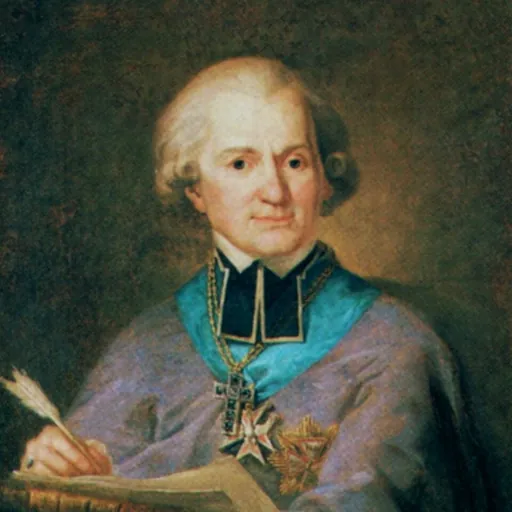
About Adam Naruszewicz
Lived 1733 – 1796 (aged 62). Adam Naruszewicz was a Polish poet, historian, catholic priest, catholic deacon, writer and catholic bishop.
Adam Stanisław Naruszewicz (; 20 October 1733 – 8 July 1796) was a Polish nobleman, poet, historian, dramatist, translator, publicist, Jesuit and Roman Catholic bishop.
Born in a szlachta family, he went on to become a close advisor to the Polish king Stanisław August Poniatowski, a titular bishop of Smolensk (1775–1790), bishop of Łuck (1790–1796), and a member of the government of the Polish-Lithuanian Commonwealth through his seat in the Permanent Council (1781–1786).
He has been described as one of the most significant writers of the Polish Enlightenment. In his early years he wrote poems and dramas, before focusing on historical research and becoming one of the first modern Polish historians. An author of the seven volumes of Historia narodu polskiego (History of the Polish Nation), a highly influential work on the early Polish historiography, he is responsible for popularizing the term "Piast dynasty" for describing the first dynasty of Poland.
Life
The Naruszewicz family belonged to the middle class szlachta (Polish-Lithuanian nobility) who held local government offices and had a small estate in Polesie region of the Polish–Lithuanian Commonwealth, where Adam Naruszewicz likely was born. He started his education in a Jesuit school in Pinsk. Naruszewicz joined the Jesuit Order on 14 August 1748, and shortly afterward he began studying and from 1753 lecturing in grammar at the Vilnius University. He acted as the "king's whip" in the Senate, although he did not play a major role in the parliamentary debates, acting mostly as a writer and organizer. and by Barbara Wolska as "one of the most significant poets of the Polish Enlightenment", and the most significant poet associated with the Poniatowski's political faction. In particular, he was also the first modern historian who used the term Piast dynasty for describing the first dynasty of Poland, popularizing it in the subsequent historiography. According to Platt, he was the most significant Polish historian until Joachim Lelewel. In Polish historiography, there is a distinction between the "Naruszewicz school", supporting monarchy and strong central power, and the more liberal-republican "Lelewel school". Just like his literary work, his historical research and writings have been influenced by the philosophy of Enlightenment, this is visible both in his methodology and philosophy (adhering to concepts such as didacticism, empiricism, humanitarianism, pragmatism, scepticism about tradition, secularism, and utilitarianism), his vernacular writing style, and his goals, such as his emphasis on studying domestic politics, endorsing a strong monarchy, and a pride in national accomplishments (including his support for the usage of Polish language in literature). John D. Stanley praised him for his "enormous respect for truth", visible in his methodology, full of critical analysis - including discussion of contradictory accounts, and extensive and detailed references to sources.
Awards (1771) Order of Saint Stanislaus (11 V 1776) Knight of the Order of the White Eagle (1783)
Don’t just read it —
keep it.
Full-length biographies made to live with: read them, listen on the way to work, watch them tonight.
- E-book
- Audio
- Video
Instant download · yours to keep · every purchase keeps this site free
Important facts
People in Adam Naruszewicz's life
Named in this biography and alive at the same time

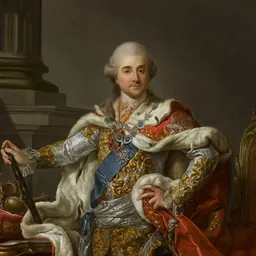
Related people
Same field, nearest in time


Contemporaries
People whose lives overlapped Adam Naruszewicz's





Frequently asked questions
Who was Adam Naruszewicz?
Polish noble
When was Adam Naruszewicz born?
Adam Naruszewicz was born on 20 October 1733 in Lahišyn, Pinsk.
When did Adam Naruszewicz die?
Adam Naruszewicz died on 6 July 1796 in Janów Podlaski, Holy Trinity church in Janów Podlaski.
What was Adam Naruszewicz's occupation?
Adam Naruszewicz was a poet, historian, catholic priest, catholic deacon, writer and catholic bishop.
What nationality was Adam Naruszewicz?
Adam Naruszewicz was Polish.
Sources & further reading
Cite this page
APA: Biography.guide. (2026). Adam Naruszewicz. https://biography.guide/adam-naruszewicz/
MLA: "Adam Naruszewicz." Biography.guide, https://biography.guide/adam-naruszewicz/.
Chicago: "Adam Naruszewicz." Biography.guide. https://biography.guide/adam-naruszewicz/.
Data last updated: 2026-09-21 · Spot an error? Report a correction.
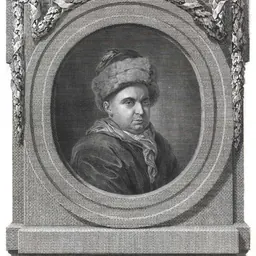
Portrait: Wikimedia Commons · author & licence
Page generated 2026-09-27 04:59 UTC