
Stanisław August Poniatowski
King of Poland and Grand Duke of Lithuania
About Stanisław August Poniatowski
Lived 1732 – 1798 (aged 66). Stanisław August Poniatowski was a Polish and Russian diplomat and military personnel.
Stanisław II August (born Stanisław Antoni Poniatowski; 17 January 1732 – 12 February 1798), known also by his regnal Latin name Stanislaus II Augustus, and as Stanisław August Poniatowski , was King of Poland and Grand Duke of Lithuania from 1764 to 1795, and the last monarch of the Polish–Lithuanian Commonwealth.
Born into wealthy Polish aristocracy, Poniatowski arrived as a diplomat at the Russian imperial court in Saint Petersburg in 1755 at the age of 22 and became intimately involved with the future empress Catherine the Great. With her aid, he was elected King of Poland and Grand Duke of Lithuania by the Sejm in September 1764 following the death of Augustus III. Contrary to expectations, Poniatowski attempted to reform and strengthen the large but ailing Commonwealth. His efforts were met with external opposition from neighbouring Prussia, Russia and Austria, all committed to keeping the Commonwealth weak. From within, he was opposed by conservative interests, which saw the reforms as a threat to their traditional liberties and privileges granted centuries earlier.
The defining crisis of his early reign was the War of the Bar Confederation (1768–1772) that led to the First Partition of Poland (1772). The latter part of his reign saw reforms wrought by the Diet (1788–1792) and the Constitution of 3 May 1791. These reforms were overthrown by the 1792 Targowica Confederation and by the Polish–Russian War of 1792, leading directly to the Second Partition of Poland (1793), the Kościuszko Uprising (1794) and the final and Third Partition of Poland (1795), marking the end of the Commonwealth. Stripped of all meaningful power, Poniatowski abdicated in November 1795 and spent the last years of his life as a captive in Saint Petersburg's Marble Palace.
A controversial figure in Poland's history, he is viewed with ambivalence as a brave and skillful statesman by some and as an overly hesitant coward by others, and even as a traitor. He is criticized primarily for his failure to resolutely stand against opposing forces and prevent the partitions, which led to the destruction of the Polish state. On the other hand, he is remembered as a great patron of arts and sciences who laid the foundation for the Commission of National Education, the first institution of its kind in the world, the Great Sejm of 1788–1792, which led to the Constitution of 3 May 1791 and as a sponsor of many architectural landmarks. Historians tend to agree that, taking the circumstances into account, he was a skillful statesman, pointing out that passing the Constitution was a sign of bravery, although his unwillingness to organize a proper nationwide uprising afterward is seen as cowardice and the key reason for the Second Partition and the subsequent downfall of Poland.
Youth
Stanisław Antoni Poniatowski was born on 17 January 1732 in Wołczyn (then in the Polish–Lithuanian Commonwealth and now Vowchyn, Belarus). He was one of eight surviving children, and the fourth son, of Princess Konstancja Czartoryska and of Count Stanisław Poniatowski, Ciołek coat of arms, Castellan of Kraków. His older brothers were Kazimierz Poniatowski (1721–1800), a Podkomorzy at Court, Franciszek Poniatowski (1723–1749), Canon of Wawel Cathedral who suffered from epilepsy and Aleksander Poniatowski (1725–1744), an officer killed in the Rhineland-Palatinate during the War of the Austrian Succession. His younger brothers were, Andrzej Poniatowski (1734–1773), an Austrian Feldmarschall, Michał Jerzy Poniatowski (1736–1794) who became Primate of Poland. His two older and married sisters were Ludwika Zamoyska (1728–1804) and Izabella Branicka (1730–1808). Among his nephews was Prince Józef Poniatowski (1763–1813), son of Andrzej. The Poniatowski family had achieved high status among the Polish nobility (szlachta) of the time.
Catherine died on 17 November 1796, succeeded by her son, Paul I of Russia. On 15 February 1797, Poniatowski left for Saint Petersburg.
When elected to the throne, he was seen by many as simply an "instrument for displacing the somnolent Saxons from the throne of Poland", yet as the British historian Norman Davies notes, "he turned out to be an ardent patriot, and a convinced reformer." and appears in Jane Porter's 1803 novel, Thaddeus of Warsaw.
On screen he has been played by Wieńczysław Gliński in the 1976 3 Maja directed by Grzegorz Królikiewicz. He appears in a Russian TV series.
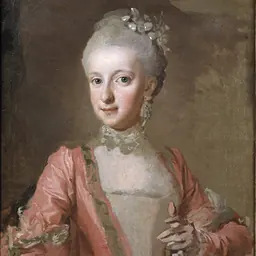
Poniatowski is depicted in numerous portraits, medals and coins. Archduchess Maria Elisabeth of Austria (1743–1808). A marriage to Princess Sophia Albertina of Sweden was suggested despite the religious differences, but this match was opposed by his sisters, Ludwika Maria Poniatowska and Izabella Poniatowska, and nothing came of it. The ceremonial role of queen and hostess of his court was played by his favourite niece, Urszula Zamoyska.
He had several notable lovers, including Elżbieta Branicka, who acted as his political adviser and financier, and had children with two of them. With Magdalena Agnieszka Sapieżyna (1739–1780), he became the father of Konstancja Żwanowa (1768–1810) and Michał Cichocki (1770–1828). In 1789 Grabowski died, leaving Elżbieta free to remarry, but if any marriage ever took place between her and the monarch (whether before or after the death of her first husband), it was never publicly announced. Jerzy Besala speculates that if Stanisław indeed married his mistress, he might have wanted to keep it secret to avoid potential unrest among nobles, as happened before in Polish history when ruler was committing mésalliance, like in cases of Casimir the Great and Krystyna of Praga, Władysław Jagiełło and Elisabeth of Pilica, or Sigismund August and Barbara Radziwiłł.
However, according to Wirydianna Fiszerowa, a contemporary who knew them both, this rumour only spread after the death of Poniatowski, was generally disbelieved, and moreover, was circulated by Elżbieta herself, so the marriage is considered by her to be unlikely.
Stanisław and Elżbieta had several children, all born before their alleged marriage:
Stanisław Konopnicy-Grabowski (1780–1845) Michał Grabowski (1773–1812) Kazimierz Grabowski (1770–?) Konstancja Grabowska Izabela Grabowska (1776–1858).
married Wincenty Dernałowicz. Not all sources agree she was Poniatowski's child.
Titles, honours and arms
The English translation of the Polish text of the 1791 Constitution gives his title as Stanisław August, by the grace of God and the will of the people, King of Poland, Grand Duke of Lithuania and Duke of Ruthenia, Prussia, Masovia, Samogitia, Kiev, Volhynia, Podolia, Podlasie, Livonia, Smolensk, Severia and Chernihiv.
Foreign Prussia: Order of the Black Eagle (5 April 1764) Order of Saint Andrew (1764)
Don’t just read it —
keep it.
Full-length biographies made to live with: read them, listen on the way to work, watch them tonight.
- E-book
- Audio
- Video
Instant download · yours to keep · every purchase keeps this site free
Important facts
Family & relationships
People in Stanisław August Poniatowski's life
Named in this biography and alive at the same time




Related people
Same field, nearest in time


Contemporaries
People whose lives overlapped Stanisław August Poniatowski's





Frequently asked questions
Who was Stanisław August Poniatowski?
King of Poland and Grand Duke of Lithuania (1764-1795)
When was Stanisław August Poniatowski born?
Stanisław August Poniatowski was born on 17 January 1732 in Vowchyn.
When did Stanisław August Poniatowski die?
Stanisław August Poniatowski died on 12 February 1798 in Saint Petersburg.
What was Stanisław August Poniatowski's occupation?
Stanisław August Poniatowski was a diplomat and military personnel.
What nationality was Stanisław August Poniatowski?
Stanisław August Poniatowski was Polish and Russian.
Sources & further reading
· Wikipedia: Stanisław August Poniatowski
· DBpedia: Stanisław August Poniatowski
Cite this page
APA: Biography.guide. (2026). Stanisław August Poniatowski. https://biography.guide/stanislaw-august-poniatowski/
MLA: "Stanisław August Poniatowski." Biography.guide, https://biography.guide/stanislaw-august-poniatowski/.
Chicago: "Stanisław August Poniatowski." Biography.guide. https://biography.guide/stanislaw-august-poniatowski/.
Data last updated: 2026-09-26 · Spot an error? Report a correction.
Page generated 2026-09-27 05:15 UTC