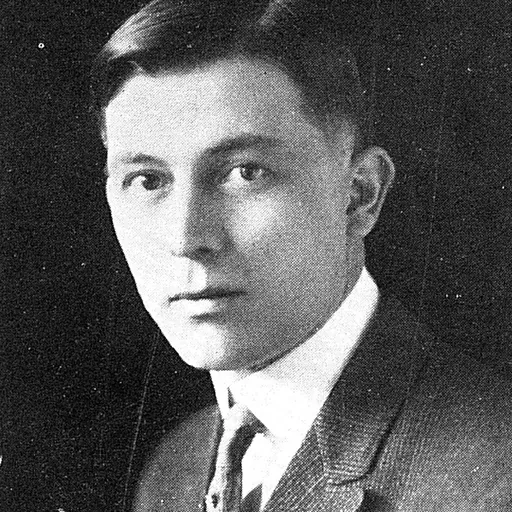
About Carl Lundgren
Lived 1880 – 1934 (aged 54). Carl Lundgren was an American baseball player.
Carl Leonard "Lundy" Lundgren (February 16, 1880 – August 21, 1934) was an American baseball and football player and coach.
Lundgren played football and baseball for the University of Illinois Urbana–Champaign and played eight seasons of Major League Baseball as a pitcher for the Chicago Cubs. In eight years with the Cubs, he compiled a record of 91 wins and 55 losses. His best season was 1907 when he won 18 games, pitched 207 innings without allowing a home run, threw seven shutouts, and gave up only 27 earned runs in 28 games. His 1.17 earned run average was the second lowest in the major leagues, and his average of 5.652 hits allowed per nine innings was the lowest in the major leagues.
Control problems held him back from greater renown. The Atlanta Constitution in 1913 summarized Lundgren's strengths and weaknesses: "He had everything including speed to burn green hickory and an assortment of curves that would keep a criptograph specialist figuring all night but he was wild as a March hare in a cyclone and couldn't locate the plate with a field glass." His father purchased a farm north of Marengo, where the family lived until 1900. He was the oldest of four children, having a younger brother, Franz Emil, and two younger sisters, Eva and Alma. While at Illinois, he played at the halfback and fullback positions for the Illini football team for three years. He was also a pitcher for the Illini baseball team from 1899 to 1902 and was the team captain in 1902. However, he did not pitch in any of the Cubs' World Series games.
His earned run average jumped from 1.17 in 1907 to 4.22 in 1908. He appeared in only two games for the Cubs in 1909, pitching his last major league game on April 23. At the end of April 1909, the Cubs placed Lundgren on waivers for a price of $1.50.
Lundgren's biggest weakness as a pitcher was lack of control. Even in 1907, his best year, Lundgren averaged 4.0 walks per nine innings pitched. In 1909, he averaged 8.3 walks per nine innings before being released. A profile of Lundgren published in 1913 by The Atlanta Constitution discussed his strengths and weaknesses:"He had everything including speed to burn green hickory and an assortment of curves that would keep a criptograph specialist figuring all night but he was wild as a March hare in a cyclone and couldn't locate the plate with a field glass. ... He had a strange hold on the art of steering the ball away from the plate that would make Wild Willie Donovan and Cy Seymour look like a brace of pikers who had been touched for their meal tickets."
Lundgren was called "the best cold-weather pitcher in the profession" by the Reach Baseball Guide.
In the summer of 1909, Lundgren appealed from a decision by the Cubs management to deny him a share of the team's $10,000 World Series bonus for 1908. In June 1909, he won what was described as "a moral victory" when a non-binding decision was entered, declaring the exclusion of Lundgren to be unjust.
Minor leagues
After his major league career ended in April 1909, Lundgren played minor league baseball for several years. In the spring of 1909, several teams expressed interest in Lundgren. Bill Armour, manager of the Toledo, Ohio team, reportedly lost interest because of Lundgren's reputation as a cold-weather pitcher: "Armour, however, discovered that Lundgren is a good man in the spring and fall, but during the hot months, when his services would be most in demand, he is unable to stand the strain."
The Cubs sold Lundgren to Brooklyn, and Brooklyn farmed him out to the Toronto Maple Leafs in the Eastern League for the 1909 season. However, he was suspended in June 1909 by Toronto manager Joe Kelley. A newspaper account on the suspension noted: "Lundgren is not in shape for a hard game, and the Toronto Club does not intend to pay him a big salary to get into shape when he's not half trying." In August 1909, he was reported to be "pitching independent ball around Chicago."
During the 1910 season, he played for the Hartford Senators in the Connecticut State League, compiling a record of 6–3. At the end of the 1910 season, The Hartford Courant wrote: "Lundgren was regarded as the ablest pitcher in this league last season and he outclassed the other boxmen." Lungren also played for the Toronto Maple Leafs in 1910, compiling a 1–4 record. In what appears to have been Lundgren's last professional baseball game, he pitched a shutout against the Bridgeport Orators on September 10, 1912.
There were newspaper reports in June 1913 indicating that Lundgren had a tryout with the Mobile team in the Southern League and that he had signed with the Atlanta Crackers or the Charleston Sea Gulls, but no record has been found of his playing for those teams.
Coaching career
In March 1912, Lundgren was hired to assist Boileryard Clarke in coaching the pitchers at Princeton University in 1912. After a short stint with Princeton, Lundgren returned to the field as a player with Hartford in June 1912. In January 1913, the University of Iowa expressed interest in hiring Lundgren as its baseball coach, but it appears that the deal fell through after the Iowa Board of Athletics was asked to meet his salary demands. In February 1913, he was also interviewed, but not hired, for the position of manager of a baseball team in Keokuk, Iowa.
In August 1913, he was hired by the University of Michigan to succeed Branch Rickey as the head coach of the Michigan Wolverines baseball team. He was the baseball coach at Michigan from 1914 through 1920, compiling a record of 93–43–6. Lundgren developed several major league players at Michigan, including George Sisler, who became one of baseball's greatest players. While coaching at Michigan, Lundgren worked in the off-season as a traveling salesman. He was Illinois' baseball coach for 14 years until his death in 1934. His Illini teams won Big Ten championships in 5 of Lundgren's 14 years as coach and tied for another. A historic marker has been placed in Marengo, Illinois commemorating his life and baseball career.
Don’t just read it —
keep it.
Full-length biographies made to live with: read them, listen on the way to work, watch them tonight.
- E-book
- Audio
- Video
Instant download · yours to keep · every purchase keeps this site free
Important facts
People in Carl Lundgren's life
Named in this biography and alive at the same time

Related people
Same field, nearest in time


Contemporaries
People whose lives overlapped Carl Lundgren's




Frequently asked questions
Who was Carl Lundgren?
American baseball player and coach (1880-1934)
When was Carl Lundgren born?
Carl Lundgren was born on 16 February 1880 in Marengo.
When did Carl Lundgren die?
Carl Lundgren died on 21 August 1934 in Marengo.
What was Carl Lundgren's occupation?
Carl Lundgren was a baseball player.
What nationality was Carl Lundgren?
Carl Lundgren was American.
Sources & further reading
Cite this page
APA: Biography.guide. (2026). Carl Lundgren. https://biography.guide/carl-lundgren/
MLA: "Carl Lundgren." Biography.guide, https://biography.guide/carl-lundgren/.
Chicago: "Carl Lundgren." Biography.guide. https://biography.guide/carl-lundgren/.
Data last updated: 2026-09-22 · Spot an error? Report a correction.
Portrait: Wikimedia Commons · author & licence
Page generated 2026-09-27 05:02 UTC