
About Joe Kelley
Lived 1871 – 1943 (aged 71). Joe Kelley was an American baseball player.
Joseph James Kelley (December 9, 1871 – August 14, 1943) was an American left fielder in Major League Baseball (MLB) who starred in the outfield of the Baltimore Orioles teams of the 1890s. Making up the nucleus of the Orioles along with John McGraw, Willie Keeler, and Hughie Jennings, Kelley received the nickname "Kingpin of the Orioles".
In his MLB career, Kelley played in the National League (NL) for the Boston Beaneaters (1891), Pittsburgh Pirates (1892), Baltimore Orioles (1892–1898), and Brooklyn Superbas (1899–1901), before he jumped to the upstart American League to play for the Baltimore Orioles (1902). He returned to the NL with Cincinnati Reds (1902–1906) and Boston Doves (1908). Kelley served as player-manager of the Reds (1902–1905) and Doves (1908). After extending his career in the minor leagues, he coached the Brooklyn Robins (1926), and scouted for the New York Yankees (1915–1916).
Kelley was regarded as an excellent batter, a good base runner, and a great leader. Over his seventeen-season MLB career, Kelley had a .317 batting average, and batted over .300 in eleven consecutive seasons. Kelley stole a career-high 87 bases in the 1896 season, which led MLB. He finished in the league's top ten in categories such as batting average, home runs, runs batted in (RBI), and stolen bases numerous times. He served as team captain of the Orioles and the Superbas. In recognition of his career achievements, Kelley was elected a member of the National Baseball Hall of Fame by the Veterans Committee in 1971.
Early life Joseph James Kelley was born on December 9, 1871, in Cambridge, Massachusetts, to Patrick Kelly and Ann Kelly (née Carney) in Cambridge, Massachusetts on December 9, 1871. Kelley's parents emigrated to the United States from Ireland, and he had five siblings. According to the 1880 United States census, Patrick worked as a marble cutter.
As a child, Kelley was educated at a parochial grammar school and St. Thomas Aquinas College in Cambridge, where he starred for the school's baseball team as a pitcher. He worked for a local piano manufacturer and the John P. Lowell Arms Company. He practiced with the Harvard Crimson, the college baseball team of Harvard University, and played semi-professional baseball for the Lowell Arms Company.
Professional career Minor leagues Kelley made his professional debut with the Lowell Indians of the New England League (NEL) in 1891, at age 19. During games he did not pitch, Lowell's manager put him in the lineup as an infielder. Kelley had a 10–3 win–loss record and a NEL-leading .323 batting average with Lowell. Three days later, Kelley signed with the Boston Beaneaters of the National League (NL). Kelley made his major league debut in August 1891 with the Beaneaters. After batting .244 in twelve games played, the Beaneaters released Kelley after the season.
Hanlon taught Kelley how to play center field. The Orioles won the NL pennant in 1894, 1895, and 1896. Kelley moved to left field in 1894 with the acquisition of Steve Brodie, who played center. Combined with 107 walks, which were tied for second most in the NL with Cupid Childs and behind only Billy Hamilton, Kelley posted a .502 on-base percentage (OBP), finishing second in the NL to Hamilton, and hit 48 doubles, good for second in the NL, behind only Hugh Duffy. Kelley hid baseballs in the outfield, using the closest hidden ball instead of finding the ball batted into the outfield. Kelley hit ten home runs in 1895, a then-franchise record, tying him for fifth in the NL with five other players. He also tied Brodie for second with 134 RBI, finished fourth with 54 stolen bases, fifth with a .546 SLG, and sixth with a .456 OBP. In 1896, Kelley finished seventh in the NL in batting average (.364), fourth in runs scored (148), fourth in SLG (.543), fifth in OBP (.469), ninth in hits (189), and tied Gene DeMontreville for eighth in home runs (8).
In 1897, Kelley agreed to serve as the coach of the Georgetown Hoyas, the college baseball team of Georgetown University. That year, he finished fifth in the NL in batting average (.362) and RBI (118), seventh in OBP (.447), and eighth in SLG (.489).
By 1898, Kelley earned an annual salary of $2,500 ($ in current dollar terms), plus a $200 ($ in current dollar terms) bonus for serving as team captain. Due to insolvency, the Brooklyn Superbas purchased the Orioles after the 1898 season and transferred Kelley, Hanlon, Keeler, Joe McGinnity, and Hughie Jennings to Brooklyn. Wanting an opportunity to manage, and to remain near Baltimore, Kelley requested a transfer to the Washington Senators, but Washington did not have enough talent to send to Brooklyn to make a trade. and led the team with a .319 batting average in 1900, while finishing fourth in the league in SLG (.485), tying Hickman for seventh in RBI (91), and tying Jimmy Collins and Buck Freeman for tenth in home runs (6).
Kelley moved back to the infield, becoming the regular first baseman in 1901. However, the opportunity to return to Baltimore proved irresistible to Kelley, and after the AL's successful 1901 season, he jumped from the Superbas to the Baltimore Orioles AL. Kelley's father-in-law, John Mahon, was president and principal share holder of the AL's Orioles.
Kelley was named Orioles' captain and received some stock in the team. Under indefinite suspension by Ban Johnson by July 1902 for fighting with umpires, With the team in financial straits, Kelley sold his shares of the Orioles to Mahon, who had purchased McGraw's shares when he left for New York, becoming principal shareholder of the Orioles. Johnson, along with Orioles minority owners, took control of the Orioles franchise, which had to forfeit their game that day as they did not have enough players. However, the other NL owners saw the situation as a coup for their league, and compelled Hanlon to drop his complaint. Kelley did not immediately report to Cincinnati, instead traveling to Boston to attempt to convince members of the Boston Americans to join him in the NL. He was dismissed as manager after the 1905 season, and replaced by Hanlon. He remained as a Reds player for the 1906 season. He batted .228 during the 1906 season, and the Reds released him. the Doves claimed Kelley from the Maple Leafs, signing Kelley to a two-year contract with an annual salary of $5,500 ($ in current dollar terms). Kelley feuded with Doves' owner George Dovey, as Dovey wanted George Browne fined for "indifferent play", which Kelley refused to do. Kelley and Dovey settled their case, freeing Kelley from the second year of his Doves contract.
Later career Maple Leafs president James McCafferey secured Kelley's return to the club in 1909. He played with the Maple Leafs through 1910, managing the Maple Leafs from 1912 to 1914, winning a second pennant in 1912. Kelley scouted for the Yankees in 1915 and 1916. Former teammate Wilbert Robinson, then manager of the Brooklyn Robins, hired Kelley and McGinnity to join his coaching staff for the 1926 MLB season.
Legacy quote=Joe had no prominent weakness. He was fast on the bases, could hit the ball hard and was as graceful an outfielder as one would care to see. He covered an immense amount of ground and had that necessary faculty, so prominent in Speaker and others, of being able to place himself where the batter would be likely to hit the ball. — – John McGraw Kelley tied Fred Carroll's MLB record with nine hits in a doubleheader, which he presently shares with eight other players.
Additionally, he was known as a great leader. He compiled a 338–321 win–loss record as an MLB manager.
Kelley was considered by the Veterans Committee for induction into the National Baseball Hall of Fame in 1964, but was not selected. He was voted into the Hall of Fame by the Veterans Committee in 1971.
Personal life Kelley married Margaret Mahon on October 26, 1897. Keeler served as Kelley's best man, and McGraw and Jennings served as groomsmen. Kelley is buried at New Cathedral Cemetery.
Don’t just read it —
keep it.
Full-length biographies made to live with: read them, listen on the way to work, watch them tonight.
- E-book
- Audio
- Video
Instant download · yours to keep · every purchase keeps this site free
Important facts
People in Joe Kelley's life
Named in this biography and alive at the same time

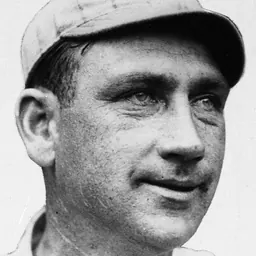



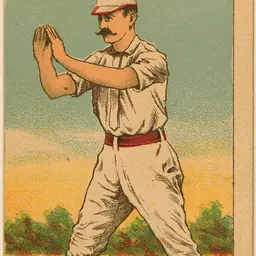
Related people
Same field, nearest in time
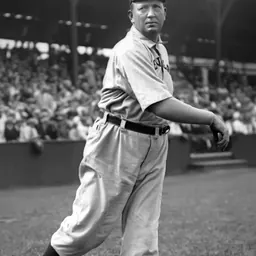


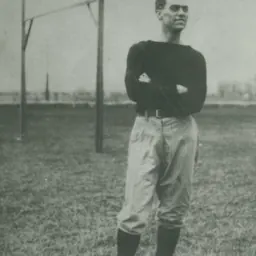
Contemporaries
People whose lives overlapped Joe Kelley's
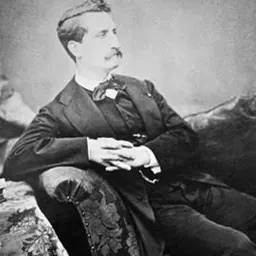



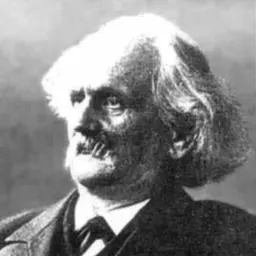
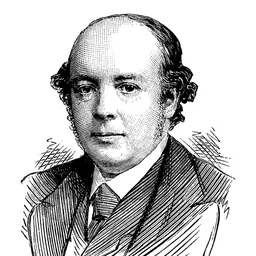
Frequently asked questions
Who was Joe Kelley?
American baseball player, coach, manager (1871–1943)
When was Joe Kelley born?
Joe Kelley was born on 9 December 1871 in Cambridge.
When did Joe Kelley die?
Joe Kelley died on 14 August 1943 in Baltimore.
What was Joe Kelley's occupation?
Joe Kelley was a baseball player.
What nationality was Joe Kelley?
Joe Kelley was American.
Sources & further reading
Cite this page
APA: Biography.guide. (2026). Joe Kelley. https://biography.guide/joe-kelley/
MLA: "Joe Kelley." Biography.guide, https://biography.guide/joe-kelley/.
Chicago: "Joe Kelley." Biography.guide. https://biography.guide/joe-kelley/.
Data last updated: 2026-09-24 · Spot an error? Report a correction.
Page generated 2026-09-27 05:06 UTC