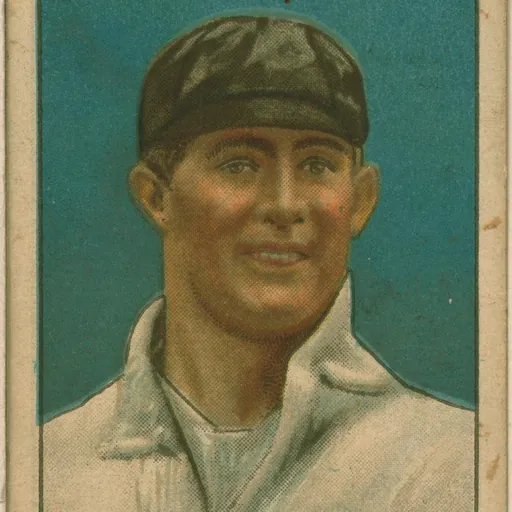
About Cy Seymour
Lived 1872 – 1919 (aged 46). Cy Seymour was an American baseball player.
James Bentley "Cy" Seymour (December 9, 1872 – September 20, 1919) was an American professional baseball center fielder and pitcher, who played in Major League Baseball (MLB) from to for the New York Giants (1896–; –), Baltimore Orioles (–), Cincinnati Reds (1902–1906) and Boston Braves. He batted and threw left-handed.
Primarily a center fielder, Seymour retired with 1,724 hits and a lifetime batting average (BA) of .303. He was a pitcher for his first five seasons, ending his MLB career with a 61–56 win–loss record and a 3.76 earned run average (ERA) in 140 games pitched (123 as a starting pitcher). Seymour is the only player apart from Babe Ruth to finish his career with at least 50 home runs (HR) and 50 pitching wins. Seymour is the Reds' career leader in batting average (.332) and holds the Reds' single-season record for batting average (.377 in ).
Career
Early career Seymour played semi-professional baseball in Plattsburgh, New York, receiving a monthly salary of $1,000 ($ in current dollar terms).
Major League Baseball
New York Giants (1896–1900) Seymour signed with the New York Giants of the National League (NL) during the 1896 season, making his Major League Baseball (MLB) debut on April 22. A sometimes wild pitcher, The New York Times described him as having a "$10,000 arm and a $00,000 head". Seymour set an MLB record with three errors in one inning, a record later tied by Tommy John. However, he pitched to an 18–14 win–loss record in 1897, with a 3.37 earned run average (ERA), while recording 149 strikeouts, good for second in the NL.
Seymour held out from the Giants for the first month of the 1899 season in a contract dispute, eventually signing for $2,000 ($ in current dollar terms), a $500 raise ($ in current dollar terms) over his 1898 salary. Due to injuries and the ineffectiveness of the Giants' outfielders, the team began to play Seymour in the outfield, though they insisted that Seymour would not shift positions on a permanent basis. McGraw, remembering Seymour's toughness in previous seasons, signed Seymour to his team, the Baltimore Orioles, before the 1901 season. Unable to afford that debt, Mahon purchased shares of the team from Kelley and player-manager McGraw, who had resigned from the team and signed with the Giants. With this, Mahon became the majority shareholder. On July 17, 1902, Mahon sold his interest in the Orioles to Andrew Freedman, principal owner of the Giants, and John T. Brush, principal owner of the Cincinnati Reds, also of the NL. That day, Freedman and Brush released Seymour, McGraw, Kelley, McGinnity, Roger Bresnahan, Jack Cronin, and Dan McGann from their Oriole contracts. Brush then signed Seymour and Kelley to the Reds, while Freedman signed McGinnity, Bresnahan, Cronin, and McGann, joining McGraw, his new player-manager, on the Giants.
Cincinnati Reds (1902–1906)
Reds owner Garry Herrmann added $100 per month ($ in current dollar terms) to Seymour's $2,800 annual salary ($ in current dollar terms) when he acquired him from Baltimore, and made him the team's starting center fielder. Seymour continued to bat above .300 with the Reds in each season through 1905, when he led the NL in batting average (.377), hits (219), runs batted in (RBI) (121), doubles (40), triples (21), and slugging percentage (.559).
New York Giants (1906–1910) The Giants purchased Seymour from the Reds on July 12, 1906, for $10,000 ($ in current dollar terms), the largest monetary transaction in baseball to date. McGraw convinced Seymour not to hold out, which could have set a precedent for players obtaining money in player transactions. However, an ankle injury prematurely ended his season. His batting average declined to .267 for the 1908 season. That year, he participated in one of baseball's most infamous plays, known as Merkle's Boner, in which the Giants lost the pennant to the Chicago Cubs. In the replayed game between the Giants and Cubs, Giants pitcher Christy Mathewson reportedly waved Seymour to move further back in the outfield; Seymour refused, only to see the ball hit over his head, allowing the Cubs to score three runs on their way to the win. Mathewson later denied waving Seymour back, saying Seymour "knew the Chicago batters as well as [he] did and how to play them."
As there were no full-time base coaches at the time, players took turns in the role. While coaching at third base, Seymour tackled teammate Moose McCormick as he rounded third base and headed for home plate, in an attempt to keep McCormick at third. McCormick overpowered Seymour and scored. When McGraw asked why, Seymour made an excuse about having the sun in his eyes. This led McGraw, now realizing the need for a full-time coach, to hire Arlie Latham for the role, the first full-time coach in MLB. Seymour got into an altercation with Latham in March 1909 at the team's hotel, prompting McGraw to seek a buyer for Seymour. Seymour apologized to McGraw, who responded by suspending Seymour for eight weeks. However, Seymour injured his right leg in his first game back from the suspension. This injury limited his effectiveness for the rest of his career. As a part-time player that season, he batted .311, best among NL reserves. After playing for the Orioles in the 1911 season, they sold him to the Newark Indians of the Class-AA International League, where he played during the 1912 season. Seymour became property of the Los Angeles Angels of the Class-A Pacific Coast League after the 1912 season, but he secured his release from the Angels without playing a game for them,
Seymour subsequently signed as a free agent with the Boston Braves on February 25, 1913. Seymour played for the Buffalo Bisons of the Class-A International League after being released by the Braves. He returned to professional baseball in 1918, playing in 13 games for the Newark Bears of the International League.
Career perspective Few players enjoyed as much success as Seymour as both a pitcher and hitter; only Babe Ruth recorded more combined pitching victories and hits.
The New York World listed Seymour as one of the best players in baseball, along with Mathewson, Ed Walsh, Honus Wagner, Nap Lajoie, and Roger Bresnahan.
Don’t just read it —
keep it.
Full-length biographies made to live with: read them, listen on the way to work, watch them tonight.
- E-book
- Audio
- Video
Instant download · yours to keep · every purchase keeps this site free
Important facts
People in Cy Seymour's life
Named in this biography and alive at the same time





Related people
Same field, nearest in time
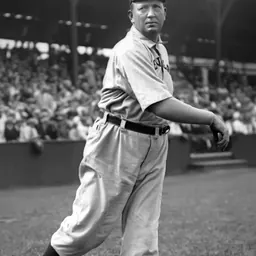

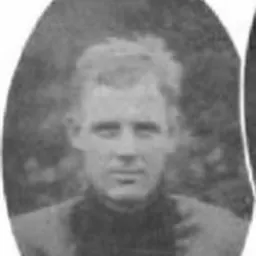

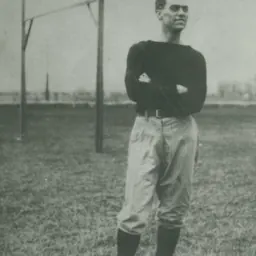
Contemporaries
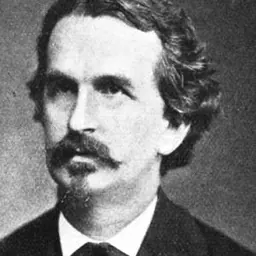
People whose lives overlapped Cy Seymour's


Frequently asked questions
Who was Cy Seymour?
Major-league baseball player
When was Cy Seymour born?
Cy Seymour was born on 9 December 1872 in Albany.
When did Cy Seymour die?
Cy Seymour died on 20 September 1919 in New York City.
What was Cy Seymour's occupation?
Cy Seymour was a baseball player.
What nationality was Cy Seymour?
Cy Seymour was American.
Sources & further reading
Cite this page
APA: Biography.guide. (2026). Cy Seymour. https://biography.guide/cy-seymour/
MLA: "Cy Seymour." Biography.guide, https://biography.guide/cy-seymour/.
Chicago: "Cy Seymour." Biography.guide. https://biography.guide/cy-seymour/.
Data last updated: 2026-09-22 · Spot an error? Report a correction.
Portrait: Wikimedia Commons · author & licence
Page generated 2026-09-27 05:01 UTC