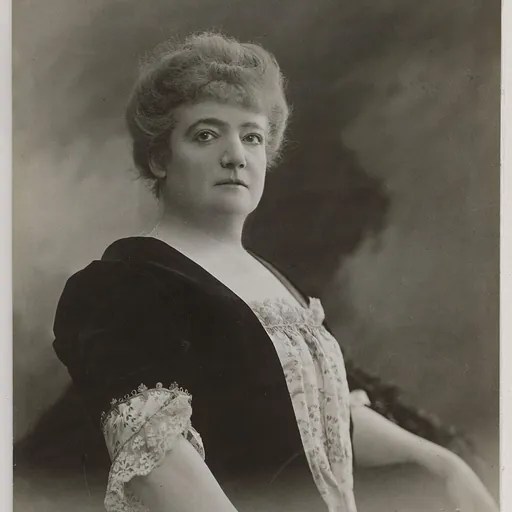
About Augusta Holmès
Lived 1847 – 1903 (aged 55). Augusta Holmès was a French and British classical composer, pianist, poet, writer and composer.
Augusta Mary Anne Holmès (; 16 December 1847 – 28 January 1903), also known by the pseudonym Hermann Zenta, was a French and Irish composer. Holmès wrote the texts to almost all of her vocal music herself, including songs, oratorios, the libretto of her opera La Montagne noire and the programmatic poems for her symphonic poems including Irlande and Andromède.
Biography Holmès was born Augusta Mary Anne Holmes on 16 December 1847 on the in 8th arrondissement of Paris to Irish parents Captain Dalkeith Holmes and Augusta Holmes (née Shearer; died 1857), a writer.
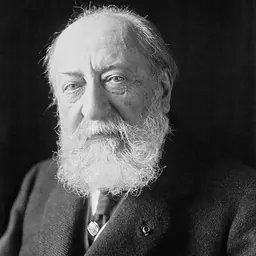
Camille Saint-Saëns was among the many artists - musicians, poets, painters - who became enamoured of her and fell in love with her, eventually proposing marriage, but he was turned down. Later, he wrote of Holmès in the journal Harmonie et Mélodie: "Like children, women have no idea of obstacles, and their willpower breaks all barriers. Mademoiselle Holmès is a woman, an extremist." Like other female composers from the nineteenth century including Fanny Mendelssohn, Holmès published some of her earlier works under a male pseudonym ("Hermann Zenta") because women in European society at that time were not taken seriously as artists and were discouraged from publishing.
For the 1889 celebration of the centennial of the French Revolution, Holmès was commissioned to write the Ode triomphale for the Exposition Universelle, a work requiring about 1,200 musicians. Jean-Baptiste Lavastre designed the immense panoramic painting decorating the stage of the Palais de l'Industrie which served as a setting for its performance.
She gained a reputation of being a composer of programme music with political meaning, such as her symphonic poems Irlande and Pologne.
Musical style Holmès' oeuvre is made up of cantatas, symphonic poems, operas, a few works for solo piano and over 100 songs.
First hearing Wagner's work at the age of 13, Holmès was influenced by Wagner all her life and advocated to have his works performed in the Concerts Populaires, a formidable concert series in Paris. Many parallels can be found in the music of Holmès and Wagner. One of the most direct examples of stylistic likeness can be heard in Wagner's Ride of the Valkyries from Die Walküre (1856) and Holmès' Roland furieux (1876). Both works make use of chromaticism and use similar orchestral colour, with dominant brass sections, announcing strong, rhythmically catching, melodic motives, while the strings drive the music forward with rapid, galloping patterns underneath the melody.
Holmès wrote four operas, largely inspired by Wagner, however, La Montagne Noire, staged in 1895, was the only one to be performed. It was one of the few operas written by a woman to be produced at the Paris Opéra in the nineteenth century, but it was poorly received, possibly due to its outdated Wagnerian influences. Saint-Saëns, in a review of Holmès' symphonic poem, Les Argonautes, remarked on her "excessive virility – a frequent fault with women composers – and flamboyant orchestration in which the brass explodes like fireworks..." The couple's daughters are the subject of the 1888 painting "The Daughters of Catulle Mendès" by Pierre-Auguste Renoir. By 1885, Holmès and Mendès had separated and the children remained in the care of their father. The couple's youngest daughter, Helyonne, married Henri Barbusse in 1898.
In 1871, Holmès became a French national and added the e-grave accent to her last name. Having previously been part of the Theosophist and Spiritualist movement, Holmès concerted to catholicism in 1902 and was baptized at the Église Saint-Philippe-du-Roule. Lancelot du lac, opera in three acts (unpublished) La Montagne noire, opera in four acts (1885), Paris, Opéra, 8 February 1895. The Black Mountain was recreated at Theater Dortmund on January 13, 2024 with Aude Extrémo (Yamina), Sergey Radchenko (Mirko) and Mandla Mndebele (Aslar), and the Dortmunder Philharmoniker conducted by Motonori Kobayashi.
Cantatas Astarté, poème musical (1871, unpublished) Lutèce, symphonie dramatique (1877) Les Argonautes, symphonie dramatique (1880) Ludus pro patria, ode-symphonie (1888) Au pays bleu, suite symphonique (c.1888) Une Vision de Sainte Thérèse for soprano and orchestra (c.1888) Ode triomphale en l'honneur du centenaire de 1789 (1889) Hymne à la paix (1890) Hymne à Apollo (c.1890s) La Belle au bois dormant suite lyrique (1902) La Vision de la reine, cantata
Orchestral works Ouverture pour une comédie, symphonic poem (before 1870) Allegro feroce (1870) Roland furieux (1876) Irlande, symphonic poem (1882) Pologne, symphonic poem (1883)
Chamber music Minuetto, for string quartet (1867) Trois petites pièces for flute and piano (1879) Fantaisie in C minor, for clarinet and piano (1900) Molto lento, for clarinet and piano
Piano music Rêverie tzigane (1887) Ce qu'on entendit dans la nuit de Noël (1890) Ciseau d'hiver (1892)
Songs, song collections (selective list) Les Sept ivresses: 1. L'Amour; 2. Le Vin; 3. La Gloire; 4. La Haine; 5. Le Rêve; 6. Le Désir; 7. L'Or (1882) Trois Chansons populaires: 1. Mignonne; 2. Les Trois pages; 3. La Princesse (1883) Noël: Trois anges sont venus ce soir (1884) En Chemin (1886) Hymne à Eros (1886) Fleur de neige (1887) La Chanson de gas d'Irlande (1891) Berceuse (1892) Contes divines (1892–5): 1. L'Aubepine de Saint Patrick (1892); 2. Les Lys bleus (1892); 3. Le Chemin de ciel (1893); 4. La Belle Madeleine (1893); 5. La Légende de Saint Amour (1893); 6. Les Moutons des anges (1895) Noël d'Irlande (1896)
Don’t just read it —
keep it.
Full-length biographies made to live with: read them, listen on the way to work, watch them tonight.
- E-book
- Audio
- Video
Instant download · yours to keep · every purchase keeps this site free
Important facts
People in Augusta Holmès's life
Named in this biography and alive at the same time



Related people
Same field, nearest in time

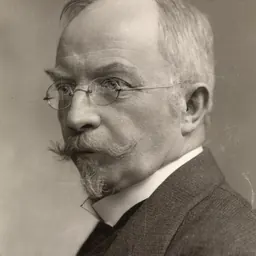

Contemporaries
People whose lives overlapped Augusta Holmès's

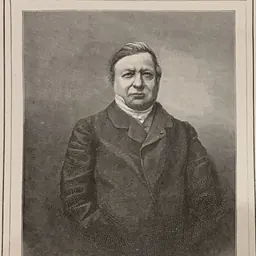



Frequently asked questions
Who was Augusta Holmès?
French composer of British-Irish origin
When was Augusta Holmès born?
Augusta Holmès was born on 18 December 1847 in former 1st arrondissement of Paris.
When did Augusta Holmès die?
Augusta Holmès died on 28 January 1903 in 17th arrondissement of Paris.
What was Augusta Holmès's occupation?
Augusta Holmès was a classical composer, pianist, poet, writer and composer.
What nationality was Augusta Holmès?
Augusta Holmès was French and British.
Sources & further reading
Cite this page
APA: Biography.guide. (2026). Augusta Holmès. https://biography.guide/augusta-holmes/
MLA: "Augusta Holmès." Biography.guide, https://biography.guide/augusta-holmes/.
Chicago: "Augusta Holmès." Biography.guide. https://biography.guide/augusta-holmes/.
Data last updated: 2026-09-20 · Spot an error? Report a correction.
Portrait: Wikimedia Commons · author & licence
Page generated 2026-09-27 04:57 UTC