
About Henri Barbusse
Lived 1873 – 1935 (aged 62). Henri Barbusse was a French writer, journalist, screenwriter, biographer, novelist and politician.
Henri Barbusse (; 17 May 1873 – 30 August 1935) was a French novelist, short story writer, journalist, poet and political activist. He began his literary career in the 1890s as a Symbolist poet and continued as a neo-Naturalist novelist; in 1916, he published Under Fire, a novel about World War I based on his experience which is described as one of the earliest works of the Lost Generation movement or as the work which started it; the novel had a major impact on the later writers of the movement, namely on Ernest Hemingway and Erich Maria Remarque. Barbusse is considered one of the important French writers of 1910–1939 who mingled the war memories with moral and political meditations. In years following the war, his work acquired a definite political orientation; he became a member of the French Communist Party He died in 1935 and didn't see the events that followed, like the Moscow trials and the Nazi-Soviet pact.
He was a lifelong friend of Albert Einstein.
Life
Early life and career Barbusse was born on 17 May 1873 in Asnières-sur-Seine to Adrien Barbusse and Anne Benson. Barbusse's father was French and his mother was English. On 18 April 1898, Barbusse married Helyonne Holmès, the daughter of the poet Catulle Mendès and the composer Augusta Holmès, in Croissy-sur-Seine.
In 1908, Barbusse wrote his first novel Hell (L'Enfer), in which he described the life of a young Parisian who lives in a boarding house and spies through a hole in his wall on the other boarders and sees birth, death, adultery and lesbianism. The novel produced controversy because of breaking taboos and crossing conventional moral boundaries of the time; Invalided out of the army three times, Barbusse served in the war for 17 months, until November 1915, when he was permanently moved into a clerical position due to pulmonary damage, exhaustion, and dysentery. On 8 June 1915, he was awarded the Croix de guerre with citation.
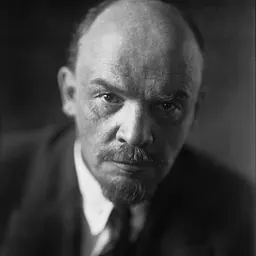
Political and cultural activities In January 1918, he left France and moved to Moscow, where he married a Russian woman and joined the Bolshevik Party. His novel, Clarté, is about an office worker who, while serving in the army, begins to realize that the imperialist war is a crime. Vladimir Lenin commented that this novel was censored in France.
The Russian Revolution had a significant influence on Barbusse's life and work. He joined the French Communist Party in 1923 and later travelled back to the Soviet Union. His later works, Manifeste aux Intellectuels (Elevations) (1930) and others, show a more revolutionary standpoint. Of these, the 1921 Le Couteau entre les dents (The Knife Between My Teeth) marks Barbusse's siding with Bolshevism and the October Revolution. Barbusse characterized the birth of Soviet Russia as "the greatest and most beautiful phenomenon in world history". The book Light from the Abyss (1919) and the collection of articles Words of a Fighting Man (1920) contain calls for the overthrow of capitalism. In 1925, Barbusse published Chains, showing history as the unbroken chain of suffering of people and their struggle for freedom and justice. In the publicistic book The Butchers, he exposes the White Terror in the Balkan countries.
In 1927, Barbusse participated in the Congress of Friends of the Soviet Union in Moscow. He led the World Congress Against Imperialist War (Amsterdam, 1932) and headed the World Committee Against War and Fascism, founded in 1933. He also took part in the work of the International Youth Congress (Paris, 1933) and the International Congress of Writers in Defense of Culture. Additionally, in the 1920s and 1930s, he edited the periodicals Monde (1928–1935) He was also literary editor for the daily newspaper l'Humanité from 1926 to 1929.
Support for Stalin In his 1928 book Voici ce qu'on a fait de la Géorgie, Barbusse praised post-sovietization political, social, and economic conditions in Georgia and completely glossed over the brutal methods employed by Stalin which disturbed the dying Lenin,
In 1930, he published a book Russie, an account of year-long living in the Soviet Union which contained flattering references to Stalin. the key condition was that it would be checked and subject to editorial changes in the Central Committee of the Soviet Communist Party, and Barbusse assured that he would break with the "Trotskyist elements" in the editorial of his journal Monde. but removed him from the masthead after his imprisonment.
Trotsky criticised Barbusse as representative of a "pretentious ... humanitarian, lyric and pacifistical 'communism'".
Death
While writing a second biography of Stalin in Moscow, Barbusse fell ill with pneumonia and died on 30August 1935.
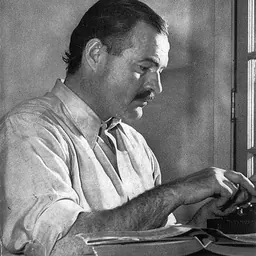
In the foreword to I Saw It Happen, a 1942 collection of eyewitness accounts of the war, the book critic Lewis Stiles Gannett wrote: "We shall be hearing and reading of this war for decades to come. No one of us can yet guess who will be its Tolstoys, its Barbusses, its Remarques and its Hemingways."
The parc Henri Barbusse was the site of the Château d'Issy.
Works 1895 – Pleureuses; English translation: The Hired Mourners (poetry) 1903 – Les Suppliants; English translation: The Supplicants (prose novel) 1908 – L'enfer; English translation: Hell (novel) 1912 – Meissonier; (biography) 1916 – Le feu; English translation: Under Fire (novel) 1919 – Clarte; English translation: Light (novel) 1921 – Le couteau entre les dents; English translation: The Knife Between My Teeth (novel) 1921 – Quelque Coins du Coeur (prose pieces with 24 woodcuts by Frans Masereel) 1923 – Esperantista Laboristo; English translation: "Esperantist Worker" (magazine article) 1927 – Jesus, Les Judas de Jesus 1930 – Manifeste aux intellectuels; English translation: Elevations (novel) 1935 – Staline: Un monde nouveau vu à travers un homme (biography); English translation: , translated by Vyvyan Holland
Don’t just read it —
keep it.
Full-length biographies made to live with: read them, listen on the way to work, watch them tonight.
- E-book
- Audio
- Video
Instant download · yours to keep · every purchase keeps this site free
Important facts
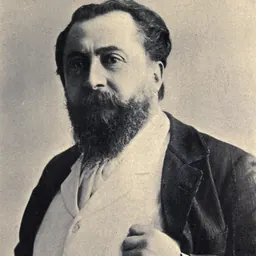
People in Henri Barbusse's life
Named in this biography and alive at the same time

Related people
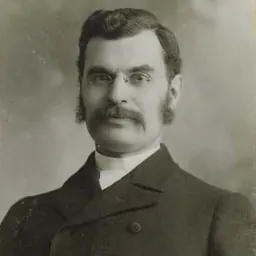
Same field, nearest in time





Contemporaries
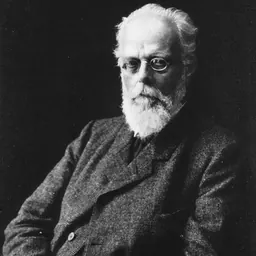
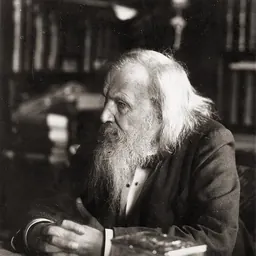
People whose lives overlapped Henri Barbusse's


Frequently asked questions
Who was Henri Barbusse?
French author (1873-1935)
When was Henri Barbusse born?
Henri Barbusse was born on 17 May 1873 in Asnières-sur-Seine.
When did Henri Barbusse die?
Henri Barbusse died on 30 August 1935 in Moscow.
What was Henri Barbusse's occupation?
Henri Barbusse was a writer, journalist, screenwriter, biographer, novelist and politician.
What nationality was Henri Barbusse?
Henri Barbusse was French.
Sources & further reading
Cite this page
APA: Biography.guide. (2026). Henri Barbusse. https://biography.guide/henri-barbusse/
MLA: "Henri Barbusse." Biography.guide, https://biography.guide/henri-barbusse/.
Chicago: "Henri Barbusse." Biography.guide. https://biography.guide/henri-barbusse/.
Data last updated: 2026-09-20 · Spot an error? Report a correction.
Page generated 2026-09-27 05:29 UTC