
About Angelica Kauffmann
Lived 1741 – 1807 (aged 66). Angelica Kauffmann was a Swiss painter, printmaker, artist and visual artist.
Maria Anna Angelika Kauffmann ( ; 30 October 1741 – 5 November 1807), usually known in English as Angelica Kauffman, was a Swiss painter who had a successful career in London and Rome. Remembered primarily as a history painter, Kauffman was a skilled portraitist, landscape and decoration painter. She was, along with Mary Moser, one of two female painters among the founding members of the Royal Academy of Art in London in 1768.
Early life Detail of Tragedy and Comedy, painted in Rome in 1791 (National Museum in Warsaw). Harmonious and powerful colours and the soft-brushed, multi-layered style of English portraitists, Sir Joshua Reynolds and Thomas Gainsborough, are typical for Kauffman's paintings.
Kauffman was born at Chur in Graubünden, Switzerland. Her family moved to Morbegno in 1742, then to Como in Lombardy in 1752 at that time under Austrian rule. In 1757, she accompanied her father to Schwarzenberg in Vorarlberg/Austria, where her father was working for the local bishop. Her father, Joseph Johann Kauffmann (1707–1782), was a relatively poor man but a skilled Austrian muralist and painter, who was often travelling for his work. He trained Angelica and she worked as his assistant, moving through Switzerland, Austria, and Italy. Angelica, a child prodigy, rapidly acquired four languages from her mother, Cleophea Lutz (1717–1757): German, Italian, French and English.
She also was a talented singer and showed talent as a musician. Angelica was forced to choose between opera and art. She quickly chose art as a Catholic priest told her that the opera was a dangerous place filled with "seedy people". By her twelfth year she had already become known as a painter, with bishops and nobles sitting for her.
In 1757, her mother died and her father decided to move to Milan. Later visits to Italy of long duration followed. Kauffman and her family moved to Florence in June 1762, where the young artist first discovered the painting style that was coined Neoclassical painting. In October, 1762, she became an elected member of the Accademia delle Arti del Disegno and an honorary member of the Accademia Clementina di Bologna. Later in 1763, she visited Rome, returning again in 1764. From Rome, she passed to Bologna and Venice, everywhere feted for her talents and charm. Writing from Rome in August 1764 to his friend Franke, Winckelmann refers to her popularity; she was then painting his picture, a half-length; of which she also made an etching. She spoke Italian as well as German, he says, and expressed herself with facility in French and English – one result of the last-named accomplishment being that she became a popular portraitist for British visitors to Rome. "She may be styled beautiful," he adds, "and in singing may vie with our best virtuosi." In May 1765, she was elected to the Accademia di San Luca, submitting Allegory of Hope as her reception piece. That same month her work appeared in England in an exhibition of the Free Society of Artists. Another instance of her intimacy with Reynolds is to be found in her variation of Guercino's Et in Arcadia ego, a subject that Reynolds repeated a few years later in his portrait of Mrs Bouverie and Mrs Crewe.
In 1767, Kauffman was seduced by an imposter going by the name Count Frederick de Horn, whom she married, but they separated the following year. It was probably owing to Reynolds's good offices that she was among the signatories to the petition to the King for the establishment of the Royal Academy. In its first catalogue of 1769, she appears with "R.A." after her name (an honour she shared with one other woman, Mary Moser); and she contributed the Interview of Hector and Andromache, and three other classical compositions. She spent several months in Ireland in 1771, as a guest of the Lord Lieutenant of Ireland, Viscount Townshend, and undertook a number of portrait commissions there. Her notable Irish portraits include those of Philip Tisdall, the Attorney General for Ireland, and his wife Mary, who acted as her patron, and of Henry Loftus, 1st Earl of Ely and his family, including his niece Dorothea Monroe, the most admired Irish beauty of her time. It appears that among her circle of friends was Jean-Paul Marat, then living in London and practising medicine, with whom she may have had an affair.
Nathaniel Hone's painting The Conjuror (1775), satirizing Sir Joshua Reynolds and alluding to a romance with the younger Angelica Kauffman. Her friendship with Reynolds was criticized in 1775 by fellow Academician Nathaniel Hone, who courted controversy in 1775 with his satirical picture The Conjurer. It was seen to attack the fashion for Italian Renaissance art and to ridicule Sir Joshua Reynolds, leading the Royal Academy to reject the painting. It also originally included a nude caricature of Kauffman in the top left corner, which he painted out after she complained to the academy. The combination of a little girl and an old man has also been seen as symbolic of Kauffman and Reynolds's closeness, age difference, and rumoured affair.
From 1769 until 1782, Kauffman was an annual exhibitor with the Royal Academy, sending sometimes as many as seven pictures, generally on classical or allegoric subjects. One of the most notable was Leonardo expiring in the Arms of Francis the First (1778). Design (1778–80), oil on canvas, 126 × 148.5 cm. Royal Academy of Arts, London. alt=Angelica Kauffman studying and copying a sculpture of a male torso. In 1773, she was appointed by the Academy with others to decorate St Paul's Cathedral, a scheme that was never carried out, and, later, with Biagio Rebecca, painted the ceiling of the Academy's Council Room at Somerset House. The work she created here between 1778 and 1780 are perhaps her greatest and most recognizable: a series of paintings, titled The Elements of Art, depicting Invention, Design, Composition, and Coloring. Kauffman's allegorical paintings represent the principles of academic art theory. This can be seen in depictions of Kauffman, such as her painting titled Design and a portrait by Nathaniel Dance. The male figures in her artworks are seen as being more feminine than most painters would choose to display, which may be a result of her lack of formal training in male anatomy.
Later years in Rome Self-Portrait Hesitating Between Painting and Music (1794). oil on canvas, 147 x: 216 cm. Nostell Priory, West Yorkshire In 1781, after her first husband's death (she had long been separated from him), she married Antonio Zucchi (1726–1795), a Venetian artist then resident in England. Shortly afterwards, she retired to Rome, where she befriended, among others, Johann Wolfgang von Goethe; yet, always restive, she wanted to do more and lived for another 25 years with much of her old prestige intact.
In 1782, Kauffman's father died, as did her husband in 1795. In 1794, she painted, Self-Portrait Hesitating Between Painting and Music, in which she emphasises the difficult choice she had faced in choosing painting as her sole career, in dedication to her mother's death. She continued at intervals to contribute to the Royal Academy in London, her last exhibit being in 1797. After this, she produced little, and in 1807 she died in Rome, being honoured with a splendid funeral under the direction of Canova. The entire Academy of St Luke, with numerous ecclesiastics and virtuosi, followed her to her tomb in Sant'Andrea delle Fratte, and, as at the burial of Raphael, two of her best pictures were carried in procession.
Legacy
Brest's Museum of Fine Arts By the time of her death she had made herself what she considered to be a renowned artist. This explains why her funeral was directed by the well-known Neoclassical sculptor Antonio Canova. Canova designed her funeral based on the funeral of the Renaissance master Raphael.
By 1911, rooms decorated with her work were still to be seen in various places. At Hampton Court was a portrait of the duchess of Brunswick; in the National Portrait Gallery, a self-portrait (NPG 430).
There were other pictures by her in Paris, at Dresden, in the Hermitage at St Petersburg, in the Alte Pinakothek at Munich, in Kadriorg Palace, Tallinn (Estonia) and in the Joanneum Alte Galerie at Graz. The Munich example was another portrait of herself, and there was a third in the Uffizi at Florence. A few of her works in private collections were exhibited among the Old Masters at Burlington House.
Kauffman is well known for the numerous engravings from her designs by Schiavonetti, Francesco Bartolozzi and others. Those by Bartolozzi especially found considerable favour with collectors. Charles Willson Peale (1741–1827), artist, patriot, and founder of a major American art dynasty, named several of his children after notable European artists, including a daughter, Angelica Kauffman Peale.
A biography of Kauffman was published in 1810 by Giovanni Gherardo De Rossi. The book was the basis of a romance by Léon de Wailly (1838), and it prompted the novel contributed by Anne Isabella Thackeray to the Cornhill Magazine in 1875 entitled Miss Angel.
The English novelist Miranda Miller published a 2020 novel entitled Angelica, Paintress of Minds, which purports to be an autobiography written during Kauffman's last days in Rome. The Historical Novel Society says of the book: "Kauffmann is presented as hard-working, loyal, kind, sometimes susceptible but more determined than she thinks she is."
From September 2018 to August 2019, the Royal Academy hosted an exhibition by Sarah Pickstone, An Allegory of Painting, which paid homage to works by Kauffman that the Academy had commissioned. Pickstone's The Rainbow reinterpreted Kauffman's Colour, with Belvedere a response to Kauffman's Design.
The Angelika Kauffmann Museum
The Angelika Kauffmann Museum in Schwarzenberg, Vorarlberg (Austria) was established in 2007. This location is in the same area that her father called home. The annually changing exhibitions focus on different aspects and themes of her artistic work. In the 2019 exhibition Angelika Kauffmann – Unknown Treasures from Vorarlberg Private Collections, many of her paintings were shown to the public for the first time, as a large proportion of her oeuvre is owned by private collectors. The museum is housed in the so-called "Kleberhaus", an old farmhouse (1556) in the typical architectural style of the region.
Portraits
Miscellaneous
Exhibitions Retrospektive Angelika Kauffmann (270 works, c. 450 ill. ), Düsseldorf, Kunstmuseum (15 November 1998 – 24 January 1999); München, Haus der Kunst (5 February – 18 April 1999); Chur, Bündner Kunstmuseum (8 May – 11 July 1999). Angelica Kauffman: Unknown Treasures from Vorarlberg Private Collections, concurrent exhibitions at the Vorarlberg Museum (June 15 – October 6, 2019) and the Angelika Kauffmann Museum, Schwarzenberg, Austria (June 16 – November 3, 2019). Angelica Kauffman, Royal Academy, London, 1 March – 30 June 2024
Don’t just read it —
keep it.
Full-length biographies made to live with: read them, listen on the way to work, watch them tonight.
- E-book
- Audio
- Video
Instant download · yours to keep · every purchase keeps this site free
Important facts
more
Maria Anna Angelica Catherina Kauffman, Maria Angelica Kaufmann Zucchi, Angelica Kaufmann, A Kauffman, Angelica Zucchi, Anga. Kauffman, Maria Anna Angelica Catharina Kauffmann, A. Haufman, Maria Angelica Kauffmann Zucchi, Maria Anna Angelica Catherina Zucchi, A. Kaufman, Angelica, Kauffman, Maria Anna Angelika Kauffmann, Kauffmann angelika, Angélica Kauffmann, Angelica CatherinFamily & relationships
People in Angelica Kauffmann's life
Named in this biography and alive at the same time
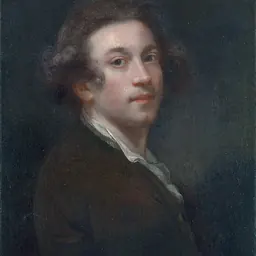


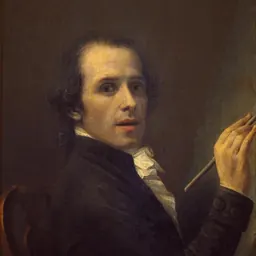
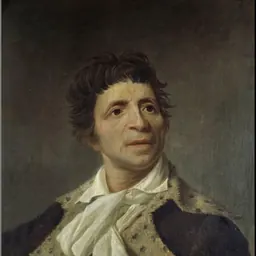
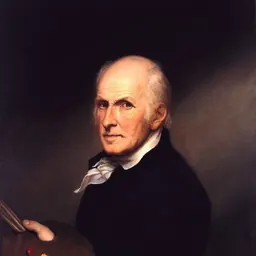
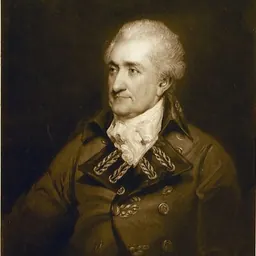

Related people
Same field, nearest in time


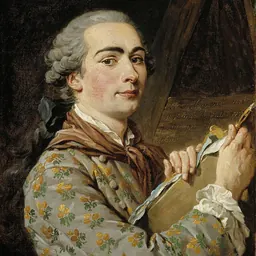
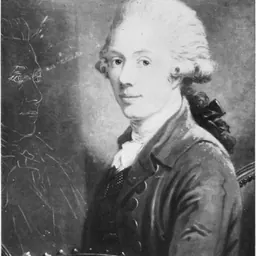

Contemporaries
People whose lives overlapped Angelica Kauffmann's





Frequently asked questions
Who was Angelica Kauffmann?
Swiss artist (1741–1807)
When was Angelica Kauffmann born?
Angelica Kauffmann was born on 30 October 1741 in Chur, Switzerland.
When did Angelica Kauffmann die?
Angelica Kauffmann died on 5 November 1807 in Rome, Austria.
What was Angelica Kauffmann's occupation?
Angelica Kauffmann was a painter, printmaker, artist and visual artist.
What nationality was Angelica Kauffmann?
Angelica Kauffmann was Swiss.
Sources & further reading
· Wikipedia: Angelica Kauffmann
Cite this page
APA: Biography.guide. (2026). Angelica Kauffmann. https://biography.guide/angelica-kauffmann/
MLA: "Angelica Kauffmann." Biography.guide, https://biography.guide/angelica-kauffmann/.
Chicago: "Angelica Kauffmann." Biography.guide. https://biography.guide/angelica-kauffmann/.
Data last updated: 2026-09-20 · Spot an error? Report a correction.
Page generated 2026-09-27 05:17 UTC