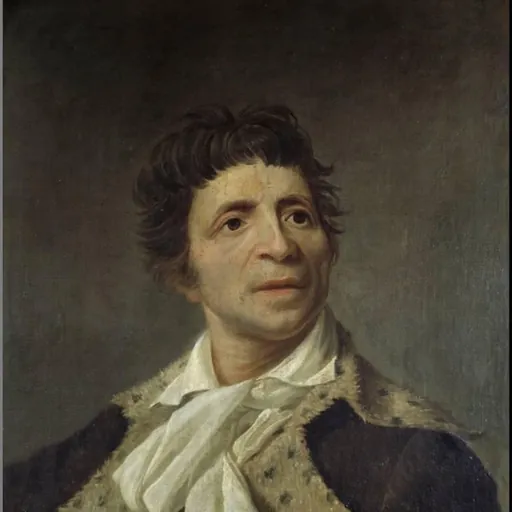
Jean-Paul Marat
Politician and journalist during the French Revolution
About Jean-Paul Marat
Lived 1743 – 1793 (aged 50). Jean-Paul Marat was a French politician, journalist and physician.
Jean-Paul Marat (, ; ; born Mara; 24 May 1743 – 13 July 1793) was a French scientist, physician, political theorist, journalist, and politician. Before the French Revolution, he pursued a career in medicine and science and published works on subjects including optics, electricity, political theory, and criminal law. During the Revolution he became one of its most prolific, radical and controversial journalists. Through his newspaper L'Ami du peuple (The Friend of the People), Marat responded rapidly to political events but also publicized complaints and grievances brought to him by ordinary citizens, presenting himself as their advocate against officials and others whom he accused of injustice or abuse. Publication reached an extraordinary intensity in 1791, when about 500 issues appeared.
Marat became closely associated with the sans-culottes and the radical politics of Paris. He did not work entirely alone, but received financial and practical assistance from a small circle of devoted supporters, including two sisters, a cook and a typesetter who lived in the same house with him. Unable to find printers willing to publish some of his more controversial writings, he established his own printing press and continued to publish despite repeated attempts by the authorities to suppress his newspaper. He frequently changed his residence and printing arrangements and spent long periods in hiding; he later described having lived underground for seven months. His presses were seized or destroyed on several occasions, but publication resumed. On 23 August 1792, he was allocated four presses from the former royal printing house for his publications.
Marat was elected to the National Convention in September 1792 and aligned with the Montagnards in their struggle against the Girondins. His journalism became notorious for increasingly violent calls for the punishment and sometimes the pre-emptive killing of those he regarded as enemies of the Revolution. Marat repeatedly justified such violence as a means of preventing greater bloodshed, at times calculating the number of lives that might be sacrificed in order to save many more. His writings and political activity have consequently remained central to debates about political violence during the Revolution, including the September Massacres. In 1793 he played an active part in the conflict that culminated in the fall of the Girondins.
On Saturday evening, 13 July 1793, Marat was assassinated by Charlotte Corday, a Girondin sympathizer, while taking a medicinal bath for a debilitating skin condition. Corday held Marat responsible for much of the violence and political disorder in France and believed that killing him would help restore peace.
Marat's assassination dramatically transformed his political image. His body was publicly displayed at the Cordeliers and Jacques-Louis David took a leading role in organizing the funeral ceremonies. On 16 July, a large procession accompanied his body through Paris to the former Cordeliers convent, where he was buried in the garden and a monument was subsequently erected over his grave. Popular societies, sections of Paris, and the Montagnards increasingly represented him as the murdered Ami du peuple and as a martyr of the Revolution. David gave this image its most enduring form in The Death of Marat.
Marat's remains were transferred to the Panthéon in September 1794, but during the Thermidorian Reaction his public cult rapidly collapsed and he was removed from the Panthéon in February 1795.
Education Marat received his early education in the city of Neuchâtel and there was a student of Jean-Élie Bertrand, who later founded the Société typographique de Neuchâtel. At 17 years of age he applied for the expedition of Jean-Baptiste Chappe d'Auteroche to Tobolsk to measure the transit of Venus, but was turned down. His first patronage was fulfilled with the wealthy Nairac family in Bordeaux, where he stayed for two years. He then moved to Paris and studied medicine without gaining any formal qualifications. After moving to France, Jean-Paul Mara francized his surname as "Marat". He worked, informally, as a doctor after moving to London in 1765 due to a fear of being "drawn into dissipation". While there he befriended the Royal Academician artist Angelica Kauffman. His social circle included Italian artists and architects who met in coffee houses around Soho. Highly ambitious, but without patronage or qualifications, he set about inserting himself into the intellectual scene.
Political, philosophical, and medical writing Marat later portrayed intellectual ambition as a defining feature of his character. In an autobiographical account, he recalled that as a child he had successively wanted to become a schoolmaster, professor, author and, by the age of twenty, a "creative genius". He described the "love of glory" as the one passion that had remained with him throughout his life.
After moving to Britain, Marat pursued medicine alongside philosophical and political writing. In 1772 he anonymously published An Essay on the Human Soul, followed in 1773 by the expanded two-volume A Philosophical Essay on Man. Around this period he lived in Newcastle upon Tyne, where he became acquainted with British radical politics. His Chains of Slavery, published in London in 1774, examined the means by which rulers could undermine political liberty. Written against the background of the agitation surrounding John Wilkes and the British general election of 1774, it attacked political corruption, restrictions on representation and the use of patronage, standing armies, censorship and other instruments of government power. Marat argued that sovereignty ultimately belonged to the people rather than the monarch, an argument influenced by Jean-Jacques Rousseau.
In 1774, Marat travelled to Amsterdam to arrange the publication of a French version of his philosophical work with the Geneva-born publisher Marc-Michel Rey, Rousseau's principal publisher. Rey published the substantially expanded work as the three-volume De l'Homme, ou des principes et des lois de l'influence de l'âme sur le corps et du corps sur l'âme in 1775–76. During his stay in the Dutch Republic he met the writer and scholar Isaac de Pinto in The Hague, who provided him with a letter of introduction to a young professor in Utrecht, though the introduction appears to have led to little.
De l'Homme brought Marat into conflict with Voltaire. Marat criticized Helvétius and Voltaire in the work; Voltaire responded with a mocking critique of Marat's philosophical arguments. Marat remembered the dispute years later, claiming in 1791 that Voltaire had been angered by the treatment he received in De l'Homme.
Marat continued to establish himself professionally as a physician. Following the publication of an account of his treatment of a case of gonorrhoea, he obtained medical referees and received an MD from the University of St Andrews in June 1775. After returning to London he published An Enquiry into the Nature, Cause, and Cure of a Singular Disease of the Eyes. In 1776 he returned to France, stopping in Geneva to visit his family, and settled in Paris. His medical reputation and the patronage of the Marquis de l'Aubespine, whose wife was among his patients, led to his appointment in June 1777 as physician to the bodyguard of the Comte d'Artois, the youngest brother of Louis XVI. The post paid 2,000 livres a year plus allowances.
Scientific writing Marat set up a laboratory in the Marquise de l'Aubespine's house with funds obtained by serving as court doctor among the aristocracy. His method was to describe in detail the meticulous series of experiments he had undertaken on a problem, seeking to explore and then exclude all possible conclusions but the one he reached.
He published works on fire and heat, electricity, and light. He published a summary of his scientific views and discoveries in Découvertes de M. Marat sur le feu, l'électricité et la lumière (English: Mr Marat's Discoveries on Fire, Electricity and Light) in 1779. He published three more detailed and extensive works that expanded on each of his areas of research.
Recherches Physiques sur le Feu The first of Marat's large-scale publications detailing his experiments and drawing conclusions from them was Recherches Physiques sur le Feu (English: Research into the Physics of Fire), which was published in 1780 with the approval of the official censors.
This publication describes 166 experiments conducted to demonstrate that fire was not, as was widely held, a material element but an "igneous fluid." He asked the Academy of Sciences to appraise his work, and it appointed a commission to do so, which reported in April 1779. The report avoided endorsing Marat's conclusions but praised his "new, precise and well-executed experiments, appropriately and ingeniously designed". Marat then published his work, with the claim that the Academy approved of its contents. Since the Academy had endorsed his methods but said nothing about his conclusions, this claim drew the ire of Antoine Lavoisier, who demanded that the Academy repudiate it. When the Academy did so, this marked the beginning of worsening relations between Marat and many of its leading members. A number of them, including Lavoisier himself, as well as Condorcet and Laplace, took a strong dislike to Marat. However, Lamarck and Lacépède wrote positively about Marat's experiments and conclusions.
Découvertes sur la Lumière In Marat's time, Newton's views on light and colour were regarded almost universally as definitive, yet Marat's explicit purpose in his second major work Découvertes sur la Lumière (Discoveries on Light) was to demonstrate that in certain key areas, Newton was wrong.
The focus of Marat's work was the study of how light bends around objects, and his main argument was that while Newton held that white light was broken down into colours by refraction, the colours were actually caused by diffraction. When a beam of sunlight shone through an aperture, passed through a prism and projected colour onto a wall, the splitting of the light into colours took place not in the prism, as Newton maintained, but at the edges of the aperture itself. Marat sought to demonstrate that there are only three primary colours, rather than seven as Newton had argued.
Once again, Marat requested the Academy of Sciences review his work, and it set up a commission to do so. Over a period of seven months, from June 1779 to January 1780, Marat performed his experiments in the presence of the commissioners so that they could appraise his methods and conclusions. The drafting of their final report was assigned to Jean-Baptiste Le Roy. The report was finally produced after many delays in May 1780, and consisted of just three short paragraphs. Significantly, the report concluded that "these experiments are so very numerous...[but]...they do not appear to us to prove what the author believes they establish". When it was published, Découvertes sur la lumière did not carry the royal approbation. According to the title page, it was printed in London, so that either, Marat could not get the official censor to approve it, or, he did not want to spend the time and effort to do so.
Recherches Physiques sur L'Électricité Marat's third major work, Recherches Physiques sur l'Électricité (English: Research on the Physics of Electricity), outlined 214 experiments. One of his major areas of interest was in electrical attraction and repulsion. Repulsion, he held, was not a basic force of nature. He addressed a number of other areas of enquiry in his work, concluding with a section on lightning rods which argued that those with pointed ends were more effective than those with blunt ends, and denouncing the idea of "earthquake rods" advocated by Pierre Bertholon de Saint-Lazare. This book was published with the censor's stamp of approval, but Marat did not seek the endorsement of the Academy of Sciences.
In April 1783, It was a polemic for penal reform which had been entered into a competition announced by the Berne Economic Society in February 1777 and backed by Frederick the Great and Voltaire. Marat was inspired by Rousseau
In the early French Revolution
Estates General and Fall of the Bastille
In 1788, the Assembly of Notables advised Louis XVI to assemble the Estates-General for the first time in 175 years. According to Marat, in the latter half of 1788 he had been deathly ill. Upon hearing of the King's decision to call together the Estates General, however, he explains that the "news had a powerful effect on me; my illness suddenly broke and my spirits revived". He strongly desired to contribute his ideas to the coming events and subsequently abandoned his career as a scientist and doctor, taking up his pen on behalf of the Third Estate. Marat claimed that this work caused a sensation throughout France, though he likely exaggerated its effect as the pamphlet mostly echoed ideas similar to many other pamphlets and cahiers circulating at the time. This was followed by a "Supplément de l'Offrande" in March, where he was less optimistic, expressing displeasure with the King's Lettres Royales of 24 January. In August 1789, he published La Constitution, ou Projet de déclaration des droits de l'homme et du citoyen, intended to influence the drafting of France's new constitution, then being debated in the National Assembly. Marat's work elicited no response from the National Assembly.
On 14 July, three days after Louis XVI dismissed Jacques Necker as his financial advisor, enraged Parisians attacked the Hotel des Invalides and the Bastille, marking the first insurrection of the French Revolution. Marat was not directly involved in the Fall of the Bastille but sought to glorify his role that day by claiming that he had intercepted a group of German soldiers on Pont Neuf. He claims that these soldiers were seeking to crush the revolution in its infancy, and that he had successfully convinced a crowd to force the soldiers to surrender their weapons. Whether or not this event actually occurred is questionable as there are no other known accounts that confirm Marat's story.
L'Ami du peuple
On 12 September 1789, Marat began his own newspaper, entitled Publiciste parisien, before changing its name four days later to L'Ami du peuple ("The People's friend"). From this position, he often attacked the most influential and powerful groups in Paris as conspirators against the Revolution, including the Commune, the Constituent Assembly, the ministers, and the Châtelet. In January 1790, he moved to the radical Cordeliers section, then under the leadership of the lawyer Danton, In May, he returned to Paris to continue publication of L'Ami du peuple and briefly ran a second newspaper in June 1790 called Le Junius français named after the notorious English polemicist Junius. This led him to call for police intervention, which resulted in the suppression of the fraudulent issues, leaving Marat the continuing sole author of L'Ami du peuple.
During this period, Marat made regular attacks on the more conservative revolutionary leaders. In a pamphlet from 26 July 1790, entitled "C'en est fait de nous" ("We're done for!"), he warned against counter-revolutionaries, advising, "five or six hundred heads cut off would have assured your repose, freedom and happiness."
Between 1789 and 1792, Marat was often forced into hiding, sometimes in the Paris sewers, where he almost certainly aggravated his debilitating chronic skin disease (possibly dermatitis herpetiformis). In January 1792, he married the 26-year-old Simonne Évrard in a common-law ceremony on his return from exile in London, having previously expressed his love for her. She was the sister-in-law of his typographer, Jean-Antoine Corne, and had lent him money and sheltered him on several occasions.
On 7 August 1792, the Council of Ministers proposed the arrest of Marat, Danton and Robespierre if they appeared at the Jacobin Club. Marat only emerged publicly on the 10 August insurrection, when the Tuileries Palace was invaded and the royal family forced to shelter within the Legislative Assembly. The spark for this uprising was the Brunswick Manifesto, which called for the crushing of the Revolution and helped to inflame popular outrage in Paris.
Committee on Surveillance
As the Paris Commune of Marat's allies achieved more influence, it formed a Committee on Surveillance which included Marat, Jacques-Nicolas Billaud-Varenne, Jean-Marie Collot d'Herbois, Georges Danton, Jean-Lambert Tallien, and Jacques-Louis David. Marat was said by Stanley Loomis to have claimed the position of its head. Ernest Belfort Bax disputed this claim, saying that on appearing once again in the upper daylight of Paris, Marat was almost immediately invited to assist the new governing body with his advice, and had a special tribune assigned to him. Marat was thus assiduous in his attendance at the Commune, although never formally a member. The Commune and the Sections of Paris, between them, had established a Comité de Surveillance, with power to add to its numbers. Into this committee Marat was, according to Bax, co-opted. They quickly decided to round up those they believed were "suspect"; the Committee voted to do so and four thousand were sent into the prisons by late August 1792. Actually the Committee, of which Marat was one of the most influential members, took the step of withdrawing from the prisons those of whose guilt, in its opinion, there was any reasonable doubt. Marat and the rest saw what was coming; the last straw to break the patience of Paris was the acquittal on Friday 31 August of Montmarin, the late Governor of Fontainebleau. Montmarin was notoriously and openly a courtier, who wished to see the allies in Paris, and his royal master reinstated, and who was proved, beyond the shadow of a doubt, to have been actively engaged in plotting to this end; yet, on being brought to trial, he was acquitted, and, as if to lend emphasis to the acquittal, the judge himself, descending from the bench, gave him his arm as he walked out of court. An unsuccessful attempt was even made to deprive the Commune of its powers. Forty-eight hours later, the notorious September massacres began.
Those arrangements would include a collection of mercenaries grouped as "Marsellais" though they were "foreign vagabonds, dregs of all nations, Genosee, Corsicans and Greeks led by a Pole named Lazowski." Added to these were convicted murderers and those imprisoned for other violent crimes, released in time to join the "Marsellais" at the center of the bloodlettings. At times those enacting violence were joined by mobs of locals, some of whom had armed themselves in preparation for a defense of the city National Guardsmen and some fédérés. In some cases makeshift "courts" were set-up, prisoners were pronounced "free" or "guilty" then all were led to a central courtyard where they were bludgeoned, hacked, speared, and decapitated. In other prisons, small bands of mercenaries entered cells which had held murderers days before, who turned their craft on the innocents brought in by the Committee, some as young as 10.
On 3 September, the second day of the massacres, the Committee of Surveillance of the Commune published a circular that called on provincial Patriots to defend Paris and asked that, before leaving their homes, they eliminate counter-revolutionaries. Authored by Marat as head of the Committee, signed by him and circulated to the provinces, it hailed the rounding up and killing of political enemies going on in Paris as a model for the provinces. While Georges Lefebvre maintained collective mentality was sufficient explanation for the mass killing, Stanley Loomis says this "is their excuse or justification".
The Girondins then made a number of copies of this circular, but there is no evidence that it had any effect. Marat himself did not participate in the violence of the massacres, but rather the Sections of Paris had begun to act of themselves. Marat and his Committee of Supervision at most took the control of the movement which had already begun spontaneously. Whether Marat played a part in the cause of the massacres is still continually debated. It can be said that there was a continuous goading on of the tribunals to definite and decided action. In No. 679 of L'Ami du Peuple we have the following advice: Guard the King from view, put a price on the heads of the fugitive Capets, arm all the citizens, form a camp near Paris, press forward the sale of the goods of the ‘emigrants,’ and recompense the unfortunates who have taken part in the conquest of the Tuileries, invite the troops of the line to name their officers, guard the provisions, do not miss a word of this last advice, press the judgment of the traitors imprisoned in the Abbaye... if the sword of justice do at last but strike conspirators and prevaricators, we shall no longer hear popular executions spoken of, cruel resource which the law of necessity can alone commend to a people reduced to despair, but which the voluntary sleep of the laws always justifies. Danton at the same moment was urging from the tribune the necessity of the prompt appointment of a court to try traitors, as the only alternative to the popular justice of the streets. Maximilien Robespierre, Danton and Marat all stressed the necessity of a tribunal that would judge these crimes. Robespierre intervened on 15 August, as a delegate of the Commune, and proclaimed: "Since 10 August, the just vengeance of the people has not yet been satisfied." According to Bax, the September massacres were the result of the efforts of the Moderate party to screen men who were openly plotting the overthrow of the Revolution.
It was enough for the Legislative Assembly, at the vigorous request of the Commune, to issue a statement to the French people on 4 September in which it promised "that it would fight with all its powers against the king and the royal government" so that the slaughter would end the same day and Parisians would go to the front. The Battle of Valmy (20 September 1792) was the first victory over their enemy since the beginning of the war. Johann Wolfgang von Goethe, an admirer of the scientific work of Dr. Marat, said, "At that place, on that day, a new era in world history began. It is the first victory of the people over the kings."
National Convention
"Marat's Triumph": a popular engraving of Marat borne away by a joyous crowd following his acquittal. thumb
Marat was elected to the National Convention in September 1792 as one of 26 Paris deputies, although he belonged to no party. When France was declared a republic on 22 September, Marat renamed his L'Ami du peuple as Le Journal de la République française ("Journal of the French Republic"). His stance during the trial of the deposed king Louis XVI was unique. He declared it unfair to accuse Louis of anything before his acceptance of the French Constitution of 1791, and although implacably, he said, believing that the monarch's death would be good for the people, defended Guillaume-Chrétien de Lamoignon de Malesherbes, the King's counsel, as a "sage et respectable vieillard" ("wise and respected old man").
In his Journal de la République française, Marat was also a persistent critic of General Dumouriez. He attacked Dumouriez's political conduct in the Austrian Netherlands and his plans for an invasion of the Dutch Republic, which Marat associated with the ambitions of the House of Orléans.
On 21 January 1793, Louis XVI was guillotined, which caused political turmoil. From January to May, Marat fought bitterly against the Girondins, whom he believed to be covert enemies of republicanism. Marat's hatred and suspicion of the Girondins became increasingly heated which led him to call for the use of violent tactics against them. He cried that France needed a chief, "a military Tribune". The Girondins fought back and demanded that Marat be tried before the Revolutionary Tribunal. On 13 April, the Convention voted to indict him over a circular calling "to arms" against traitors in the government and the Convention. Marat initially remained out of sight, but surrendered himself to the authorities on 23 April. On 24 April, he became the first representative of the people to be brought before the Revolutionary Tribunal. Marat defended himself without counsel, and the jury acquitted him, finding that his writings expressed a "just indignation". He was acclaimed by the crowd and carried in triumph back to the Convention.
Assassination Paris historique. Maison de Marat dans Rue de l'École-de-Médecine (Paris) thumb
Marat played an active role in the insurrection of 31 May–2 June 1793 that brought about the fall of the Girondins. On 1 June, he went to the Hôtel de Ville and urged the people to remain mobilized, and reportedly rang the tocsin. Later that day, when the Committee of Public Safety proposed taking three days to consider the demand for the arrest of the Girondin deputies, Marat demanded a decision within one day. On 2 June, the Convention, surrounded by National Guardsmen under François Hanriot, ordered the arrest of the leading Girondins. Marat, who was presiding over the Convention, took an active part in determining which deputies were to be arrested, removing several names from the proposed list.
On 13 July, Charlotte Corday, a young woman from Caen, came to Marat's home claiming to have information about the Girondins who had fled to Normandy. Marat, whose illness confined him to a medicinal bath for much of the day, received her there. Corday gave him information about the Girondins in Caen and named several of them. According to her later testimony, Marat told her that they would soon be guillotined in Paris. Corday later stated that these words decided his fate. Corday then drew a kitchen knife concealed in her clothing and stabbed Marat once in the chest. Mortally wounded, he called to Simonne Évrard, "Aidez-moi, ma chère amie!" ("Help me, my dear friend!"), and died shortly afterwards. Corday was tried before the Revolutionary Tribunal on 17 July 1793. During her interrogation and trial, she maintained that she had acted alone and denied that the Girondins had been involved in a conspiracy to assassinate Marat. She was convicted of the murder and guillotined later that day.
Memory in the Revolution
Marat's assassination led to his apotheosis. The painter Jacques-Louis David, a member of one of the two "Great Committees" (the Committee of General Security), was asked to organise a grand funeral. David was also asked to paint Marat's death, and took up the task of immortalising him in the painting The Death of Marat. As a result of this work, David was later criticised as glorifying the Jacobin's death.
The entire National Convention attended Marat's funeral, and he was buried under a weeping willow in the garden of the former Club des Cordeliers (former Couvent des Cordeliers). On his tomb, the inscription on a plaque read, "Unité, Indivisibilité de la République, Liberté, Égalité, Fraternité ou la mort." His remains were transferred to the Panthéon on 21 September 1794 and his near messianic role in the Revolution was confirmed with the elegy: Like Jesus, Marat loved ardently the people, and only them. Like Jesus, Marat hated kings, nobles, priests, rogues and, like Jesus, he never stopped fighting against these plagues of the people. The eulogy was given by the Marquis de Sade, delegate of the Section Piques and an ally of Marat's faction in the National Convention.
On 19 November, the port city of Le Havre-de-Grâce changed its name to Le Havre-de-Marat and then Le Havre-Marat. When the Jacobins started their dechristianisation campaign to set up the Cult of Reason of Hébert and Chaumette and later the Cult of the Supreme Being of the Committee of Public Safety, Marat was made a quasi-saint, and his bust often replaced crucifixes in the former churches of Paris.
After the Thermidorian Reaction, Marat's reputation decreased. On 13 January 1795, Le Havre-Marat became simply Le Havre, the name it bears today. In February, his coffin was removed from the Panthéon and his busts and sculptures were destroyed. The 4 February 1795 (16 Pluviôse) issue of Le Moniteur Universel reported how, two days earlier, "his busts had been knocked off their pedestals in several theatres and that some children had carried one of these busts about the streets, insulting it [before] dumping it in the rue Montmartre sewer to shouts of 'Marat, voilà ton Panthéon !' [Marat, here is your Panthéon] His final resting place is the cemetery of the church of Saint-Étienne-du-Mont. Another was created in 2013 for the Musée de la Révolution française.
He continued to be held in high regard in the Soviet Union. Marat became a common name, and Marat Fjord in Severnaya Zemlya was named after him. Russian battleship Petropavlovsk was renamed Marat in 1921. A street in the centre of Sevastopol was named after Marat on 3 January 1921, shortly after the Bolsheviks took over the city.
Skin disease Described during his time as a man "short in stature, deformed in person, and hideous in face," Marat has long been noted for physical irregularities. The nature of Marat's debilitating skin disease, in particular, has been an object of ongoing medical interest. In the 19th century Thomas Carlyle alleged that the cause was syphilis, though this is very unlikely as syphilitic rashes are generally neither itchy nor as long-lasting as Marat's skin condition was. Josef E. Jelinek noted that his skin disease was intensely itchy, blistering, began in the perianal region, and was associated with weight loss leading to emaciation. He was sick with it for the three years prior to his assassination, and spent most of this time in his bathtub. Various minerals and medicines were present in his bath while he soaked to help ease the pain caused by the disease. A bandana wrapped around his head was soaked in vinegar to reduce the severity of his discomfort. Jelinek's diagnosis is dermatitis herpetiformis. The tub was in the shape of an old-fashioned high-buttoned shoe and had a copper lining.
Works A Philosophical Essay on Man (1773) (in English) The Chains of Slavery (1774) (in English) An Essay on Gleets &c. (1775) (in English) Enquiry into the Nature, Cause, and Cure of a Singular Disease of the Eyes (1776) (in English) De l'Homme (1776) (translation of his 1773 English work) Découvertes de M. Marat sur le feu, l'électricité et la lumière (1779) Plan de Législation Criminelle (1780) Recherches physiques sur le feu (1780) Découvertes de M. Marat sur la lumière, constatées par une suite d'expériences nouvelles (1780) Recherches physiques sur l'électricité, &c (1782) Mémoire sur l'électricité médicale (1783) Notions élémentaires d'optique (1784) Lettres de l'observateur Bon Sens à M. de M sur la fatale catastrophe des infortunés Pilatre de Rozier et Ronzain, les aéronautes et l'aérostation (1785) Observations de M. l'amateur Avec à M. l'abbé Sans . . . &c., (1785) Éloge de Montesquieu : présenté à l'Académie de Bordeaux, le 28 mars 1785 / par J.-P. Maratz; publié avec une introduction, par Arthur de Brézetz...Éloge de Montesquieu (1785) (provincial Academy competition entry first published 1883 by M. de Bresetz) Optique de Newton (1787) Mémoires académiques (1788) Offrande à la Patrie (1789) (pamphlet) Constitution, ou projet de déclaration des Droits de l'Homme et du Citoyen (1789) (pamphlet) Les Charlatans modernes, ou lettres sur le charlatanisme académique (L'Ami du Peuple, 1791) (pamphlet) Les chaînes de l'Esclavage (1792) (translation of his 1774 English work) Les Aventures du jeune comte Potowski (unpublished manuscript first published in 1847 by Paul Lacroix) Lettres polonaises (unpublished manuscript first printed in English in 1905; recently translated into French but authenticity disputed) La Correspondance de Marat (published in 1908 by Charles Vellay)
Don’t just read it —
keep it.
Full-length biographies made to live with: read them, listen on the way to work, watch them tonight.
- E-book
- Audio
- Video
Instant download · yours to keep · every purchase keeps this site free
Important facts
People in Jean-Paul Marat's life
Named in this biography and alive at the same time



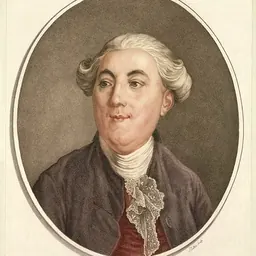
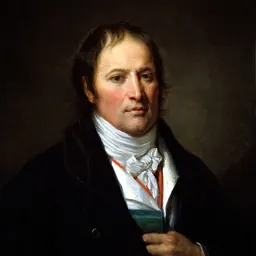
Related people
Same field, nearest in time
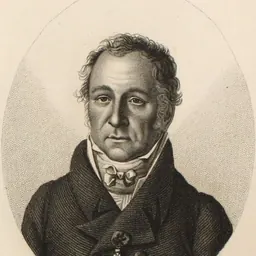

Contemporaries
People whose lives overlapped Jean-Paul Marat's
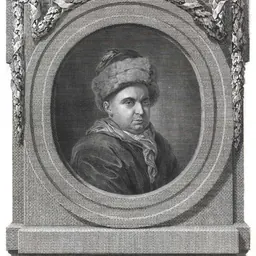




Frequently asked questions
Who was Jean-Paul Marat?
politician and journalist during the French Revolution (1743-1793)
When was Jean-Paul Marat born?
Jean-Paul Marat was born on 24 May 1743 in Boudry.
When did Jean-Paul Marat die?
Jean-Paul Marat died on 13 July 1793 in Paris.
What was Jean-Paul Marat's occupation?
Jean-Paul Marat was a politician, journalist and physician.
What nationality was Jean-Paul Marat?
Jean-Paul Marat was French.
Sources & further reading
Cite this page
APA: Biography.guide. (2026). Jean-Paul Marat. https://biography.guide/jean-paul-marat/
MLA: "Jean-Paul Marat." Biography.guide, https://biography.guide/jean-paul-marat/.
Chicago: "Jean-Paul Marat." Biography.guide. https://biography.guide/jean-paul-marat/.
Data last updated: 2026-09-22 · Spot an error? Report a correction.
Portrait: Wikimedia Commons · author & licence
Page generated 2026-09-27 05:03 UTC