
About Philip Tisdall
Lived 1703 – 1777 (aged 74). Philip Tisdall was a politician.
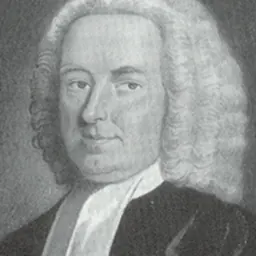
Philip Tisdall SL (1 March 1703 – 11 September 1777) was an Irish lawyer and politician, who held the office of Attorney-General for Ireland. He was for many years a leading figure in the Irish Government.
Background He was born in County Louth, son of Richard Tisdall (died 1742), who was MP for Dundalk in 1703–1713 and for County Louth in 1717–1727, by his wife Marian Boyle, daughter of Richard Boyle, MP, a cousin of the Earl of Cork. He quickly became one of the leaders of the Bar, partly through his legal ability and partly through his marriage into the wealthy and influential Singleton family of Drogheda, and was reputed to earn £30,000 a year.
In 1742, he was appointed Third Serjeant, then Solicitor-General in 1751 and Attorney-General in 1760. He enjoyed the crucial support of George Stone, Archbishop of Armagh. He was also appointed judge of the Prerogative Court of Ireland, an office he held from 1745 to his death, but failed to become Master of the Rolls in Ireland as he had hoped to on the death of his wife's uncle, Henry Singleton, in 1759. To his credit, Townshend recognised that Tisdall's support was still an asset to the Government, and made great efforts to conciliate him.
Townshend lobbied hard for Tisdall to be appointed Lord Chancellor of Ireland, but to his bitter disappointment he came up against the inflexible British reluctance, which endured for many years afterwards, to appoint an Irishman to this crucial office.
Tisdall retained the confidence of successive Lords Lieutenants, and, in 1777, despite his age and failing health, he was asked to resume his role as Government leader in the House of Commons: he agreed, but died at Spa, Belgium on 11 September the same year.
Family
He married in 1736 Mary Singleton, daughter of the Rev. Rowland Singleton and Elizabeth Graham, and niece and co-heiress of Henry Singleton, Chief Justice of the Irish Common Pleas, a marriage which brought him both wealth and influence. They had three daughters:
Elizabeth, who married Colonel Hugh Morgan of Cottlestown, County Sligo, and had issue Alicia, who married Thomas Meredyth: they were the parents of Sir John Meredyth, first of the Meredyth baronets of Carlandstown, County Meath Mary, who died unmarried.
Mary Singleton Tisdall (nicknamed "la belle Marie") was renowned for her beauty and as a patron of the arts. In particular, she was one of the principal Irish patrons of the celebrated Swiss painter Angelica Kauffman, who visited the Tisdalls regularly in Dublin in the early 1770s and painted Philip, Mary and their daughters.
Character
He was strikingly dark in complexion, hence his nicknames "Black Phil" and "Philip the Moor", and was described as "grave in manner and sardonic in temper". Despite his somewhat forbidding appearance, he was a hospitable character, who was noted for entertaining lavishly, even when he was well into his seventies, both at his Dublin house in South Leinster Street, and his country house at Stillorgan (now a suburb of Dublin). Even by Irish standards, he was a heavy drinker, although accounts of his consuming eight bottles of wine a day are barely credible (admittedly a bottle of wine then held a good deal less than its modern equivalent). John Scott, 1st Earl of Clonmell, who succeeded him as Attorney General, wrote that he would have lived longer if he had adopted a more sedate lifestyle in his later years (although Scott did not take his own good advice, dying from the effects of over-indulgence in food and drink at fifty-eight). Tisdall did much to foster the career of the rising young lawyer and orator Walter Hussey Burgh, and it was through his influence that Burgh became Prime Serjeant in 1776.
By his own wish, all his papers were destroyed after his death.
Don’t just read it —
keep it.
Full-length biographies made to live with: read them, listen on the way to work, watch them tonight.
- E-book
- Audio
- Video
Instant download · yours to keep · every purchase keeps this site free
Important facts
People in Philip Tisdall's life
Named in this biography and alive at the same time




Related people
Same field, nearest in time



Contemporaries
People whose lives overlapped Philip Tisdall's


Frequently asked questions
Who was Philip Tisdall?
Irish politician
When was Philip Tisdall born?
Philip Tisdall was born on 1 March 1703.
When did Philip Tisdall die?
Philip Tisdall died on 11 September 1777.
What was Philip Tisdall's occupation?
Philip Tisdall was a politician.
Sources & further reading
Cite this page
APA: Biography.guide. (2026). Philip Tisdall. https://biography.guide/philip-tisdall/
MLA: "Philip Tisdall." Biography.guide, https://biography.guide/philip-tisdall/.
Chicago: "Philip Tisdall." Biography.guide. https://biography.guide/philip-tisdall/.
Data last updated: 2026-09-20 · Spot an error? Report a correction.
Page generated 2026-09-27 05:32 UTC