
About Alicia Boole Stott
Lived 1860 – 1940 (aged 80). Alicia Boole Stott was a British and Irish mathematician.
Alicia Boole Stott (8 June 1860 – 17 December 1940) was a British mathematician. She made a number of contributions to the field and was awarded an honorary doctorate from the University of Groningen. Facing poverty, Alicia's mother moved the family to London, where Mary became the librarian at Queen's College, London. Alicia, unlike her sisters, remained in Cork and stayed with her grandmother and great uncle. When Alicia was 11 she rejoined her mother and sisters in London.
Mary researched mathematics and educational methods aside from her work as a teacher, and she later wrote about the use of geometric models for early childhood mathematical education. Irene Polo-Blanco suggests it is likely that Mary used these methods in teaching math to her daughters. At the time, formal mathematical education was not available or encouraged for most women, and Alicia mostly learned from her mother and the first two books of Euclid.
Stott was first exposed to geometric models of higher-dimensional spaces by her brother-in-law Charles Howard Hinton when she was 17, and she developed the ability to visualise four-dimensional space. Stott and Schoute also collaborated on papers published in 1908 and 1910. The pair presented Stott's models in 1907 at the annual British Association of the Advancement of Science meeting in Leicester. In 1912 at the 5th International Congress of Mathematicians in Cambridge, Schoute presented his work on semiregular polytopes and credited Stott with the roots of his proof. After Schoute's death in 1913 Alicia took a hiatus from mathematical work.
In 1930 she was introduced by her nephew Geoffrey Ingram Taylor to Harold Scott MacDonald Coxeter and they worked together on various problems.
Death and legacy Alicia Boole Stott died in Middlesex in 1940. In spring 2001, a paper roll of coloured drawings of polyhedra was found at Groningen University. Though unsigned, it was immediately recognised as Alicia's work.
Stott's models are kept at the University of Groningen and The Faulkes Institute for Geometry at Cambridge.
Don’t just read it —
keep it.
Full-length biographies made to live with: read them, listen on the way to work, watch them tonight.
- E-book
- Audio
- Video
Instant download · yours to keep · every purchase keeps this site free
Important facts
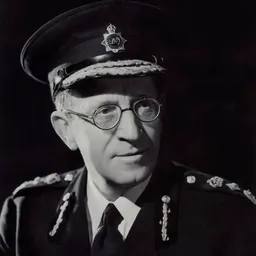
People in Alicia Boole Stott's life
Named in this biography and alive at the same time



Related people
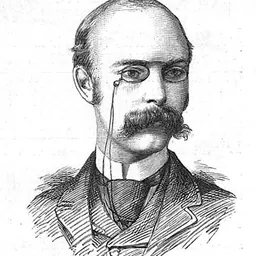
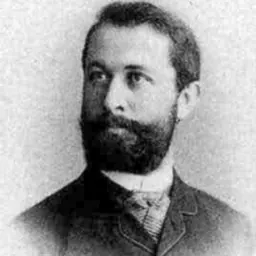
Same field, nearest in time


Contemporaries
People whose lives overlapped Alicia Boole Stott's

Frequently asked questions
Who was Alicia Boole Stott?
Irish-English mathematician (1860-1940)
When was Alicia Boole Stott born?
Alicia Boole Stott was born on 8 June 1860 in Cork.
When did Alicia Boole Stott die?
Alicia Boole Stott died on 17 December 1940 in Highgate, England.
What was Alicia Boole Stott's occupation?
Alicia Boole Stott was a mathematician.
What nationality was Alicia Boole Stott?
Alicia Boole Stott was British and Irish.
Sources & further reading
· Wikipedia: Alicia Boole Stott
Cite this page
APA: Biography.guide. (2026). Alicia Boole Stott. https://biography.guide/alicia-boole-stott/
MLA: "Alicia Boole Stott." Biography.guide, https://biography.guide/alicia-boole-stott/.
Chicago: "Alicia Boole Stott." Biography.guide. https://biography.guide/alicia-boole-stott/.
Data last updated: 2026-09-20 · Spot an error? Report a correction.
Page generated 2026-09-27 05:08 UTC