
About Howard Hinton
Lived 1867 – 1948 (aged 80). Howard Hinton was an art collector.
Howard Hinton (10 November 1866 – 23 January 1948) was an Australian art patron and benefactor. A thwarted artist due to shortsightedness, he visited many of the great galleries of Europe in his youth. At age 24 he migrated to Australia and quickly associated with leading artists of the Heidelberg School and the bohemian artists' camps around Sydney Harbour in the 1890s. He built a successful career in shipping and, along with a family inheritance, used his moderate wealth to support waves of Australian artists in the first half of the twentieth century. Through extensive donations to the Art Gallery of New South Wales and particularly the Armidale Teachers' College he became one of the greatest benefactors in Australian art history .
Early life Born in Croydon, Surrey, November 10, 1866 Hinton's early schooling was at Mr Hester's school, Margate, and Mr Southee's school, Ramsgate, before he attended Whitgift Grammar School, South Croydon, until fifth form in 1883. His passion for art developed at an early age. As a youth he took parentally-financed vacations with his brother to some of the great galleries of Europe. He even attended art classes at Continental schools, but acute near-sightedness frustrated any hope of becoming an artist himself.
Howard's father, Thomas, was a commission merchant, a broker trading for marginal returns. Howard was given early experience in this trade which was to be the basis for his future career. As a young man Hinton was rather plump, pink, short-sighted, wearing very thick optical lenses, diffident in manner, shy, and he "only really dropped his guard with his closest friends." Through the shipping agent Dangar, Gedye & Co. he gained employment with merchant agents W. & A. McArthur Ltd. in Sydney. and began buying paintings. His art purchasing was predominantly based in Sydney, on Sydney exhibitions, galleries and studios. He visited artists' studios and was a familiar figure at galleries, openings and showrooms. He used his wealth to acquire their work despite having little display or storage space in his boarding-house room. He famously kept fewer than a dozen cherished works on the walls – and a similar number of Norman Lindsay watercolours and drawings in a metal trunk by his bed – whilst eventually giving in excess of 1,500 works to institutions. Norman Lindsay wrote that Hinton "worked hard at his business career only to acquire money to devote to art, spending nothing on himself", and Leon Gellert wrote that Hinton "never "donated" his gifts. They were transmitted – ever so gently, as though by sleight-of-hand."
By 1935 the Melbourne Age reported glowingly that "Mr. Howard Hinton's benefactions to the National Art Gallery and to the gallery at Armidale now amount in value to approximately £100,000. No man living in Australia during his lifetime has spent so much money among living artists and helped art along in the way it should go as this fine patron, concerning whose art appreciation and assistance to artists, as well as creating a love of fine art among his fellow men, too much cannot be said."
National Art Gallery of New South Wales Hinton made his first gift of artworks to the Art Gallery of New South Wales (then the National Art Gallery of New South Wales) in 1914. He continued giving to the gallery and was made a trustee in 1919, a position he held till his death in 1948, by which time he had donated 122 pictures including important works by E. Phillips Fox, Elioth Gruner, George Lambert, Roberts and Streeton. During his retirement holiday to England and Europe in 1928 he purchased and forwarded several paintings as further donations to the gallery. However, as these were not Australian works and acquired without consultation, his fellow Trustees decided to defer acceptance. Hinton offered more European works in 1929, but was informed that any such paintings must be approved before being acquired for donation. It is speculated that Hinton fell out with his fellow Trustees over this issue, and that this led to him channeling his future donations towards a different institution – the Armidale Teachers' College – but in fact he continued as a Trustee of the Art Gallery of New South Wales and gave further (Australian) paintings which were accepted.
Armidale Teachers' College These constrictions on his ability to donate works of his choice to the state gallery, however, did encourage him to look elsewhere. While still in England, he wrote his enquiry to the Minister of Education, David Drummond, who had ministerial responsibility for the gallery. Drummond was the NSW state member for Armidale and asked the Director of Education in New South Wales (NSW), S. H. Smith, to write to Hinton suggesting the recently founded Armidale Teachers' College, the first teachers' college built outside the Sydney metropolitan area to train country teachers for country service, as a destination for his donations. Hinton agreed, and the Principal of the Teachers' College, C. B. Newling, wrote to him in London and "profusely accepted the donation." His beliefs were in keeping with the view of art as a means of inculcating civilising values.
Hinton has been described by Arthur Streeton and Norman Lindsay as one of Australia's great art benefactors alongside Alfred Felton, David Scott Mitchell and Sir Baldwin Spencer. By the end of his life in 1948 he had donated over a thousand works to the Teachers' College in Armidale representing the work of hundreds of Australian artists including Arthur Streeton, Tom Roberts, Nora Heysen, Hans Heysen, Elioth Gruner, Margaret Preston, William Dobell, Adrian Feint, Ethel Spowers, Roy De Maistre, Thea Proctor, Lloyd Rees, Lance Solomon, and the Lindsay family. Barry Pearce, former head curator of Australian Art at the Art Gallery of New South Wales described the Hinton donation as including "many magnificent Australian landscapes by a range of major and minor artists ... crowned by such masterpieces as Arthur Streeton's Morning Sketch (aka McMahon's Point Ferry) 1890 and Near Streeton's camp at Sirius Cove, 1892 and, the jewel in the crown, Mosman's Bay, 1894 by Tom Roberts."
A complete list of works donated to both the Art Gallery of New South Wales and the Armidale Teachers' College was published in 1951.
New England Regional Art Museum (NERAM) In 1971 the Armidale Teachers' College became a College of Advanced Education and began offering a range of courses beyond teaching. By the 1970s it was evident that the valuable and significant works donated by Hinton required levels of secure housing, curatorship, preservation and environmental management not available within the open doors and corridors of a public college. The Armidale community began a long-term fundraising effort to build a dedicated museum, and with matching grants from the NSW State government the New England Regional Art Museum (NERAM) was formally opened by the Premier of NSW, the Honourable Neville Wran QC, on 26 March 1983.
Hinton Collection NERAM now houses the Hinton Collection and in February 2018 a permanent exhibition, Hinton: Treasures of Australian art, featuring over a hundred and thirty of the most iconic works from the collection, was opened in the museum's East Gallery by former Director of the Art Gallery of New South Wales, Edmund Capon. Works remain on display for limited periods at a time to avoid damage from extended exposure.
Death Howard Hinton died of severe pneumonia, heart failure, and the ravages of Parkinson's disease on 23 January 1948. He was cremated with Anglican rites after a funeral service at his church, St James, King Street, Sydney. North Sydney Council established a plaque commemorating the site of Hinton's boarding house residence Hazelhurst as part of its Heritage Plaques Walk 4: Military Road to Cremorne Point.
Don’t just read it —
keep it.
Full-length biographies made to live with: read them, listen on the way to work, watch them tonight.
- E-book
- Audio
- Video
Instant download · yours to keep · every purchase keeps this site free
Important facts
People in Howard Hinton's life
Named in this biography and alive at the same time



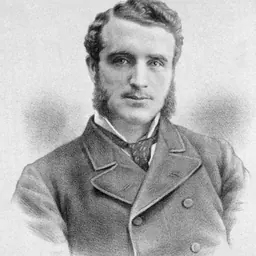


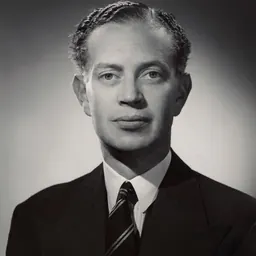
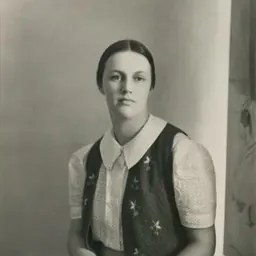
Related people
Same field, nearest in time
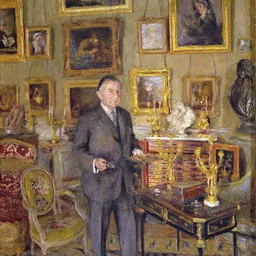


Contemporaries
People whose lives overlapped Howard Hinton's



Frequently asked questions
Who was Howard Hinton?
(1867-1948) company director and patron of art
When was Howard Hinton born?
Howard Hinton was born on 10 November 1867 in Croydon.
When did Howard Hinton die?
Howard Hinton died on 23 January 1948 in Sydney.
What was Howard Hinton's occupation?
Howard Hinton was an art collector.
Sources & further reading
· DBpedia: Howard Hinton (art patron)
Cite this page
APA: Biography.guide. (2026). Howard Hinton. https://biography.guide/howard-hinton/
MLA: "Howard Hinton." Biography.guide, https://biography.guide/howard-hinton/.
Chicago: "Howard Hinton." Biography.guide. https://biography.guide/howard-hinton/.
Data last updated: 2026-09-20 · Spot an error? Report a correction.
Page generated 2026-09-27 05:16 UTC