
Geoffrey Ingram Taylor
British mathematician and physicist
About Geoffrey Ingram Taylor
Lived 1886 – 1975 (aged 89). Geoffrey Ingram Taylor was a British physicist, engineer, mathematician and meteorologist, known for Anchor, Beltrami flow and Dislocation.
Sir Geoffrey Ingram Taylor OM FRS FRSE (7 March 1886 – 27 June 1975) was a British physicist, who made instrumental contributions to fluid dynamics and wave theory.
Early life and education Taylor was born in St. John's Wood, London. His father, Edward Ingram Taylor, was an artist, and his mother, Margaret Boole, came from a family of mathematicians (his aunt was Alicia Boole Stott and his grandfather was George Boole). As a child he was fascinated by science after attending the Royal Institution Christmas Lectures, and performed experiments using paint rollers and sticky-tape.
Taylor read mathematics and physics at Trinity College, Cambridge from 1905 to 1908. He won several scholarships and prizes at Cambridge, one of which enabled him to study under J. J. Thomson. The interference effects were produced with light from a gas light, attenuated through a series of dark glass plates, diffracting around a sewing needle. Three months were required to produce a sufficient exposure of the photographic plate. The paper does not mention quanta of light (photons) and does not reference Einstein's 1905 paper on the photoelectric effect, but today the result can be interpreted by saying that less than one photon on average was present at a time.
Once it became widely accepted in around 1927 that the electromagnetic field was quantized, Taylor's experiment began to be presented in pedagogical treatments as evidence that interference effects with light cannot be interpreted in terms of one photon interfering with another photon—that, in fact, a single photon's probability amplitudes do interfere by going through both slits of a double-slit apparatus. Modern understanding of the subject has shown that the conditions in Taylor's experiment were not sufficient to demonstrate this, because the light source was not a single-photon source, but the experiment was reproduced in 1986 using a single-photon source, and the same result was obtained.
He followed this up with work on shock waves, winning a Smith's Prize. In 1910 he was elected to a Fellowship at Trinity College, and the following year he was appointed to a meteorology post, becoming Reader in Dynamical Meteorology. His work on turbulence in the atmosphere led to the publication of "Turbulent motion in fluids", which won him the Adams Prize in 1915. In 1913 Taylor served as a meteorologist aboard the Ice Patrol vessel Scotia, where his observations formed the basis of his later work on a theoretical model of mixing of the air. One of these, on "why ships roll in a rough sea", was the first RI Christmas Lecture to be televised, by the BBC.
Manhattan Project During World War II, Taylor again applied his expertise to military problems such as the propagation of blast waves, studying both waves in air and underwater explosions. Independently of two other scientists in the US and the Soviet Union, he devised what's now called Taylor–von Neumann–Sedov blast wave.
Taylor was sent to the United States in 1944–1945 as part of the British delegation to the Manhattan Project. At Los Alamos, Taylor helped solve implosion instability problems in the development of atomic weapons, particularly the plutonium bomb used at Nagasaki on 9 August 1945.
In 1944 he also received his knighthood and the Copley Medal from the Royal Society. He was elected to the United States National Academy of Sciences the following year.
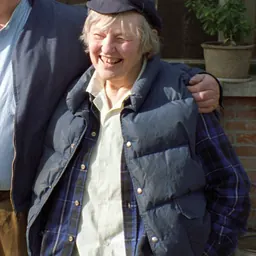
Taylor was present at the Trinity nuclear test, July 16, 1945, as part of General Leslie Groves' "VIP List" of 10 people who observed the test from Compania Hill, about 20 miles (32 km) northwest of the shot tower. By coincidence, Joan Hinton, another direct descendant of the mathematician George Boole, had been working on the same project and witnessed the event in an unofficial capacity. The cousins met at the time but later followed different paths. Joan, strongly opposed to nuclear weapons, defected to Mao's China, while Taylor maintained that political policy was not within the remit of the scientist.
In 1950, he published two papers estimating the yield of the explosion using the Buckingham Pi theorem, and high speed photography stills from that test, bearing timestamps and physical scale of the blast radius, which had been published in Life magazine. He gave two estimates of 16.8 and 23.7 kt, close to the accepted value of 20 kt, which was still highly classified at that time.
Later life Taylor continued his research after the war, serving on the Aeronautical Research Committee and working on the development of supersonic aircraft. Though he officially retired in 1952, he continued research for the next twenty years, concentrating on problems that could be attacked using simple equipment. This led to such advances as a method for measuring the second coefficient of viscosity. Taylor devised an incompressible liquid with separated gas bubbles suspended in it. The dissipation of the gas in the liquid during expansion was a consequence of the shear viscosity of the liquid. Thus the bulk viscosity could easily be calculated. His other late work included the longitudinal dispersion in flow in tubes, movement through porous surfaces, and the dynamics of thin sheets of liquids.
Personal life
Taylor married Grace Stephanie Frances Ravenhill, a school teacher in 1925. They stayed together until Stephanie's death in 1967. Taylor suffered a severe stroke in 1972 which effectively put an end to his work. He died in Cambridge in 1975. Order of Merit (14 July 1969), Monarch of the United Kingdom Honorary member (1966), American Society of Mechanical Engineers Franklin Medal (1962), Franklin Institute Kelvin Gold Medal (1959), Institution of Electrical Engineers Timoshenko Medal (1958), American Society of Mechanical Engineers De Morgan Medal (1956), London Mathematical Society Member, American Academy of Arts and Sciences (1956) International Member of the American Philosophical Society (1955) Wilhelm Exner Medal (1954), Austrian Trade Association (Österreichischer Gewerbeverein) Symons Gold Medal (1951), Royal Meteorological Society Knight Bachelor (1944), Monarch of the United Kingdom Copley Medal (1944), Royal Society Royal Medal (1933), Royal Society Bakerian Medal (1923), Royal Society FRS (1919) Adams Prize (1915), University of Cambridge Smith's Prize (1910), University of Cambridge
Don’t just read it —
keep it.
Full-length biographies made to live with: read them, listen on the way to work, watch them tonight.
- E-book
- Audio
- Video
Instant download · yours to keep · every purchase keeps this site free
Important facts
more
Plasticity (physics), Rayleigh–Taylor instability, Saffman–Taylor instability, Schneider flow, Taylor column, Taylor cone, Taylor dispersion, Taylor microscale, Taylor number, Taylor scraping flow, Taylor–Couette flow, Taylor–Culick flow, Taylor–Goldstein equation, Taylor–Green vortex, Taylor–Proudman theorem, Taylor–von Neumann–Sedov blast wave, Zeldovich–Taylor flowPeople in Geoffrey Ingram Taylor's life
Named in this biography and alive at the same time







Related people
Same field, nearest in time
Contemporaries
People whose lives overlapped Geoffrey Ingram Taylor's


Frequently asked questions
Who was Geoffrey Ingram Taylor?
British mathematician and physicist (1886-1975)
When was Geoffrey Ingram Taylor born?
Geoffrey Ingram Taylor was born on 7 March 1886 in St John's Wood, London.
When did Geoffrey Ingram Taylor die?
Geoffrey Ingram Taylor died on 27 June 1975 in Cambridge.
What was Geoffrey Ingram Taylor's occupation?
Geoffrey Ingram Taylor was a physicist, engineer, mathematician and meteorologist.
What was Geoffrey Ingram Taylor known for?
Geoffrey Ingram Taylor was known for Anchor, Beltrami flow, Dislocation, Eddy diffusion, Entrainment (hydrodynamics) and Homogeneous isotropic turbulence.
What nationality was Geoffrey Ingram Taylor?
Geoffrey Ingram Taylor was British.
Sources & further reading
· Wikipedia: Geoffrey Ingram Taylor
Cite this page
APA: Biography.guide. (2026). Geoffrey Ingram Taylor. https://biography.guide/geoffrey-ingram-taylor/
MLA: "Geoffrey Ingram Taylor." Biography.guide, https://biography.guide/geoffrey-ingram-taylor/.
Chicago: "Geoffrey Ingram Taylor." Biography.guide. https://biography.guide/geoffrey-ingram-taylor/.
Data last updated: 2026-09-20 · Spot an error? Report a correction.
Page generated 2026-09-27 05:04 UTC