
About Yongji
Lived 1752 – 1776 (aged 23–24). Yongji was a Chinese writer and poet.
Yongji (; 7 June 1752–17 March 1776) was a Qing dynasty imperial prince and poet. He was the twelfth son of the Qianlong Emperor and the son of the Step Empress, Lady Nara. Despite being a legitimate son of the emperor and empress, his life changed dramatically after his mother's sudden fall from favor. As a result, he became politically marginalized and never received a noble title during his lifetime. Early life and background
Aisin-Gioro Yongji was born on 7 June 1752 in the Forbidden City. At the time of his birth, his mother, the Step Empress of the Ula-Nara clan, was in favor with the Qianlong Emperor. The emperor reportedly had high expectations for his son and personally chose the name "Yongji" (永璂). The character Ji (璂) refers to a jade ornament associated with a ruler's ceremonial crown.
Yongji received a traditional education as an imperial prince. The scholar and historian Qian Daxin (钱大昕) was later appointed as one of his tutors and praised the prince's character and abilities, describing him as having "a pure nature and exceptional qualities" (天资淳粹,至性过人).
Mother's disgrace and loss of favor During the Qianlong Emperor's fourth southern inspection tour in 1765, the Step Empress suddenly cut her hair, an act considered a serious taboo in Manchu culture. The emperor reacted strongly, placing her under house arrest and removing her imperial authority. She died the following year, when Yongji was fourteen years old.
Following his mother's fall from favor, Yongji's position at court declined significantly. Unlike several of his brothers, he was never granted a princely title and spent his life as an untitled member of the imperial clan (闲散宗室). In 1770, at the age of nineteen, Yongji married his primary consort, a woman of the Borjigit clan from the Abaga Right Banner.
Literary works
Although Yongji did not play a major political role, he took part in scholarly activities. The Qianlong Emperor assigned him to help compile the general index of the Yuzhi Manmeng Wenjian (御制满蒙文鉴总纲), a Manchu–Mongolian dictionary. When the work was submitted in 1775, the emperor pointed out several errors but still acknowledged Yongji's contribution. Yongji was also interested in poetry. He left a collection of poems called Rike Shigao (日课诗稿), which includes his poems and literary notes.
Death and legacy
Yongji died of illness on 17 March 1776 at the age of 23. Because of his mother's fall from favor, his funeral was held according to the standards of an imperial duke rather than a prince. He was buried at the Zhuahuashan (朱华山) princely garden tombs outside the Eastern Qing Tombs.
Because Yongji died without producing an heir, the Qianlong Emperor ordered that Miansi (绵偲), the biological fourth son of Yongji's older half-brother Prince Yongcheng, be adopted into Yongji's lineage to continue his family line.
After the death of the Qianlong Emperor, Yongji's status was partly restored. In 1799, the Jiaqing Emperor posthumously granted him the rank of Doroi beile (多罗贝勒) and revised his spirit tablet to reflect the honor.
Scholarly interpretations Scholars note that Yongji's alienation from the throne may have begun earlier than his mother's disgrace in 1765. Palace Museum researcher Wang Zhiwei notes that despite the Qianlong Emperor's strong desire to pass the throne to a legitimate son born of an empress (立嫡情结), the emperor showed no inclination to favor Yongji even in 1763, instead focusing his attention on other princes such as Yongyan.
Historian Bai Xinliang argues that Yongji was a prime example of Qianlong's strict implementation of guilt by association within the imperial family. Despite committing no personal political offenses, Yongji was implicitly disqualified from the succession and "silently forced out of the competition" entirely because of his mother's loss of imperial favor.
Scholar Wang Miansen notes that Yongji's lack of a noble title and his lower-ranking funeral were the result of his reduced status after his mother's fall from favor. According to Wang, this also reduced the standing of his branch of the Aisin-Gioro clan.
In popular culture Portrayed by Shao Cong in the 1999 television series My Fair Princess II. Portrayed by Wu Tiezheng in the 2011 television series New My Fair Princess. Portrayed by Sun Ao in the 2018 television series Story of Yanxi Palace. Portrayed by Xu Lingchen in the 2018 television series Ruyi's Royal Love in the Palace. Portrayed by Kang Naixing in the 2022 television series Lord Jiaqing's Tour of Taiwan .
Don’t just read it —
keep it.
Full-length biographies made to live with: read them, listen on the way to work, watch them tonight.
- E-book
- Audio
- Video
Instant download · yours to keep · every purchase keeps this site free
Important facts
People in Yongji's life
Named in this biography and alive at the same time
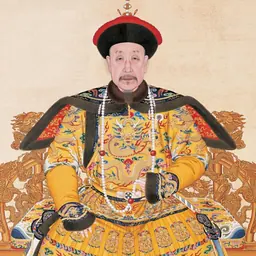
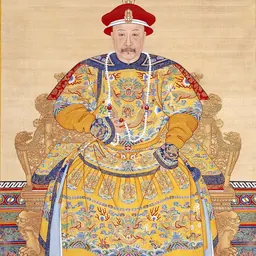
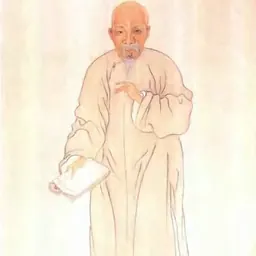
Related people
Same field, nearest in time
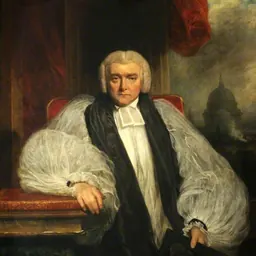



Contemporaries
People whose lives overlapped Yongji's




Frequently asked questions
Who was Yongji?
Qing dynasty person CBDB = 73644
When was Yongji born?
Yongji was born in 1752.
When did Yongji die?
Yongji died on 17 March 1776.
What was Yongji's occupation?
Yongji was a writer and poet.
What nationality was Yongji?
Yongji was Chinese.
Sources & further reading
Cite this page
APA: Biography.guide. (2026). Yongji. https://biography.guide/yongji/
MLA: "Yongji." Biography.guide, https://biography.guide/yongji/.
Chicago: "Yongji." Biography.guide. https://biography.guide/yongji/.
Data last updated: 2026-09-20 · Spot an error? Report a correction.
Page generated 2026-09-27 05:09 UTC