
Scipione Piattoli
Italian Piarist, secretary of Stanisław August Poniatowski
About Scipione Piattoli
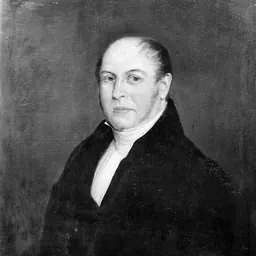
Lived 1749 – 1809 (aged 59). Scipione Piattoli was an Italian and Polish writer, politician, catholic priest, regular cleric and courtier, known for Constitution of 3 May 1791.
Scipione Piattoli (; 10 November 1749 – 12 April 1809) was an Italian Catholic priest — a Piarist — an educator, writer, and political activist, and a major figure of the Enlightenment in Poland. After ten years as a professor at the University of Modena in Italy, he emigrated to the Polish–Lithuanian Commonwealth, where he became associated with several magnate families — the Potockis, Lubomirskis, and Czartoryskis. He was a member of Duchess Dorothea von Medem's court in Courland (Lithuania) and of King Stanisław August Poniatowski's court.
Piattoli was politically active in Warsaw during and after the Four-Year Sejm (1788–1792). He served as intermediary between the reformist Patriotic Party and King Stanisław August Poniatowski, and as an aide to the King (1789–1793). He is best remembered for his participation in drafting the Constitution of 3 May 1791, a milestone in the history of Polish political legislation. He was an organiser of the 1794 Kościuszko Insurrection against Russian influence, which was the last armed struggle held under the banners of the Commonwealth. After the Third Partition of Poland (1795), Piattoli was interned by the Austrians for several years, together with another Polish activist of the Constitution movement, Hugo Kołłątaj. Freed in 1800, he worked several years with Polish and Russian statesman Prince Adam Jerzy Czartoryski in the service of Russia, before retiring to Courland.
Piattoli was an inspiration to Leo Tolstoy, who based the figure of Abbé Morio in War and Peace (1869) on him. He is also one of the figures immortalized in Jan Matejko's 1891 painting, Constitution of 3 May 1791. In his 1980 ten-page entry on Piattoli in the Polish Biographical Dictionary, historian Emanuel Rostworowski notes that, "despite two Italian monographs (by A.D. Ancon and G. Bozzolato)", Piattoli still awaits a definitive biography.
Early life Scipione Piattoli was born in Florence on 10 November 1749 to a family of painters (father, Gaetano Piattoli; mother, Anna Bacherini Piattoli; brother, Giuseppe Piattoli).
Don’t just read it —
keep it.
Full-length biographies made to live with: read them, listen on the way to work, watch them tonight.
- E-book
- Audio
- Video
Instant download · yours to keep · every purchase keeps this site free
Important facts
People in Scipione Piattoli's life
Named in this biography and alive at the same time
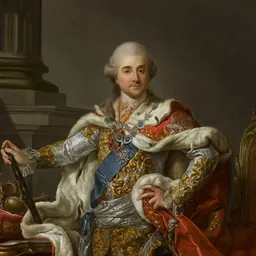

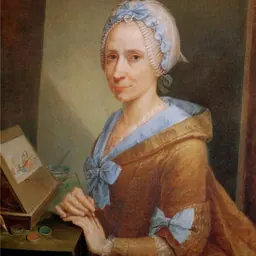

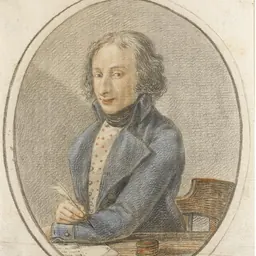

Related people
Same field, nearest in time


Contemporaries
People whose lives overlapped Scipione Piattoli's




Frequently asked questions
Who was Scipione Piattoli?
Italian Piarist, secretary of Stanisław August Poniatowski (1749–1809)
When was Scipione Piattoli born?
Scipione Piattoli was born on 10 November 1749 in Florence.
When did Scipione Piattoli die?
Scipione Piattoli died on 12 April 1809 in Altenburg, Löbichau.
What was Scipione Piattoli's occupation?
Scipione Piattoli was a writer, politician, catholic priest, regular cleric and courtier.
What was Scipione Piattoli known for?
Scipione Piattoli was known for Constitution of 3 May 1791.
What nationality was Scipione Piattoli?
Scipione Piattoli was Italian and Polish.
Sources & further reading
· Wikipedia: Scipione Piattoli
Cite this page
APA: Biography.guide. (2026). Scipione Piattoli. https://biography.guide/scipione-piattoli/
MLA: "Scipione Piattoli." Biography.guide, https://biography.guide/scipione-piattoli/.
Chicago: "Scipione Piattoli." Biography.guide. https://biography.guide/scipione-piattoli/.
Data last updated: 2026-09-22 · Spot an error? Report a correction.
Page generated 2026-09-27 05:33 UTC