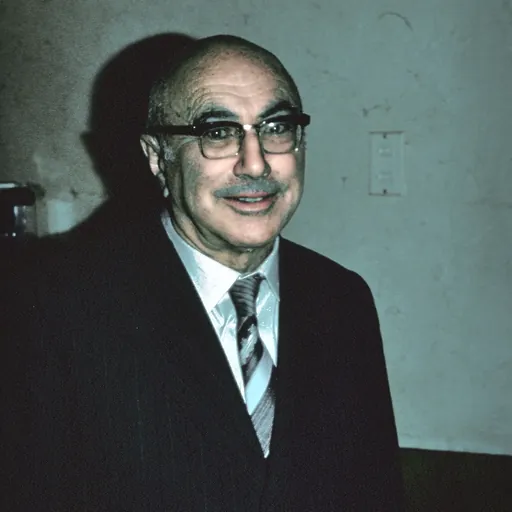
Yakov Zeldovich
Soviet physicist, physical chemist and cosmologist
About Yakov Zeldovich
Lived 1914 – 1987 (aged 73). Yakov Zeldovich was a Russian and Belarusian physicist, astrophysicist, inventor, chemist and university teacher, known for Activation energy asymptotics, Antidynamo theorem and Classical nucleation theory.
Yakov Borisovich Zeldovich (, ; 8 March 1914 – 2 December 1987), also known as YaB, was a leading Soviet physicist of Belarusian origin, who is known for his prolific contributions in physical cosmology, physics of thermonuclear reactions, combustion, and hydrodynamical phenomena.
From 1943, Zeldovich, a self-taught physicist, started his career by playing a crucial role in the development of the former Soviet program of nuclear weapons. In 1963, he returned to academia to embark on pioneering contributions on the fundamental understanding of the thermodynamics of black holes and expanding the scope of physical cosmology. However, in mid-1914, the Zeldovich family moved to Saint Petersburg. They resided there until August 1941, when the family was evacuated together with the faculty of the Institute of Chemical Physics to Kazan to avoid the Axis Invasion of the Soviet Union. They remained in Kazan until the summer of 1943, when Zeldovich moved to Moscow.
Zeldovich was an autodidact. He was regarded as having a remarkably versatile intellect, and during his life he explored and made major contributions to a wide range of scientific endeavors. From a given opportunity in May 1931, he secured an appointment as a laboratory assistant at the Institute of Chemical Physics of the Academy of Sciences of the Soviet Union, and remained associated with the institute for the remainder of his life.
In 1936, he was successful in his candidacy for the Candidate of Science degree (a Soviet equivalent of PhD), having successfully defended his dissertation on the topic of the "adsorption and catalysis on heterogeneous surfaces". Zeldovich discovered its mechanism, known in physical chemistry as the thermal mechanism or Zeldovich mechanism.
Soviet program of nuclear weapons
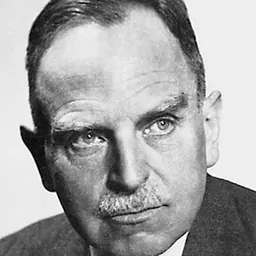
Zeldovich is regarded as a secret principal of the Soviet nuclear weapons project; his travels abroad were highly restricted, to Eastern Europe, under close Soviet security. Soon after the discovery of nuclear fission (by German chemist Otto Hahn in 1939) Russian physicists had begun investigating the scope of nuclear-fission physics, and undertook seminars on that topic; Igor Kurchatov and Yulii Khariton were engaged in 1940. He remained associated with the nuclear testing program, while heading the experimental laboratories at Arzamas-16 until October 1963, when he left for academia.
Academia and cosmology
In 1952, Zeldovich began work in the field of elementary particles and their transformations. He predicted the beta decay of a pi meson. Together with Semyon Gershtein he noticed the analogy between the weak and electromagnetic interactions, and in 1960, he predicted the muon catalysis (more precisely, the muon-catalysed dt-fusion) phenomenon. In 1977, Zeldovich together with was awarded the Kurchatov Medal, the highest award in nuclear physics of the Soviet Union. The citation was "for prediction of characteristics of ultracold neutrons, their detection and investigation". He was elected academician of the USSR Academy of Sciences on 20 June 1958. He was a head of division at the Institute of the Applied Mathematics of the USSR Academy of Sciences from 1965 until January 1983.
In early 1960s, Zeldovich started working in astrophysics and physical cosmology. In 1964, he and independently Edwin Salpeter were the first to suggest that accretion discs around massive black holes are responsible for the huge amounts of energy radiated by quasars. From 1965, he was a professor at the Department of Physics of the Moscow State University and a head of the division of Relativistic Astrophysics at the Sternberg Astronomical Institute. In 1966, he and Igor Novikov were the first to propose searching for black hole candidates among binary systems in which one star is optically bright and X-ray dark and the other optically dark but X-ray bright (the black hole candidate).
Zeldovich worked on the theory of the evolution of the hot universe, the properties of the microwave background radiation, the large-scale structure of the universe, and the theory of black holes. He predicted, with Rashid Sunyaev, that the cosmic microwave background should undergo inverse Compton scattering. This is called the Sunyaev-Zeldovich effect, and measurements by telescopes such as the Atacama Cosmology Telescope and the South Pole Telescope has established it as one of the key observational probes of cluster cosmology. Zeldovich contributed sharp insights into the nature of the large scale structure of the universe, in particular, through the use of Lagrangian perturbation theory (the Zeldovich approximation) and the application of the Burgers' equation approach via the adhesion approximation.
In 1974, in collaboration with A. G. Polnarev, suggested the existence of a gravitational memory effect, for which a system of freely falling particles initially at relative rest are displaced after the passing of a burst of gravitational radiation.
Black hole thermodynamics
Zeldovich played a key role in developing the theory of black hole evaporation due to Hawking radiation. Zeldovich and Charles W. Misner concomitantly predicted the possibility of particle generation by rotating Kerr black holes in 1971, 1972. Previously, In 1965, Zeldovich had predicted that Kerr black holes would split the emission lines of photons as in a Zeeman effect. During Stephen Hawking's visit to Moscow in 1973, Soviet scientists Zeldovich and Alexei Starobinsky showed Hawking that, according to the quantum mechanical uncertainty principle, rotating black holes should create and emit particles.
Family With his wife, Varvara Pavlovna Konstantinova, Yakov Zeldovich had a son and two daughters who were also physicists: son – Boris Zeldovich; daughters – Olga Yakovlevna Zeldovich and Marina Yakovlevna Zeldovich.
Zeldovich also had a daughter, Annushka, with O.K. Shiryaeva.
He had one more daughter in 1945, Alexandra Varkovitskaya, with a linguist and folklorist Ludmila Varkovitskaya.
Zeldovich had another son with Nina Nikolaevna Agapova in 1958, whose name was Leonid Yakovlevich Agapov; he died in 2016 at the age of 58.
Publications Books
Awards and honors
Igor Kurchatov called him a "genius" and Andrei Sakharov named him "a man of universal scientific interests." After the first meeting in Moscow, Stephen W. Hawking wrote to Zeldovich: "now I know that you are a real person and not a group of scientists like Bourbaki." He was a member of the American Academy of Arts and Sciences (1975), the United States National Academy of Sciences (1979), and the American Philosophical Society (1979).
Dirac Medal of the ICTP (1985) Bruce Medal (1983) Gold Medal of the Royal Astronomical Society (1984). Kurchatov Medal (1977) Three times Hero of Socialist Labor (1949, 1953, 1957) Stalin Prize (1943, 1949, 1951, 1953) Lenin Prize (1957) Three Orders of Lenin (1949, 1962, 1974) Two Orders of the Red Banner of Labour (1945,1964) Order of the October Revolution (1962) An asteroid 11438 Zeldovich was named in his honor in 2001.
Don’t just read it —
keep it.
Full-length biographies made to live with: read them, listen on the way to work, watch them tonight.
- E-book
- Audio
- Video
Instant download · yours to keep · every purchase keeps this site free
Important facts
more
Matter power spectrum, Method of matched asymptotic expansions, Primordial black hole, Self-similar solution, Shvab–Zeldovich formulation, Sunyaev–Zeldovich effect, Superradiance, ZFK equation, ZND detonation model, Zeldovich mechanism, Zeldovich number, Zeldovich pancake, Zeldovich spontaneous wave, Zeldovich–Liñán model, Zeldovich–Taylor flowmore
Yakov Borisovich ZeldovichPeople in Yakov Zeldovich's life
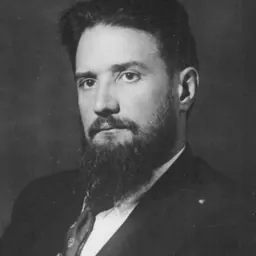
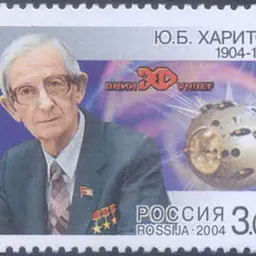
Named in this biography and alive at the same time



Related people
Same field, nearest in time



Contemporaries
People whose lives overlapped Yakov Zeldovich's


Frequently asked questions
Who was Yakov Zeldovich?
Soviet physicist, physical chemist and cosmologist (1914-1987)
When was Yakov Zeldovich born?
Yakov Zeldovich was born on 23 February 1914 in Minsk.
When did Yakov Zeldovich die?
Yakov Zeldovich died on 2 December 1987 in Moscow.
What was Yakov Zeldovich's occupation?
Yakov Zeldovich was a physicist, astrophysicist, inventor, chemist and university teacher.
What was Yakov Zeldovich known for?
Yakov Zeldovich was known for Activation energy asymptotics, Antidynamo theorem, Classical nucleation theory, Diffusive–thermal instability, Four-current and Gravitational memory effect.
What nationality was Yakov Zeldovich?
Yakov Zeldovich was Russian and Belarusian.
Sources & further reading
Cite this page
APA: Biography.guide. (2026). Yakov Zeldovich. https://biography.guide/yakov-zeldovich/
MLA: "Yakov Zeldovich." Biography.guide, https://biography.guide/yakov-zeldovich/.
Chicago: "Yakov Zeldovich." Biography.guide. https://biography.guide/yakov-zeldovich/.
Data last updated: 2026-09-23 · Spot an error? Report a correction.
Portrait: Wikimedia Commons · author & licence
Page generated 2026-09-27 05:05 UTC