
About Igor Kurchatov
Lived 1903 – 1960 (aged 57). Igor Kurchatov was a Russian physicist, nuclear physicist, university teacher and politician, known for Soviet atomic bomb project.
Soviet programme of nuclear weapons
After 1942, Kurchatov oversaw the facility expansion and overall development of the Russian programme in the Soviet Union, from military to civilian dimensions of the nuclear programme. Kurchatov is widely known as father of the Soviet program of nuclear weapons, and is often compared to American Robert Oppenheimer— although Kurchatov was not a theoretical physicist.
The Soviet establishment did not start the programme until 1943 despite receiving intelligence from Russian spies in the United States and a warning from Georgii Flerov. Kurchatov established the Laboratory No. 2 in Moscow by bringing Abram Alikhanov (who worked on heavy water production) from Armenia and Lev Artsimovich who was instrumental in electromagnetic isotope separation. In 1945, Kurchatov became involved in designing and building the first reactor at Laboratory No. 2 which sustained the nuclear chain reaction in late 1946. The fissile material was obtained from using the gaseous diffusion and implosion-type plutonium core that Kurchatov spent most of his time on.
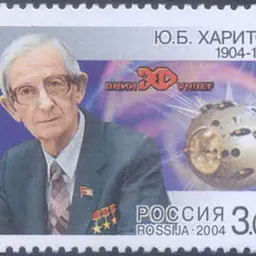
Final device assembly was overseen by Yulii Khariton who had a device moved to a knock-down subassembly in Semipalatinsk in Kazakhstan. Kurchatov later remarked that his main feeling at the time to be one of relief. Kurchatov aided in calculations but most work was done by Vitaly Ginzburg, Andrei Sakharov, Khariton, and Zel'dovich who had the most credit in developing the design for the thermonuclear device, known as RDS-6, which was detonated in 1953. In an effort to save the uranium load and reduce losses in the production of plutonium, Kurchatov, without proper safety gear, was the first to step into the central hall of the damaged reactor full of radioactive gases. After 1950, Kurchatov's health sharply declined. He suffered a stroke in 1954, and died in Moscow of a cardiac embolism on 7 February 1960, aged 57. He was cremated, and his ashes were buried in the Kremlin Wall Necropolis on Red Square. Kurchatov was a communist who had a portrait of Stalin by the time he died, and a member of Communist Party of the Soviet Union.
Two towns bear his name: Kurchatov Township in Kazakhstan, and Kurchatov near Kursk (the site of a nuclear power station), the Kurchatov Institute is named in his honour, and bears a large monument dedicated to him at the entrance. The crater Kurchatov on the Moon and the asteroid 2352 Kurchatov are also named after him. Many of his students also enjoyed distinguished careers, among them Andrei Sakharov, Viktor Adamsky, Yuri Babayev, Yuri Trutnev and .
For his part in establishing the Soviet nuclear programme, in accordance with state decree 627-258, Kurchatov was awarded the title of Hero of Socialist Labor, the Stalin Prize First Class, the sum of 500,000 rubles (besides the earlier results of (50%) premium in the amount of 500,000 rubles) and a ZIS-110 car, a private house and cottage furnished by the state, a doubling of his salary and "the right (for life for him and his wife) to free travel by rail, water and air transport in the USSR". In all, he was:
Member of the Soviet Academy of Sciences (elected in 1943) Three times Hero of Socialist Labor (1949, 1951, 1954) Awarded five Orders of Lenin Awarded two Orders of the Red Banner Awarded the following medals: "For Victory over Germany", "For the defense of Sevastopol" Four times recipient of the Stalin Prize (1942, 1949, 1951, 1954) Recipient of the Lenin Prize (1957).
Kurchatov was buried in the Kremlin Wall in Moscow, a burial place reserved for top Soviet officials. In 1960 his institute was renamed to the I.V. Kurchatov Institute of Atomic Energy, and in 1991 to the Russian Research Centre Kurchatov Institute. The Kurchatov Medal was established by the Academy of Sciences for outstanding work in nuclear physics. In the Transfermium Wars element naming controversy, the USSR's proposed name for element 104 was "kurchatovium", Ku, in honor of Kurchatov. Element 104 is now known as rutherfordium.
Don’t just read it —
keep it.
Full-length biographies made to live with: read them, listen on the way to work, watch them tonight.
- E-book
- Audio
- Video
Instant download · yours to keep · every purchase keeps this site free
Important facts
People in Igor Kurchatov's life
Named in this biography and alive at the same time


Related people
Same field, nearest in time


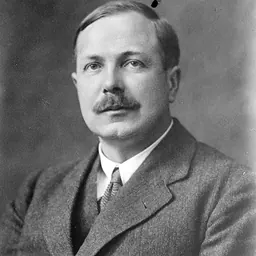
Contemporaries
People whose lives overlapped Igor Kurchatov's
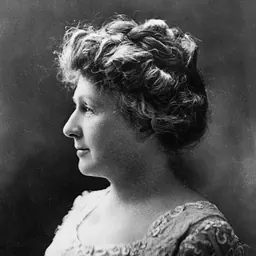
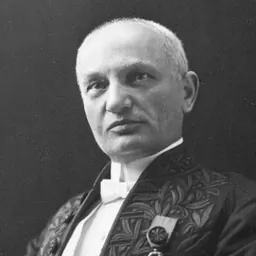
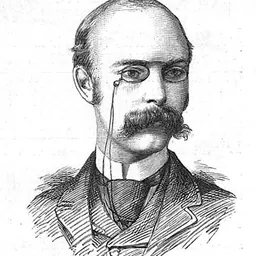
Frequently asked questions
Who was Igor Kurchatov?
Soviet nuclear physicist (1903-1960)
When was Igor Kurchatov born?
Igor Kurchatov was born on 8 January 1903 in Sim.
When did Igor Kurchatov die?
Igor Kurchatov died on 7 February 1960 in Moscow, Barvikha.
What was Igor Kurchatov's occupation?
Igor Kurchatov was a physicist, nuclear physicist, university teacher and politician.
What was Igor Kurchatov known for?
Igor Kurchatov was known for Soviet atomic bomb project.
What nationality was Igor Kurchatov?
Igor Kurchatov was Russian.
Sources & further reading
Cite this page
APA: Biography.guide. (2026). Igor Kurchatov. https://biography.guide/igor-kurchatov/
MLA: "Igor Kurchatov." Biography.guide, https://biography.guide/igor-kurchatov/.
Chicago: "Igor Kurchatov." Biography.guide. https://biography.guide/igor-kurchatov/.
Data last updated: 2026-09-26 · Spot an error? Report a correction.
Page generated 2026-09-27 05:15 UTC