
About Vitaly Ginzburg
Lived 1916 – 2009 (aged 93). Vitaly Ginzburg was a Russian physicist, astrophysicist, inventor, university teacher, scientist and theoretical physicist, known for Ginzburg criterion, Ginzburg–Landau theory and Transition radiation.
Biography Vitaly Ginzburg was born to a Jewish family in Moscow on 4 October 1916— the son of an engineer, Lazar Yefimovich Ginzburg, and a doctor, Augusta Wildauer who was a graduate from the Physics Faculty of Moscow State University in 1938. After attending his mother's alma mater, he defended his qualifications of the candidate's (Kandidat Nauk) dissertation in 1940, and his comprehensive thesis for the doctor's (Doktor Nauk) qualification in 1942. In 1944, he became a member of the Communist Party of the Soviet Union. Among his achievements are a partially phenomenological theory of superconductivity, the Ginzburg–Landau theory, developed with Lev Landau in 1950; the theory of electromagnetic wave propagation in plasmas (for example, in the ionosphere); and a theory of the origin of cosmic radiation. He is also known to biologists as being part of the group of scientists that helped bring down the reign of the politically connected anti-Mendelian agronomist Trofim Lysenko, thus allowing modern genetic science to return to the USSR.
In 1937, Ginzburg married Olga Zamsha. In 1946, he married his second wife, Nina Ginzburg (nee Yermakova), who had spent more than a year in custody on fabricated charges of plotting to assassinate the Soviet leader Joseph Stalin.
As a renowned professor and researcher, Ginzburg was an obvious candidate for the Soviet bomb project. From 1948 through 1952 Ginzburg worked under Igor Kurchatov to help with the hydrogen bomb. Ginzburg and Igor Tamm both proposed ideas that would make it possible to build a hydrogen bomb. When the bomb project moved to Arzamas-16 to continue in even more secrecy, Ginzburg was not allowed to follow. Instead he stayed in Moscow and supported from afar, staying under watch due to his background and past. He also headed the Academic Department of Physics and Astrophysics Problems, which Ginzburg founded at the Moscow Institute of Physics and Technology in 1968.
Ginzburg identified as a secular Jew, and following the collapse of communism in the former Soviet Union, he was very active in Jewish life, especially in Russia, where he served on the board of directors of the Russian Jewish Congress. He is also well known for fighting anti-Semitism and supporting the state of Israel.
In the 2000s (decade), Ginzburg was politically active, supporting the Russian liberal opposition and human rights movement. He defended Igor Sutyagin and Valentin Danilov against charges of espionage put forth by the authorities. On 2 April 2009, in an interview to the Radio Liberty Ginzburg denounced the FSB as an institution harmful to Russia and the ongoing expansion of its authority as a return to Stalinism.
Ginzburg worked at the P. N. Lebedev Physical Institute of Soviet and Russian Academy of Sciences in Moscow since 1940. Russian Academy of Sciences is a major institution where mostly all Nobel Prize laureates of physics from Russia have done their studies and/or research works.
Stance on religion
Ginzburg was an avowed atheist, both under the primarily atheist Soviet government and in post-Communist Russia when religion made a strong revival. He criticized clericalism in the press and wrote several books devoted to the questions of religion and atheism. Because of this, some Orthodox Christian groups denounced him and said no science award could excuse his verbal attacks on the Russian Orthodox Church. He was one of the signers of the Open letter to the President Vladimir V. Putin from the Members of the Russian Academy of Sciences against clericalisation of Russia.
Nobel Prize Vitaly Ginzburg, along with Anthony Leggett and Alexei Abrikosov were awarded the Nobel Prize in Physics in 2003 for their groundbreaking work on the theory of superconductors. Before their collaboration, Landau had just done research on liquid helium and other quantum fluids, but Ginzburg allowed them to go a step further.
Ginzburg introduced the concept of an order parameter, which would allow them to characterize the state of the superconductor. To do this, they derived a complex set of equations that would allow them to describe the behavior of the superconductor. These equations provided a model from which researchers can understand the transition between a normal and superconducting state, as well as be able to predict various properties of other superconductors. Using these equations, they were also able to introduce the Ginzburg–Landau parameter. This parameter used a separate set of equations in order to classify if they were looking at a type-I or type-II superconductor. This advancement allowed Anthony Leggett to build upon it and complete his own research on superconductors.
Applications of his research findings include MRI machines, engines, and new Maglev trains.
Death A spokeswoman for the Russian Academy of Sciences announced that Ginzburg died in Moscow on 8 November 2009 from cardiac arrest. He had been suffering from ill health for several years,
Ginzburg was buried on 11 November in the Novodevichy Cemetery in Moscow, the resting place of many famous politicians, writers and scientists of Russia. and 20 problems in 1985. In 1999, he published his list of 30 problems for the 21st century. During his 2003 Nobel lecture he presented the list, and was finally published in his About Science, Myself and Others in 2005. The list includes: Ó Ceallaigh Medal by the IUPAP Cosmic Ray Commission for contributions to cosmic ray physics. Order "For Merit to the Fatherland", 1st class (4 October 2006) – for outstanding contribution to the development of national science and many years of fruitful activity
Don’t just read it —
keep it.
Full-length biographies made to live with: read them, listen on the way to work, watch them tonight.
- E-book
- Audio
- Video
Instant download · yours to keep · every purchase keeps this site free
Important facts
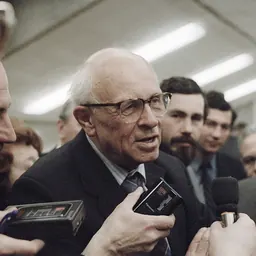
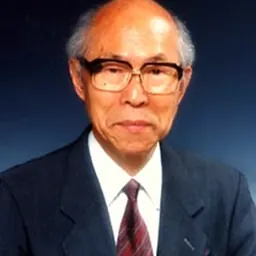
People in Vitaly Ginzburg's life
Named in this biography and alive at the same time
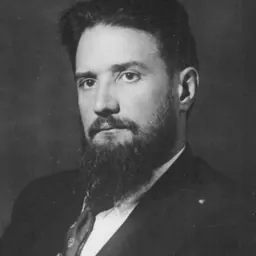

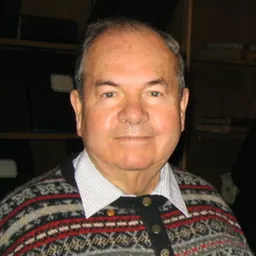


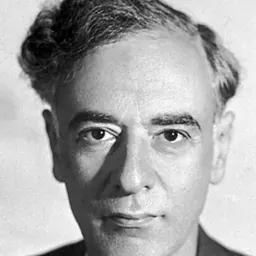

Related people
Same field, nearest in time
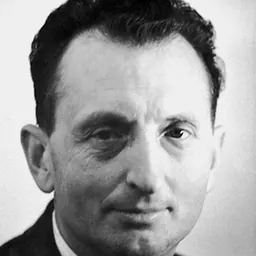


Contemporaries
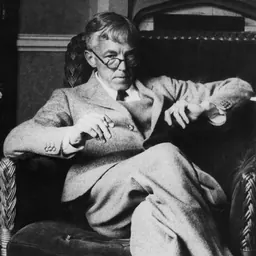
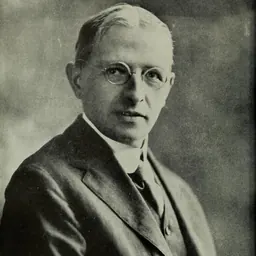
People whose lives overlapped Vitaly Ginzburg's



Frequently asked questions
Who was Vitaly Ginzburg?
Russian physicist (1916–2009)
When was Vitaly Ginzburg born?
Vitaly Ginzburg was born on 21 September 1916 in Moscow.
When did Vitaly Ginzburg die?
Vitaly Ginzburg died on 8 November 2009 in Moscow.
What was Vitaly Ginzburg's occupation?
Vitaly Ginzburg was a physicist, astrophysicist, inventor, university teacher, scientist and theoretical physicist.
What was Vitaly Ginzburg known for?
Vitaly Ginzburg was known for Ginzburg criterion, Ginzburg–Landau theory, Transition radiation and Undulator.
What nationality was Vitaly Ginzburg?
Vitaly Ginzburg was Russian.
Sources & further reading
Cite this page
APA: Biography.guide. (2026). Vitaly Ginzburg. https://biography.guide/vitaly-ginzburg/
MLA: "Vitaly Ginzburg." Biography.guide, https://biography.guide/vitaly-ginzburg/.
Chicago: "Vitaly Ginzburg." Biography.guide. https://biography.guide/vitaly-ginzburg/.
Data last updated: 2026-09-20 · Spot an error? Report a correction.
Page generated 2026-09-27 05:27 UTC