
About Wolfgang Lubitz
Born 1949. Wolfgang Lubitz is a German biochemist, biophysicist, university teacher and chemist, known for Electron paramagnetic resonance, Hydrogenase and Oxygen-evolving complex.
Wolfgang Lubitz (born in 1949) is a German chemist and biophysicist. He is currently a director emeritus at the Max Planck Institute for Chemical Energy Conversion. He is well known for his work on bacterial photosynthetic reaction centres, hydrogenase enzymes, and the oxygen-evolving complex using a variety of biophysical techniques. He has been recognized by a Festschrift for his contributions to electron paramagnetic resonance (EPR) and its applications to chemical and biological systems.
Education and career He studied chemistry at the Free University Berlin from 1969 to 1974 and continued with his Dr. rer. nat. until 1977. From 1977 to 1982 he worked for his habilitation in organic chemistry at the Free University Berlin with a focus on electron paramagnetic resonance (EPR) and double resonance methods, such as ENDOR/TRIPLE. From 1979 to 1989 the FU Berlin employed him as an assistant professor, and as an associate professor at the Chemistry Department. From 1983 to 1984 he worked as a Max Kade Fellow at UC San Diego in the Physics Department with George Feher on EPR and ENDOR in photosynthesis. In 1989 he became an associate professor of experimental physics at the University of Stuttgart. In 1991 he returned to Berlin as a Full Professor and Chair of Physical Chemistry at the Max Volmer Institute at Technische Universität Berlin. He stayed until 2000 when he became a Scientific Member of the Max Planck Society and Director at the Max Planck Institute for Radiation Chemistry (in 2003 renamed Max Planck Institute for Bioinorganic Chemistry and in 2012 Max Planck Institute for Chemical Energy Conversion) in Mülheim an der Ruhr, North Rhine-Westphalia, Germany. In the same year, he became honorary professor of the Heinrich-Heine-University of Düsseldorf. From 2004 to 2012, he was managing director of the Max Planck Institute and is currently a director emeritus of the Max Planck Institute for Chemical Energy Conversion. Since 2004, he has been a member of the council for the Lindau Nobel Laureate Meetings, and has been its vice-president since 2015.
Research His research focuses on the elementary processes of photosynthesis and catalytic metal centers in metalloproteins. He is an expert in the application of EPR spectroscopy and quantum chemical calculations. He has over 500 publications with more than 25,000 citations.
EPR spectroscopy Throughout his career, EPR has played an important role as a biophysical technique to gain information about radicals, radical pairs, triplet states and metal centers in chemistry and biochemistry. These techniques have been used by him and his group to extensively study bacterial photosynthetic reaction centres, their donor-acceptor model complexes, photosystem I, photosystem II, Further work using advanced Pulse EPR techniques, such as EDNMR, has led to information on the binding of water and a proposal of an efficient O-O bond formation in the final state of the cycle.
Similar work has been accomplished for the [FeFe]-hydrogenases. and the determination of the magnitude and orientation of the g-tensor using single crystal EPR. The ADT-ligand was later confirmed by artificial maturation of [FeFe]-hydrogenases. Using artificial maturation, the protein could be generated without the co-factor (apoprotein) using E. coli mutagenesis and a synthetically created active site could be inserted, which has opened new vistas in hydrogenase research.
Awards and recognition
Otto-Klung-Preis für Chemie, FU Berlin (1978) Max-Kade-Fellowship, New York (1983) International Zavoisky Award, Russian and Tatarstan Academy of Sciences, Kazan, Russia (2002) Bruker Prize, Royal Society of Chemistry, ESR group, U.K. (2003) Fellow of the Royal Society of Chemistry. U.K. (2004) Gold Medal of the International EPR Society (2005) Honorary doctorate Dr. h. c., Uppsala University, Sweden (2008) Fellow of ISMAR (International Society of Magnetic Resonance) (2010) Foreign Member of the Academy of Sciences of the Republic of Tatarstan (2012) Honorary doctorate, Dr. h.c., Université d'Aix-Marseille, France (2014) Robert Bunsen Vorlesung, Deutsche Bunsen-Gesellschaft für Physikalische Chemie e.V. (2017) Fellow of the International EPR Society (2017)
Don’t just read it —
keep it.
Full-length biographies made to live with: read them, listen on the way to work, watch them tonight.
- E-book
- Audio
- Video
Instant download · yours to keep · every purchase keeps this site free
Important facts
People in Wolfgang Lubitz's life
Named in this biography and alive at the same time


Related people
Same field, nearest in time
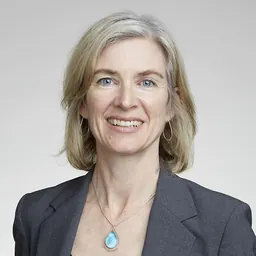

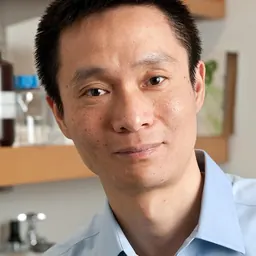
Contemporaries
People whose lives overlapped Wolfgang Lubitz's

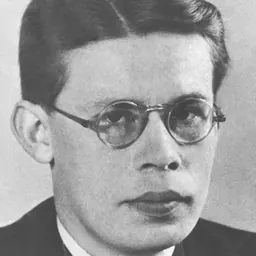
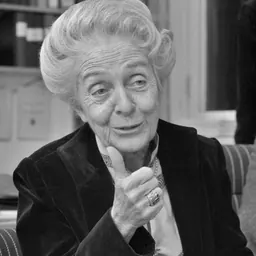

Frequently asked questions
Who is Wolfgang Lubitz?
German chemist and biophysicist
When was Wolfgang Lubitz born?
Wolfgang Lubitz was born on 23 July 1949 in Berlin.
What is Wolfgang Lubitz's occupation?
Wolfgang Lubitz is a biochemist, biophysicist, university teacher and chemist.
What is Wolfgang Lubitz known for?
Wolfgang Lubitz is known for Electron paramagnetic resonance, Hydrogenase, Oxygen-evolving complex and Photosynthesis.
What nationality is Wolfgang Lubitz?
Wolfgang Lubitz is German.
Sources & further reading
Cite this page
APA: Biography.guide. (2026). Wolfgang Lubitz. https://biography.guide/wolfgang-lubitz/
MLA: "Wolfgang Lubitz." Biography.guide, https://biography.guide/wolfgang-lubitz/.
Chicago: "Wolfgang Lubitz." Biography.guide. https://biography.guide/wolfgang-lubitz/.
Data last updated: 2026-09-20 · Spot an error? Report a correction.
Page generated 2026-09-27 05:27 UTC