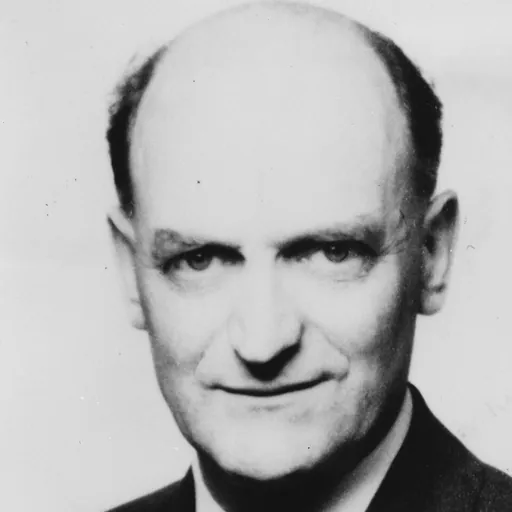
About William Phillips
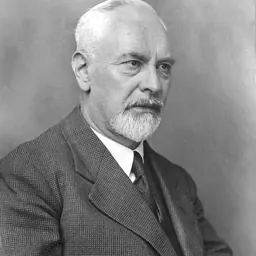
Lived 1914 – 1975 (aged 60). William Phillips was a British and New Zealand economist.
Alban William Housego "A. W." Phillips, MBE (18 November 1914 – 4 March 1975) was a New Zealand economist who spent most of his academic career as a professor of economics at the London School of Economics (LSE). He invented the Phillips curve relating level of employment and inflation in 1958. He also designed and built the MONIAC hydraulic computer macroeconomic model in 1949.
Early life Phillips was born at Te Rehunga near Dannevirke, New Zealand, to Harold Housego Phillips, a dairy farmer, and his wife, Edith Webber, a schoolteacher and postmistress. During the attack, Phillips improvised a machine gun mounting which allowed him to fire at the enemy. Laurens van der Post, who was in captivity with Phillips, described him as "one of the most singularly contained people I knew, quiet, true and without any trace of exhibitionism".
In 1946, he was made a Member of the Order of the British Empire (MBE) for his war service, in particular for his development of a system that allowed Brewster Buffalo fighter planes to fire through the propeller.
Economics career
After the war Phillips moved to London and began studying sociology at the London School of Economics (LSE), because of his fascination with prisoners of war's ability to organize themselves. But he became bored with sociology and developed an interest in Keynesian theory, so he switched his course to economics and within eleven years was a professor of economics.
MONIAC While a student at the LSE Phillips used his training as an engineer to develop MONIAC (‘Monetary National Income Analogue Computer’), an analogue computer which used hydraulics to model the workings of the British economy, inspiring the term hydraulic macroeconomics. It was very well received and Phillips was soon offered a teaching position at the LSE. He advanced from assistant lecturer in 1951 to professor in 1958.
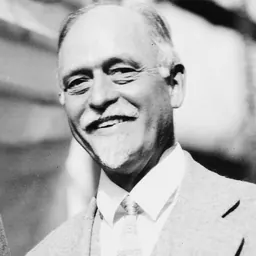
Phillips curve While at LSE, Phillips' work focused on British data and observed that in years when the unemployment rate was high, the rate of growth of nominal wages tended to be stable, or possibly fall. Conversely, when unemployment was low, wages rose rapidly. This sort of pattern had been noticed earlier by Irving Fisher, but, based on Phillip's intuition that “hen the demand for labour is high and there are very few unemployed we should expect employers to bid wages rates up quite rapidly” and that firms would put up prices as a result, he published his own paper in 1958 on the relationship between inflation and unemployment, The Phillips curve can be written of terms of rate of growth of prices and unemployment. It was subject to the study of several Keynesian and neoclassical economists, especially in the context of the monetarist model by Milton Friedman and the new neoclassical macroeconomics by Robert Lucas. Several studies around the Phillips curve tried to understand whether it is possible or not for policy makers to exploit the Phillips curve, that is to accept a lower level of employment, and so a higher level of unemployment, in exchange of inflation stabilisation. Nowadays there is still debate around this concept.
Soon after the publication of Phillips' paper, the idea that there was a trade-off between a strong economy and low inflation caught the imagination of academic economists and policy-makers alike. Paul Samuelson and Robert Solow wrote an influential article describing the possibilities suggested by the Phillips curve in the context of the United States. What people think of as the Phillips curve has changed substantially over time, but remains an important feature of macroeconomic analysis of economic fluctuations, with his paper on wage inflation and unemployment becoming the most cited macroeconomics title of the 20th Century. for 2 years, at the University of Auckland. He died in Auckland on 4 March 1975.
Don’t just read it —
keep it.
Full-length biographies made to live with: read them, listen on the way to work, watch them tonight.
- E-book
- Audio
- Video
Instant download · yours to keep · every purchase keeps this site free
Important facts
People in William Phillips's life
Named in this biography and alive at the same time





Related people
Same field, nearest in time



Contemporaries
People whose lives overlapped William Phillips's


Frequently asked questions
Who was William Phillips?
New Zealand economist (1914–1975)
When was William Phillips born?
William Phillips was born on 18 November 1914 in Te Rehunga.
When did William Phillips die?
William Phillips died on 5 March 1975 in Auckland.
What was William Phillips's occupation?
William Phillips was an economist.
What nationality was William Phillips?
William Phillips was British and New Zealand.
Sources & further reading
· DBpedia: Bill Phillips (economist)
Cite this page
APA: Biography.guide. (2026). William Phillips. https://biography.guide/william-phillips-economist/
MLA: "William Phillips." Biography.guide, https://biography.guide/william-phillips-economist/.
Chicago: "William Phillips." Biography.guide. https://biography.guide/william-phillips-economist/.
Data last updated: 2026-09-20 · Spot an error? Report a correction.
Page generated 2026-09-27 05:10 UTC