
About William Beattie-Brown
Lived 1831 – 1909 (aged 77–78). William Beattie-Brown was a British painter.
William Beattie-Brown (1831–1909) was a Scottish landscape painter.
Biography Beattie-Brown was born in the parish of Haddington in 1831, was son of Adam Brown, farmer, and Ann Beattie. He removed at an early age to Edinburgh and was educated at Leith High School. Having early shown a taste for art, he was apprenticed as a glass -stainer to the well-known firm of Messrs. Ballantine, and here his artistic tastes were so rapidly developed that before his apprenticeship was completed he entered the Trustees' Art Academy, then under the charge of Robert Scott Lauder. Among his fellow-students of this period and companions of a later time were William Bell Scott, Horatio MacCulloch, Sam Bough, and George Paul Chalmers. In 1848, when seventeen years of age, he exhibited a picture, ' On the Forth,' at the Royal Scottish Academy, and from that time till his death he was always represented at the annual exhibitions. His skill and accuracy as a draughtsman led to his being employed to make illustrations for several medical works; and his care and discretion as an artist brought him much employment in restoring pictures for Henry Doig, art-dealer, Edinburgh, whose daughter he married in 1858. To extend his experience he studied for a long time in Belgium, there using water-colour as his principal medium, though his chief work was done in oil-colour. He found English subjects for his pictures in Surrey, Kent, and Yorkshire, but his main themes were Scottish highland landscapes. He was a pioneer among the Scottish 'out-of-door' artists, frequently completing his pictures directly from nature a practice which explains his vigour and realism. In 1871 he was elected an associate of the Royal Scottish Academy, and in 1884 an academician. His diploma picture, dated 1883, is a characteristic highland landscape, 'Coire-na-Faireamh,' now in the Scottish National Gallery, Edinburgh. Representative works by him are in the public galleries at Liverpool, Manchester, Oldham, and Bolton. He was a frequent exhibitor at the Royal Academy, London, and also at Glasgow and other Scottish exhibitions. In his later years he adopted a more glowing scheme of colour than in his earlier work; but his pictures were always noticeable for their realistic line and tone, and for their technical excellence. Beattie-Brown died at Edinburgh on 31 March 1909.
By his wife Esther Love Doig, he had three sons and six daughters. The eldest son, H. W. Jennings Brown (1862–1898), showed promise as a portrait and figure-painter.
Don’t just read it —
keep it.
Full-length biographies made to live with: read them, listen on the way to work, watch them tonight.
- E-book
- Audio
- Video
Instant download · yours to keep · every purchase keeps this site free
Important facts
People in William Beattie-Brown's life
Named in this biography and alive at the same time

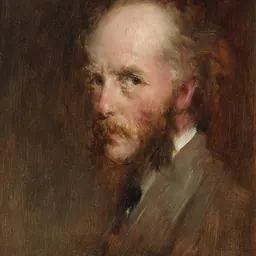


Related people
Same field, nearest in time
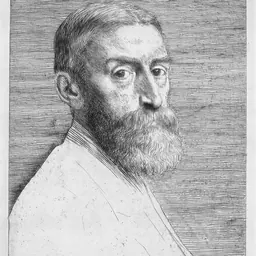
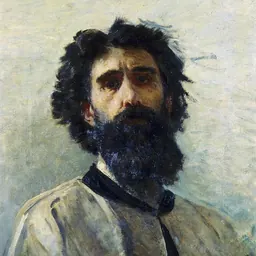
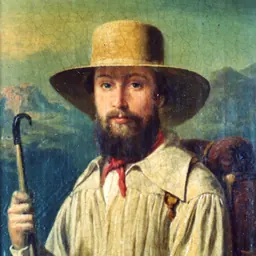


Contemporaries
People whose lives overlapped William Beattie-Brown's



Frequently asked questions
Who was William Beattie-Brown?
Scottish landscape painter (1831–1909)
When was William Beattie-Brown born?
William Beattie-Brown was born in 1831 in Haddington.
When did William Beattie-Brown die?
William Beattie-Brown died on 31 March 1909 in Edinburgh.
What was William Beattie-Brown's occupation?
William Beattie-Brown was a painter.
What nationality was William Beattie-Brown?
William Beattie-Brown was British.
Sources & further reading
· Wikipedia: William Beattie-Brown
· DBpedia: William Beattie-Brown
Cite this page
APA: Biography.guide. (2026). William Beattie-Brown. https://biography.guide/william-beattie-brown/
MLA: "William Beattie-Brown." Biography.guide, https://biography.guide/william-beattie-brown/.
Chicago: "William Beattie-Brown." Biography.guide. https://biography.guide/william-beattie-brown/.
Data last updated: 2026-09-20 · Spot an error? Report a correction.
Page generated 2026-09-27 05:34 UTC