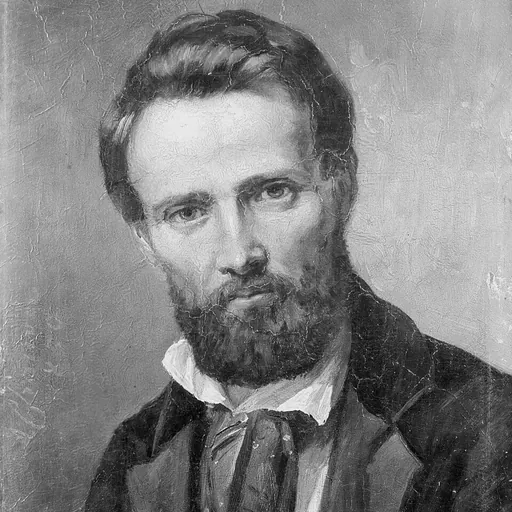
About Auguste Chauvin
Lived 1810 – 1884 (aged 73). Auguste Chauvin was a Belgian painter and draftsperson.
Auguste Adolphe Chauvin (24 October 1810 – 29 May 1884) was a Belgian painter and draughtsman. He produced religious scenes, portraits, historical and allegorical compositions, and genre scenes. In his historical works he was close to the Romantic movement, while his religious painting was strongly influenced by the Düsseldorf school.
Born in Liège, Chauvin moved with his family to Aachen in 1816. He trained initially as an architect while learning the basics of drawing and painting from . After working as a master mason for several years, he abandoned that career in 1831 to study at the Kunstakademie Düsseldorf under Wilhelm von Schadow. From 1832 to 1841 he continued his training in Düsseldorf while spending several months each year as court painter to the prince of Neuwied.
In 1841 Chauvin returned to Liège, where he was offered a teaching post at the Royal Academy of Fine Arts. He became its director in 1856 and also was director of the city's painting collections. He retired in 1880. Throughout his career he worked to promote German art, particularly the Düsseldorf masters, in Belgium.
Biography
Early life and training (1810–1841)
Auguste Adolphe Chauvin was born on 24 October 1810 in Liège, then part of the French Empire. The couple had several other children, including François Chauvin (born 1812), who became an officer in the German army and was ennobled after the wars of 1866 and 1870.
In 1816 the family moved to Aachen, where Auguste attended primary school, secondary school, and finally industrial school. He was soon attached to the latter institution as a substitute teacher. According to an 1865 article in La Meuse, "Schadow pulled a rather doubtful face when he heard the plans laid out by this young man of twenty-one; and he forcefully objected to the difficulties of his undertaking; nevertheless, yielding to this firm and unshakeable will, he allowed him to make a trial." including the University of Liège professor and orientalist Victor Chauvin (1844–1913).
Career at the Liège Academy (1841–1880)
In 1841 Chauvin returned to Liège, where he was appointed professor of drawing at the Academy of Fine Arts. This began a teaching career that extended from 1842 to 1880. the Provincial Monuments Commission, In 1856 he was also named director of the city of Liège's painting collections, then housed in the Halle aux Drapiers, a position he likewise held until 1880. and urging him "to be bolder; let him not fear to show too much audacity". The absence of notable exhibitions during this period was probably linked to his increased workload at the Academy following the death of in 1855. In 1855–56 he had been named director of the Academy (initially in an acting capacity until 1858, then permanently) and of the municipal art collections, He also continued to teach the intermediate courses in drawing "from the antique" and expression, which he had handled since 1842, until he was finally replaced in September 1859 by Charles Soubre.
Chauvin's return to exhibiting was well received by contemporary critics, where it was also well received by the critics. "to report on the exhibition of graphic works from the Bavarian schools". and made official in October, "after long and loyal service". and of Hippolyte Cornet, former mayor of Chênée.
Auguste Chauvin died in Liège on 29 May 1884 from an illness that had struck him shortly before, as recalled at the funeral: "Scarcely a month ago he took to his bed, never to rise again, and yesterday, still alive in spirit, he passed away without suffering."
Work
Style and technique
The art historian identifies in Auguste Chauvin a "predilection for portraits, historical and allegorical compositions, and genre scenes" and places him as "close to Romanticism". Serge , a doctor of archaeology and art history, summarises: "Auguste Chauvin—his heroic canvases prolong nationalist Romanticism… into the last quarter of the century!" In the volume Un double regard sur 2000 ans d'art wallon, the same author briefly traces Chauvin's career at the Liège academy, where he "led a brilliant career marked by his historical and religious compositions, bearing the influence of his years of training in Aachen and Düsseldorf".
This closeness to Romanticism, especially in his historical compositions, is also highlighted by Jacques Goijen and by Sibylle Valcke and Gaëtane Warzée. The same authors also agree that the style of his biblical canvases is strongly influenced by the Düsseldorf school and recognise the quality of his portraits of prominent bourgeois figures and celebrities. The art historian and museum curator Jacques Hendrick considers that "his portraits, his small-format paintings, defend his memory better and are superior to his large compositions".
Liliane Sabatini, curator of the Museum of Walloon Art, drawing on a remark by the artist and art historian , notes: "Painters of religious subjects, influenced by the Nazarenes who led a quasi-monastic life in a disused convent in Rome—Auguste Chauvin, , and —tried indeed to recover through science and reflection the faith and genius of bygone eras. They thus created conscientious works weighed down by the need to signify." The influence of the Romantic and Nazarene movements on Chauvin is also underlined by the art historian Séverine Livin in the catalogue published in 2001 for the exhibition Towards Modernity: the 19th Century in the Country of Liège.
As an 1865 article in La Meuse put it, Auguste Chauvin was one of the few Belgian artists who found in German art "the language through which they can properly express themselves, and which even becomes their true mother tongue." the celebrated French preacher who in 1847 stayed in Liège, at whose cathedral he gave a series of lectures between 21 February and 20 April as part of Lent. He came with the aim of "preparing souls for Faith, because Faith is the principle of Hope and Charity".
Lacordaire's lectures and discourses were received enthusiastically by the people of Liège, so much so that he also gave lectures at the , where he was named an honorary member, was awarded an honorary doctorate in philosophy by the University of Liège, and where subscriptions were collected to "immortalise his passage through Liège". Chauvin was chosen to produce the portrait, and he depicted the clergyman seated in a room with a window in the background showing the bell tower of Saint Paul's Cathedral.
The work was one of the five paintings Chauvin presented at the 1848 Brussels Salon. The Banquet of Jupille, a monumental canvas completed in 1861 and part of the collections of the Museum of Fine Arts, is exhibited at Saint Paul's Cathedral in Liège. It was presented there on 5 September 1996 as part of the commemorations of the 13th centenary of Saint Lambert's death, after a restoration begun in April 1996.
The work was commissioned from Chauvin by the Belgian state and the city of Liège, under a contract signed on 1 May 1855 stipulating that "M. Chauvin undertakes to execute a painting representing a fact drawn from the annals of the country, whose subject and dimensions shall be duly approved" and that the total price was fixed at 10,000 Belgian francs. The composition was developed from 1855 to 1861, and although Chauvin quickly determined the subject, delays in its execution were "due to the artist's illness and above all to his dual functions as director of the Academy and acting professor of the drawing-from-the-antique class". Once completed, the work was exhibited at the Antwerp Salon
In this case, the painting references "two justificatory sources for the Belgium of 1830: the Catholic religion and the national past". Saint Lambert acts as "defender of the sacrament of marriage" and thus of Christian moral values, but he also represents "a nod to the principality era", and hence a reference to that national past. The allusion to the national past is completed by the use of "the Pippinid and Carolingian imaginary", evoked "with Pepin of 'Herstal' in his 'palace' of 'Jupille', not forgetting the young Charles Martel represented by Chauvin beside his parents."
The Journal des beaux-arts of 15 September 1861 published an enthusiastic review of the work, then exhibited at the Antwerp Salon:
The composition is irreproachable: in line, in logic, M. Chauvin has placed himself at a great height. One discerns a serious thinker beneath the artist; a man accustomed to commenting on the rules of art and to entering into the heart of what determines the study of the true and the beautiful. There is something like a breath of the great Corneille over this scene, which forms one of the most salient constitutive points of the history of Liège; one feels it in this great human storm raised by the word of St. Lambert, and the spectator submits to its secret and magical influence. Each of the characters is perfectly in the spirit of their role: terror, anger, faith, fear—all these passions and all these sentiments occupy an important place in the work, and, it must be said, it is, in this respect, one of the broadest successes we have witnessed. the Wallraf-Richartz Museum in Cologne, the in Liège, the Bishopric of Liège, the Belgian Senate, the art collections of the Fédération Wallonie-Bruxelles, and in numerous private collections.
Critical reception
During Chauvin's lifetime, his works were generally well received by the critics. (1856–1911) Achille Chainaye (1862–1915) (1850–1896) (1852–1927) Léon Mignon (1847–1898) (1857–1902) (1850–1889) (1843–1906) (1853–1919) Émile Ubaghs (1844–1879) (1852–1937)
Exhibitions
During Chauvin's lifetime
Chauvin exhibited on several occasions in Prussia, notably in Berlin in 1836, 1838, and 1862.
1840: Antwerp Salon, 1 August – 15 September, rue Vénus, Antwerp (two canvases: The Châtelaine; Episode of the Falcon Hunt and Portrait of a Man). 1845: Brussels Salon, 15 August – 6 October, former apartments of the Palace of Charles of Lorraine, Brussels (The Death of Moses).
1848: Brussels Salon, 16 August – 2 October, former apartments of the Palace of Charles of Lorraine, Brussels (five paintings: The Prayer of Moses, The Flight into Egypt, Judas, A Last Meeting between the Mayors Beeckman and Laruelle, and Portrait of Father Henri Lacordaire). The Exhibition of the Royal Academy of Arts, Royal Academy, London (The Holy Women, The Flight into Egypt, and The Wise Men of the East). 1861: Antwerp Salon, 4 August – 30 September, rue Vénus, Antwerp (The Banquet of Jupille). 1862: London International Exhibition, 1 May – 1 November. 1864: Antwerp Salon, 7 August – 2 October, rue Vénus, Antwerp (The Remorse of Cain). 1870: Antwerp Salon, 14 August – 2 October, rue Vénus, Antwerp (The Arrival of the Holy Family in Egypt). 1871: 28th National and Triennial Exhibition – Ghent Salon, 10 September – 14 November, Casino, Ghent (The Education of the Virgin Mary). 1873: Antwerp Salon, 10 August – 5 October, rue Vénus, Antwerp (two works: The Adoration of the Shepherd Children and The Education of the Virgin Mary). 1874: 29th Triennial Exhibition – Ghent Salon, 30 August – 18 October, Casino, Ghent (Young Girl at Her Toilette). 1875: Brussels Salon, 23 August – 15 November, , Brussels (Judas Iscariot). 1880: 31st Triennial Exhibition – Ghent Salon, 15 August – 2 November, Casino, Ghent (Moses on Mount Sinai); Artistic Circle Festival, August, Artistic and Literary Circle of Brussels (Portrait of Joseph Lebeau); , 1 August – 31 October, Royal Museums of Fine Arts of Belgium, Brussels (Judas Iscariot, A Last Meeting between the Mayors Beeckman and Laruelle, and Portrait of Louis Jamme).
Posthumous exhibitions
1895: Inaugural Exhibition of the Academy of Fine Arts (organised by the Royal Circle of Fine Arts for the inauguration of the new buildings of the Académie royale des beaux-arts de Liège), 15–29 July, Rue des Anglais 21, Liège. 2001–2002: Towards Modernity: the 19th Century in the Country of Liège, 5 October 2001 – 20 January 2002, Museum of Walloon Art and Saint-Georges Hall, Liège (four paintings: Portrait of Father Henri Lacordaire, Study for Saint Lambert at the Banquet of Jupille, Portrait of Louis Jamme, and Portrait of Frédéric Rouveroy). 2025–2026: 250 Years of the Royal Academy of Fine Arts of Liège: An Art School Across Four Centuries, 3 October 2025 – 18 January 2026, Fonds Patrimoniaux, Liège (his 1850 Self-portrait was exhibited).
Awards and distinctions
1848: vermeil medal at the Brussels Salon for A Last Meeting between the Mayors Beeckman and Laruelle. 1861: Knight of the Order of Leopold (8 October).
Don’t just read it —
keep it.
Full-length biographies made to live with: read them, listen on the way to work, watch them tonight.
- E-book
- Audio
- Video
Instant download · yours to keep · every purchase keeps this site free
Important facts
People in Auguste Chauvin's life
Named in this biography and alive at the same time

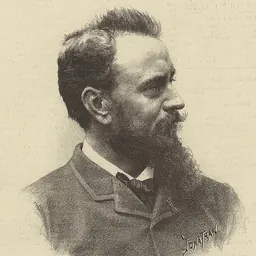

Related people
Same field, nearest in time

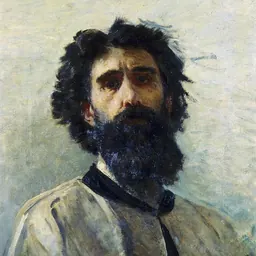
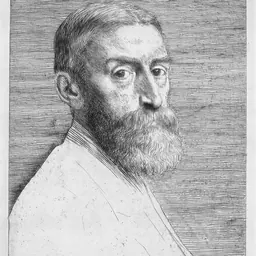
Contemporaries
People whose lives overlapped Auguste Chauvin's




Frequently asked questions
Who was Auguste Chauvin?
Belgian painter (1810-1884)
When was Auguste Chauvin born?
Auguste Chauvin was born on 25 October 1810 in Liège.
When did Auguste Chauvin die?
Auguste Chauvin died on 29 May 1884 in Liège.
What was Auguste Chauvin's occupation?
Auguste Chauvin was a painter and draftsperson.
What nationality was Auguste Chauvin?
Auguste Chauvin was Belgian.
Sources & further reading
Cite this page
APA: Biography.guide. (2026). Auguste Chauvin. https://biography.guide/auguste-chauvin/
MLA: "Auguste Chauvin." Biography.guide, https://biography.guide/auguste-chauvin/.
Chicago: "Auguste Chauvin." Biography.guide. https://biography.guide/auguste-chauvin/.
Data last updated: 2026-09-23 · Spot an error? Report a correction.
Portrait: Wikimedia Commons · author & licence
Page generated 2026-09-27 05:07 UTC