
About Vyacheslav Lypynsky
Lived 1882 – 1931 (aged 49). Vyacheslav Lypynsky was a Russian and Ukrainian historian, diplomat, opinion journalist and politician.
Vyacheslav (Viacheslav) Kazymyrovych Lypynsky (5 April 1882 — 14 June 1931) was a Ukrainian historian, social and political activist, an ideologue of Ukrainian conservatism. He was also the founder of the Ukrainian Democratic–Agrarian Party. Under the government of Hetmanate, he served as the Ukrainian ambassador to Austria.
Family lineage The Polish noble Lypynsky family, also transliterated as Lipiński, is of Mazovian origin, coming from the settlement of Lipiny in the Nur Land of the Duchy of Masovia - or the Nurska land "de Antiqua Lipiny". At the beginning of the 18th century, one branch of the family permanently settled in Podolia after Kazimierz-Józef Lipiński purchased the village of in 1759. Józef-Antoni then became stolnik of Drohiczyn and sub-steward of the Cherkasy Land. His son, Antoni, was the owner of , the subchamberlain of Kamianets, and an elected district marshal of the nobility.
The family's connection to Zaturtsi stemmed from the marriage of Emilia Bechkowska to Włodzimierz-Severyn-Marian Lipiński in 1839. Bechkowska gave the village of Zaturtsi as her dowry.
Early life Vyacheslav (on the left) with his father Kazimir and one of his brothers, Stanislav, sometime during the late 1800s. Lypynsky was born on in the village of , then part of the Vladimir-Volynsky Uyezd of the Volhynia Governorate in the Russian Empire (now in Volyn Oblast, Ukraine). (His nephew stated that he was instead born in the village of , as his brother Stanislav was, which was part of the Volhynia Governorate also but in the Lutsky Uyezd.) He was the firstborn son of Kazimir Lypynsky and Klara Rokicka, both of whom were Roman Catholics. His father, Kazimir, was the lord of Zaturtsi and a participant in the Russo-Turkish War (1877–1878), retiring as a staff captain. In 1881, he married Klara Rokicka, of the Rogala coat of arms Apolinary Rokick, who was the Lord of Chernivtsi (a small village in Podolia). As he later wrote, Ukrainian was his first language because his nanny, a peasant, "did not know Polish", and although he was "a Pole in terms of spoken language and religion, and a Russophile in the political views inherited from home", the imagery of Ukrainian culture, such as the Zaporozhian Cossacks, drew him in. He was enlisted as a one-year volunteer (вольноопределяющихся), who, after the implementation of conscription were people with higher or secondary education who voluntarily entered military service without being enrolled due to the conscription (but in practice were mostly wealthy young men who were landowners). Perhaps most influential to him during this time, however, was Bohdan Lepky. After overhearing a lecture by Lepky, he decided to enroll in the Ukrainian language study circle and began to cultivate a relationship with him, where they spoke extensively about a Ukrainian national idea. Lepsky also introduced him to the Ukrainian student community, the Prosvita society, and Ukrainian historian Stepan Tomashivskyi, who pushed him into the field of history.
He left the study of agronomy in 1905 after two years, but did not graduate because he did not complete the required promotion exams. There is a brief one-year period afterwords during which his activities were unknown and not documented, although his sister Vanda maintained that he was studying history in Krakow. He then intended to return to Ukraine and study history, first at Taras Shevchenko National University of Kyiv and then Lviv University, but his plans fell apart, and he returned to Jagiellonian University in 1908. He was then an "ordinary listener" to attend courses, but left soon after from Jagiellonian to start working and never formally completed his education.
Pre-World War I and literary activities Ukrainian-language newspaper and the Rakowski affair
After leaving his schooling, he became employed as a writer at the first Ukrainian daily newspaper "". He mostly wrote under the pseudonym "V. Pravoberezhets" for the newspaper (Pravoberezhets literally translating to "Right-Banker"), although he sometimes used his real name or "Prav.", intermittently in 1908, 1910, and 1911-12. he still praised the role of the German monarchy in the Balkans and furthermore, in private conversations with Mykhailo Hrushevsky proposed the possibility of a conservative current in the Ukrainian movement.
Almost immediately after the brochure's release it was banned although the censorship office for Kyiv allowed it for sale if the 30 pages covering the history of Polonization in Ukraine were removed. Lypynsky refused to do so, although copies still circulated among academians at the time. The brochure came into controversy from almost all angles: the Polish press advocated for destroying copies and claimed that Lypynsky demanded Catholics convert to Orthodoxy, and Russian nationalists said he was disowning the Polish name. Despite this, Dmytro Doroshenko stated the book was as important to the Ukrainian national identity at the time as Volodymyr Antonovych's Confession, and stated it was a landmark public declaration at the time.
Polish-language newspapers After the series of lectures he delivered in the summer of 1908, he sought to create a newspaper directed towards the Ukrainianization of the Polish nobility entitled "Przegląd Krajowy", first approaching Yosyp Yurkevych as a potential publisher of it. However, he rejected the idea of pandering towards such an audience. He then approached Bohdan Yaroshevsky, the founder of the Ukrainian Socialist Party, who agreed to publish it with the financial support of Count Mykhaylo Tyshkevych of the Tyszkiewicz family. The periodical was first launched in May 1909. It lasted for a total of 12 issues and had subscribers from Ukraine, St. Petersburg, Warsaw, and Lviv and was written entirely in Polish.
The periodical was reviewed favorably by the Ukrainian press, such as Rada and Dilo, which considered it as uniting Ukrainians of Polish culture and Poles on Ukrainian territory together. It was less favorably viewed by the Polish press, which was critical of it. However, it wouldn't last long due to chronic financial problems and insufficient reception of territorialist ideas, especially by the broader Polish public. Andrey Sheptytsky attempted to save the paper by providing an emergency funding of 1,000 crowns and even attempted to resort to abandoning it and creating a new monthly called "Przegląd Ukraiński", which was never realized. The project collapsed in early 1910, and he would look back critically on its failure.
He later attempted the idea again in late 1912 with the monthly "Życie Ukraińskie", but this also was never realized because he lacked collaborators who would write for it. The monthly was to be the organ of the Latin Church in Ukraine, however, and was not directed towards the whole Polish elements, and instead he wanted to address it to "the public that reads in Polish." His last attempt at writing in a Polish newspaper pre-World War I was in "Ukrainskaya Zhizn" in December 1912, in which he addressed Polish leading circles in relation to Ukraine.
Activities in Uman Lypynsky (center) at his estate in Rusalivski Chahary with his peasants in 1913-14. In July 1913, he received the estate located in the Uman Raion, which consisted of about 160 desyatynas of land, from his uncle Adam Apollonariyovych Rokytsky. I. Hyrych suggests he likely accepted the offer - despite receiving public renown at the time - because of his illness and an attraction to agricultural labor. In July 1914, then as an ensign, he was assigned to the 4th Novotroitsk-Yekaterinoslavsky Dragoon Regiment, which was headquartered in the Lomzha Governorate and part of the 6th Army Corps.
Views
A conservative monarchist, Lypynsky was critical of the populism and socialism of the leadership of the Central Council and Directorate of Ukraine, which emphasised the workers and intelligentsia as a source of support. Instead, Lypynsky proposed that the focus of the struggle of independence should be built around the peasantry, the bourgeois, and the elite. Accordingly, he felt that a primary focus in the struggle for Ukrainian independence should be the conversion of the Russified or Polonized Ukrainian elite or nobility to the cause of Ukrainian statehood. Lypynsky wrote that Ukrainian statehood depended on the loyalty of the Ukrainian population towards the Ukrainian state regardless of ethnic origins or social status. A Ukrainian monarch, such as a Hetman, was seen by Lypynsky as essential in cementing the loyalties of the members of various social classes and ethnicities. Although opposed to democracy, Lypynsky's national and class inclusiveness was also opposed to the integral nationalist ideology of his rival Dmytro Dontsov.
Works Szlachta na Ukrainie. Udział jej w życiu narodu na tle jego dziejów (1909) Stanisław Michał Krzyczewski. Z dziejów walki szlachty ukraińskiej w szeregach powstańczych pod wodzą Bohdana Chmielnickiego (1912) Z dziejów Ukrainy. Księga pamiątkowa ku czci Włodzimierza Antonowicza, Paulina Święcickiego i Tadeusza Rylskiego, wydana staraniem dr. J. Jurkiewicza, Fr. Wolskiej, Ludw. Siedleckiego i Wacława Lipińskiego (1913) Lysty do brativ chiliborobiv (1926)
Don’t just read it —
keep it.
Full-length biographies made to live with: read them, listen on the way to work, watch them tonight.
- E-book
- Audio
- Video
Instant download · yours to keep · every purchase keeps this site free
Important facts
People in Vyacheslav Lypynsky's life
Named in this biography and alive at the same time



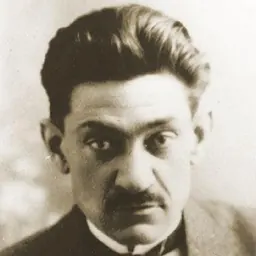
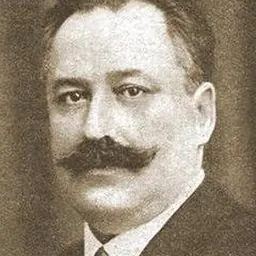
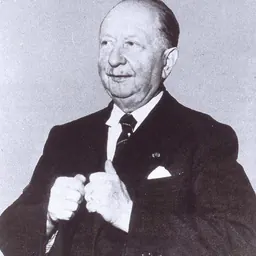
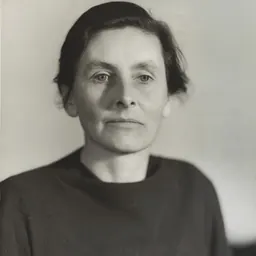
Related people
Same field, nearest in time
Contemporaries
People whose lives overlapped Vyacheslav Lypynsky's





Frequently asked questions
Who was Vyacheslav Lypynsky?
Ukrainian historian (1882-1931)
When was Vyacheslav Lypynsky born?
Vyacheslav Lypynsky was born on 5 April 1882 in Zaturtsi.
When did Vyacheslav Lypynsky die?
Vyacheslav Lypynsky died on 14 June 1931 in Pernitz.
What was Vyacheslav Lypynsky's occupation?
Vyacheslav Lypynsky was a historian, diplomat, opinion journalist and politician.
What nationality was Vyacheslav Lypynsky?
Vyacheslav Lypynsky was Russian and Ukrainian.
Sources & further reading
· Wikipedia: Vyacheslav Lypynsky
· DBpedia: Vyacheslav Lypynsky
Cite this page
APA: Biography.guide. (2026). Vyacheslav Lypynsky. https://biography.guide/vyacheslav-lypynsky/
MLA: "Vyacheslav Lypynsky." Biography.guide, https://biography.guide/vyacheslav-lypynsky/.
Chicago: "Vyacheslav Lypynsky." Biography.guide. https://biography.guide/vyacheslav-lypynsky/.
Data last updated: 2026-09-20 · Spot an error? Report a correction.
Page generated 2026-09-27 05:33 UTC