
About Bohdan Lepky
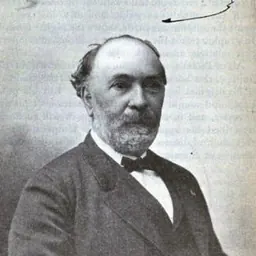
Lived 1872 – 1941 (aged 68). Bohdan Lepky was an Austrian and Polish writer, journalist, poet, literary critic, translator and literary historian.
The board and members of the Shevchenko Scientific Society celebrating the 100th anniversary of the publication of Ivan Kotliarevsky's Eneida, Lviv, 31 October 1898: Sitting in the first row: Mykhailo Pavlyk, Yevheniya Yaroshynska, Natalia Kobrynska, Olha Kobylianska, Sylvester Lepkyi, Andrii Chaykovskyi, Kost Pankivskyi. In the second row: Ivan Kopach, Volodymyr Hnatiuk, Osyp Makovei, Mykhailo Hrushevsky, Ivan Franko, Oleksandr Kolessa, Bohdan Lepky. Standing in the third row: Ivan Petrushevych, Filaret Kolessa, Yosyp Kyshakevych, Ivan Trush, Denys Lukiianovych, Mykola Ivasyuk.
Bohdan Teodor Nestor Sylvestrovych Lepky (, 9 November 1872 – 21 July 1941 ) was a Ukrainian writer, poet, scholar, public figure, and artist.
He was born on 9 November 1872, in the village of Kryvenke, in the same house where the Polish insurgent Bogdan Jarocki once lived. He spent his childhood in Krohulets. Son of Ukrainian writer and Greek Catholic priest Sylvester Lepkyi.
Education
Bohdan was sent to a normal school in Berezhany at the age of six, where he started in the second grade. In 1883 he started attending the gymnasium at the same town. Lepky would later recall that most young Ukrainian and Polish students were noted for their ethnic tolerance, mutual respect, openness, and active participation in choirs, stage productions, and concerts with a repertoire of both Polish and Ukrainian productions.
After completing the gymnasium in 1891, Lepky was admitted to the Academy of Arts in Vienna but left after a year to pursue a degree in literature. He then went to the Lviv University, studying Ukrainian history and literature, and was a part of the society Vatra and the choir Boyan there before he graduated in 1895. He then returned to the gymnasium in Berezhany as a teacher of Ukrainian and German language and literature.
Years in Kraków
Lepky moved to Kraków in 1899 when Kraków's Jagiellonian University launched a series of lectures on the Ukrainian language and literature and offered a chair to Lepky, who remained there for the rest of his life.
While in Kraków Lepky's house was at 28, Ulica Zielona, where he often hosted many other Ukrainian academics, including Kyrylo Studynsky, Vasyl Stefanyk, Vyacheslav Lypynsky, Mykhailo Zhuk, Mykhailo Boychuk, among others. Lepky also talked with Polish artists such as Kazimierz Tetmajer (1865–1940; a poet and prose writer, and author of the historical novel Legend of the Tatra Mountains), the playwright and painter Stanisław Wyspiański, and the poet Władysław Orkan.
Lepky is best known for his Polish translation of the ancient Ukrainian chronicle Słowo o pułku Igora (The Tale of Ihor's Host, 1905) and for the poem "Zhuravli" (Cranes, 1910), which became known as the song "You see, my brother, my friend, the gray string of cranes flying off into the distance." Lepky later said that one of Wyspiański's plays prompted him to compose Zhuravli: "In the fall of 1910, in Kraków, I was walking home after viewing a theatrical production of Wyspianski's drama Noc Listopadowa. The withered leaves rustled beneath my feet, and departing cranes were trumpeting high above. The poem seemed to come by itself, without my knowledge or effort. My brother Lev Lepky set it to music."
Bohdan Lepky died in Kraków and is buried at the local Rakowicki Cemetery. Is it a Storm or is it a Thunder - a patriotic march initially written in 1912 for the Sich sporting society and reworked in August 1914; put to music by Filaret Kolessa and popularized as a song used by fighters of the Ukrainian Sich Riflemen and Ukrainian Insurgent Army. Three Portraits - a book of memoirs in which he relates his encounters and creative relationships with Ivan Franko and Vasyl Stefanyk and reminiscences extensively about Władysław Orkan. Stricha - 1899 Tale of My Life - autobiographic trilogy published between 1936 and 1941
English Translations Short story "Why?".
Family Lepkyi's brother Lev studied at the Krakow Arts Academy and became a creator of Mazepynka cap, which became the standard headgear of Ukrainian Sich Riflemen during the First World War.
Don’t just read it —
keep it.
Full-length biographies made to live with: read them, listen on the way to work, watch them tonight.
- E-book
- Audio
- Video
Instant download · yours to keep · every purchase keeps this site free
Important facts
People in Bohdan Lepky's life
Named in this biography and alive at the same time


Related people
Same field, nearest in time


Contemporaries
People whose lives overlapped Bohdan Lepky's



Frequently asked questions
Who was Bohdan Lepky?
Ukrainian writer
When was Bohdan Lepky born?
Bohdan Lepky was born on 4 November 1872 in Krohulets, Kryvenke.
When did Bohdan Lepky die?
Bohdan Lepky died on 21 July 1941 in Kraków.
What was Bohdan Lepky's occupation?
Bohdan Lepky was a writer, journalist, poet, literary critic, translator and literary historian.
What nationality was Bohdan Lepky?
Bohdan Lepky was Austrian and Polish.
Sources & further reading
Cite this page
APA: Biography.guide. (2026). Bohdan Lepky. https://biography.guide/bohdan-lepky/
MLA: "Bohdan Lepky." Biography.guide, https://biography.guide/bohdan-lepky/.
Chicago: "Bohdan Lepky." Biography.guide. https://biography.guide/bohdan-lepky/.
Data last updated: 2026-09-20 · Spot an error? Report a correction.
Page generated 2026-09-27 05:31 UTC