
Andrey Sheptytsky
Metropolitan Archbishop of the Ukrainian Greek Catholic Church
About Andrey Sheptytsky
Lived 1865 – 1944 (aged 79). Andrey Sheptytsky was an Austrian and Ukrainian catholic priest, politician, transitional deacon, catholic bishop, metropolitan and theologian.
Andrey Sheptytsky OSBM (; ; 29 July 1865 – 1 November 1944) was a prelate and theologian of the Ukrainian Greek Catholic Church who served as Metropolitan of Galicia and Archbishop of Lviv from 1901 until his death in 1944. His tenure in office spanned two world wars and seven political regimes: Austrian, Russian, Ukrainian, Polish, Soviet, Nazi German, and again Soviet.
He was born as Roman Szeptycki in Prylbychi, a village outside of Lviv in Austrian Galicia, to on his father's side the Roman Catholic Szeptycki family who were part of the Polish szlachta (nobility) of Ruthenian origin, and on his mother's side to the very famous in Poland Fredro family, who also were part of the Roman Catholic Polish szlachta. Although he was baptized in the Latin Church, Sheptytsky joined the Greek-Catholic Order of Saint Basil the Great in 1888, and took the monastic name Andrey. In 1892 he took his solemn vows and was also ordained to the deaconate and the priesthood. He went on to serve as a hegumen and seminary professor in the Basilian Order. In 1899 Sheptytsky was nominated by Emperor Franz Joseph to become the Bishop of Stanislau, and his consecration took place that year. In 1900 he was selected to be the Metropolitan Archbishop of Galicia (also the leading bishop of the Ukrainian Greek Catholic Church), and he was enthroned in 1901.
Sheptytsky had a major role in raising Ukrainian national consciousness in modern-day western Ukraine and expanded the Ukrainian Catholic Church. He defended the interests of Ukrainians to the Austro-Hungarian House of Lords and Emperor Franz Joseph, established schools and a hospital society, and founded a seminary and the order of the Ukrainian Studite Monks. He also facilitated the appointment of the Ukrainian Catholic hierarchy for Ukrainian immigrants in Canada and the United States. Sheptytsky was a member of the National Council of the Western Ukrainian People's Republic after World War I, and when Galicia became part of Poland, he defended the Ukrainian Orthodox from persecution. He also became the main sponsor of the nascent Russian Greek Catholic Church in 1907 with the approval of the Holy See, and was responsible for the Russian Catholic hierarchy until shortly before his death.
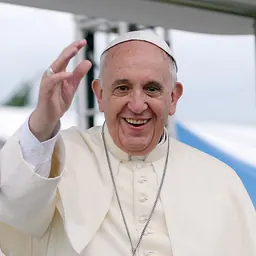
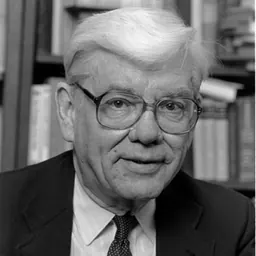
According to the church historian Jaroslav Pelikan, "Arguably, Metropolitan Andrey Sheptytsky was the most influential figure ...in the entire history of the Ukrainian Church in the twentieth century". Several locations and organizations in Ukraine have been named after him, including the city of Sheptytskyi in Lviv Oblast and the Andrey Sheptytsky National Museum of Ukrainian culture in the city of Lviv. In 2015, Pope Francis recognized his life as one of heroic virtue by declaring him Venerable.
Life
Early life and education He was born as Count Roman Aleksander Maria Szeptycki in Prylbychi, a village 40 km west/northwest of Lviv, in the Kingdom of Galicia and Lodomeria, then a crownland of the Austrian Empire. His parents were and Zofia née Fredro.
The Szeptycki family was part of the Polish szlachta of Ruthenian origin. The maternal Fredro family was descended from the Polish nobility and, through his mother, the future Metropolitan Bishop was the grandson of Polish Romantic poet Aleksander Fredro. The Szeptycki family produced a number of bishops of both Catholic rites, most notably in the 18th century. Greek Catholic Bishops of Lviv and Metropolitans of Kiev were: Athanasius and Leo, was also bishop of Lviv. was a Greek Catholic bishop of Przemyśl and Nikifor was archimanrite of Lavriv. The Latin Catholic Bishop of Płock was , while his nephew Marcin was elected to the position, but did not take it. One of his brothers, Klymentiy Sheptytsky, M.S.U., became a Studite monk, and another, Stanisław Szeptycki, became a General in the Polish Army. His brothers Leon and Aleksander died during WWII.
He was 2 m 10 cm (6 ft. 10 in.) tall.
Sheptytsky was baptized in the Roman rite at the parish church in Bruchnal (today Ternovytsia). Sheptytsky likely spoke about his desire to bring Russia to Catholicism during his audience with Pope Leo XIII in 1888, and it was one of the factors that influenced his decision to become an Eastern Catholic despite his family's Polish and Latin Church background. A monk who later became his aide wrote in 1933 that Sheptytsky "never turned his eyes away from the conversion of Russia."
Religious and political life
Sheptytsky became a novice at the Basilian monastery in Dobromyl on May 29, 1888. He took the name Andrey, after the younger brother of Saint Peter, Andrew the Apostle, considered the founder of the Byzantine Church and also specifically of the Ukrainian Church. Beginning in 1889, he studied Ukrainian there under . (now Ivano-Frankivsk), and Pope Leo XIII concurred. Thus he was consecrated as bishop in Lviv on 17 September 1899 by Metropolitan Julian Sas-Kuilovsky assisted by Bishop Chekhovych and Bishop Weber, the Latin-Rite auxiliary of Lviv. On February 5 of that year, he received a doctorate in theological sciences in Rome, nostrified at the Faculty of Theology of the Jagiellonian University. attended the twenty-first International Eucharistic Congress in Montreal; toured Ukrainian communities in Canada; and invited the Redemptorist fathers ministering in the Byzantine rite to come to Ukraine.
In the spring of 1914, the Austrian government lobbied for the Holy See to make Sheptytsky a cardinal, but this was not done.
World War I
After the outbreak of World War I, Sheptytsky proposed eventual creation of the Ukrainian state out of the Russian territories, he also appealed to believers to stay loyal to the emperor of Austria. While staying there he tried to recreate the Union by consecrating Josyf Botsyan as bishop of Lutsk. During the destruction the family archives were lost. In 1921 he was appointed apostolic visitor by the Pope, representing Vatican before the Red Cross and other humanitarian organizations tasked with aiding orphans and other victims of the recent war. In the United States the metropolitan had an audience with president Warren G. Harding and met with Ukrainian diplomats, voicing his opposition to the annexation of Eastern Galicia to Poland. As a result, Polish authorities started collecting compromising information against Sheptytskyi and the Polish press declared him a traitor, despite the fact that the metropolitan's own brother Stanisław was serving as the country's defence minister during that time. Fearing Sheptytskyi's influence in Galicia, Polish authorities offered the Vatican to appoint him to a position in Rome or in North America. Nevertheless, Sheptytskyi took a decision to return, an in August 1923 crossed the Polish border. Immediately thereafter he was arrested and spent six weeks isolated in Poznań. Finally, after a meeting with Polish president Stanisław Wojciechowski, the metropolitan was allowed to proceed to Lviv, where he arrived in early October.
Between 1923 and 1935 Sheptytskyi sponsored an art school in Lviv, which was established by painter Oleksa Novakivskyi and employed notable Ukrainian artists including Osyp Kurylas, Stepan Baley, Ivan Rakovskyi, Yevhen Nahirnyi, Volodymyr Peshchanskyi, Volodymyr Zalozetskyi and Ilarion Svientsitskyi. Twice a month, the metropolitan himself gave lectures at the establishment.
World War II After the German invasion of Poland, Sheptytsky issued a pastoral letter appealing not to succumb to propaganda. On October 9, 1939, after the Soviets took over eastern Poland, without the consent of the Holy See, he created a new territorial division of the Greco-Catholic Church on the territory of the USSR. He reportedly told Volodymyr Kubiyovych, who was helping organize it, that "there is virtually no price which should not be paid for the creation of a Ukrainian army." According to his close friend Rabbi David Kahane, however, Sheptytsky had believed that the Division would be used to fight Stalinism and personally expressed disgust in a conversation with the Rabbi about the Division's subsequent role as perpetrators of the Holocaust in Ukraine.
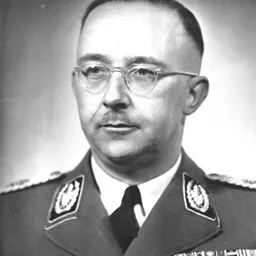
Also in February 1942, Sheptytsky sent a letter to Heinrich Himmler protesting the Holocaust. to protest Nazi atrocities.
According to historian Ronald Rychlak, "A German Foreign Office agent named 'Frederic' was sent in a tour through various Nazi-occupied and satellite countries during the war. He wrote in his confidential report to the German Foreign Office on September 19, 1943, that Metropolitan Archbishop Andrey Sheptytsky, of the Ukrainian Greek Catholic Church, remained adamant in saying that the killing of Jews was an inadmissible act. 'Frederic' went on to comment that Sheptytsky made the same statements and used the same phrasing as the French, Belgian, and Dutch bishops, as if they were all receiving instructions from the Vatican."
One of the rabbis whose life was saved by Metropolitan Sheptytsky, David Kahane, stated: "Andrew Sheptytsky deserves the undying gratitude of the Jews and the honorific title 'Prince of the Righteous'". In addition, among the Jews who, thanks to Sheptytsky's help, survived the war were Lili Pohlmann and her mother, Adam Daniel Rotfeld (later Poland's foreign minister), two sons of the chief rabbi of Katowice (including the prominent cardiac surgeon Leon Chameides). In March 1946, during the so-called "Lviv Synod", it was officially declared part of the Russian Orthodox Church, forcing millions of its members to continue their worship in the underground.
Views
Sheptytsky in the early years of his episcopacy expressed strong support for a celibate Eastern Catholic clergy. Yet he said to have changed his mind after years in Imperial Russian prisons where he encountered the faithfulness of married Russian and Ukrainian Orthodox priests and their wives and families. After this, he fought Latin Catholic leaders who attempted to require clerical celibacy among Eastern Catholic priests.
Sheptytsky was also a patron of artists, students, including many Orthodox Christians, and a pioneer of ecumenismhe also opposed the Second Polish Republic's policies of linguistic imperialism, coercive Polonisation, and the forced conversion of Greek Catholic and Orthodox Ukrainians into Latin Rite Catholics. He strove for reconciliation between ethnic groups and wrote frequently on social issues and spirituality. In 1958 the cause for his canonization was begun, but stalled at the behest of Cardinal Stefan Wyszynski. Pope Francis approved his life as being one of heroic virtue on 16 July 2015, thus proclaiming him to be Venerable, the first step towards sainthood.
The first monument to Metropolitan Andrey Sheptytsky was erected during his lifetime in 1932. It was destroyed by the Soviets in 1939. A new monument to Metropolitan Andrey Sheptytsky was inaugurated in Lviv on 29 July 2015, the 150th anniversary of his birth.
Shepytsky is considered to be, alongside Metropolitan Eugene Hackmann of Bukovina, one of the most important religious figures of modern Ukraine. The Lviv National Museum, founded by Sheptytsky in 1905, now bears his name. The Information-Resource Center of the Ukrainian Catholic University that was opened in September 2017 also bears his name The Metropolitan Andrey Sheptytsky Center.
On 23 August 2024, the 103rd Territorial Defense Brigade of the Armed Forces of Ukraine was named in his honor by a decree of President Volodymyr Zelenskyy. On 19 September 2024, the Verkhovna Rada of Ukraine voted to rename the city of Chervonohrad to Sheptytskyi in his honor as a part of the derussification campaign.
Images
Don’t just read it —
keep it.
Full-length biographies made to live with: read them, listen on the way to work, watch them tonight.
- E-book
- Audio
- Video
Instant download · yours to keep · every purchase keeps this site free
Important facts
more
Patriarch Andrej Sheptytskyj, Andriy Sheptytsky, Andrzej Szeptycki, Andriy Sheptytskyi, Andrej Sheptytskyj, Andrej Szeptycki, Andrej Sheptytsky, Andrei SheptytskiPeople in Andrey Sheptytsky's life
Named in this biography and alive at the same time




Related people
Same field, nearest in time
Contemporaries
People whose lives overlapped Andrey Sheptytsky's



Frequently asked questions
Who was Andrey Sheptytsky?
Metropolitan Archbishop of the Ukrainian Greek Catholic Church (1865-1944)
When was Andrey Sheptytsky born?
Andrey Sheptytsky was born on 29 July 1865 in Prylbychi.
When did Andrey Sheptytsky die?
Andrey Sheptytsky died on 1 November 1944 in Lviv.
What was Andrey Sheptytsky's occupation?
Andrey Sheptytsky was a catholic priest, politician, transitional deacon, catholic bishop, metropolitan and theologian.
What nationality was Andrey Sheptytsky?
Andrey Sheptytsky was Austrian and Ukrainian.
Sources & further reading
· Wikipedia: Andrey Sheptytsky
Cite this page
APA: Biography.guide. (2026). Andrey Sheptytsky. https://biography.guide/andrey-sheptytsky/
MLA: "Andrey Sheptytsky." Biography.guide, https://biography.guide/andrey-sheptytsky/.
Chicago: "Andrey Sheptytsky." Biography.guide. https://biography.guide/andrey-sheptytsky/.
Data last updated: 2026-09-20 · Spot an error? Report a correction.
Page generated 2026-09-27 05:31 UTC