
About Vlada Ilić
Lived 1882 – 1952 (aged 69). Vlada Ilić was a politician, industrialist and mayor.
Vlada Ilić (; 6 September 1882 – 3 July 1952) was a Serbian merchant, industrialist, and politician, who, as a mayor of Belgrade, from 1935 to 1939 oversaw the unprecedented development of the city. Named the "first modern mayor of Belgrade", he is today probably best remembered as the founder of the Belgrade Zoo.
Early life Ilić was born on in Vlasotince, south Serbia, as the youngest of six sons of Kostadina (née Stojilković) and Kosta Ilić, a mumdžija, or the soap-maker.
His father was among the first generation of merchants which developed in Vlasotince in the 1860s and 1870s, while the area was still occupied by the Ottoman Empire. He originally produced soaps and candles and his occupation name became his nickname, Kosta Mumdžija. After Turks withdrew in 1878, Kosta bought the land from them, becoming a landowner. He later developed the family business into the large company, which included the textile production.
He had five brothers (Sotir, Mihajlo, Milan, Petar and Blagoje) and a sister Jevrosima, nicknamed Roska. She was married to Mika Janković, from Leskovac, but they later moved to Belgrade. Other brothers were mostly oriented to the business family owned in Leskovac. During Interbellum, Leskovac had 5,000 workers out of which 1,500 were employed by the Ilić family. They were the major benefactors in Leskovac prior to World War II (palaces, churches, newspapers, etc.)
Business career
His father Kosta, who also ventured into trade and shark loaning,
Ilić enjoyed the major support of Milan Stojadinović, an economist and a politician, finance minister (1922–24, 1924–26, 1934–35) and prime minister of Yugoslavia (1935–39). He was member of Stojadinović's party Yugoslav Radical Union (JRZ or Jereza) and of Jugoras, state sponsored Yugoslav Workers Trade Union. As the competent entrepreneur, he was a longtime president of the City of Belgrade's Industrial Chamber and of the Central Industrial Corporation of Yugoslavia.
Apart from factories, it is known that he owned shares in the foreign banks, in Istanbul and Alexandria, but there were also stories about secret accounts in Swiss banks.
The first planned expansion of Belgrade over the Sava began on 6 June 1937 with the construction of the Staro Sajmište complex for the Belgrade Fair and in 1938 the drying and filling of the surrounding marshes began, with an envisioned new city for 500,000 inhabitants. The new Communist authorities continued with the works after 1948 which resulted in the construction of New Belgrade. It hosted international fairs, with task of promoting the economy of Yugoslavia as well. On 10 September 1938 one of the exhibitions on the fair was the first presentation of television in this part of Europe by Philips, and the air shows and the first car show in Belgrade were held there. Named elementary school "Cloth Factory Ilić", it was built from his donations in 1923. It has been renamed "Jovan Cvijić" in 1931, a name it still bears today.
On 12 July 2009 His tenure of almost 5 years in office was a rarity in Belgrade, as in the previous decades city saw a large number of mayors which would stay for short terms. City finances were in huge debt and city administration was characterized by the major corruption and negligence. He introduced structural reforms, austerity measures concerning the expenditures of the administration and hired new, young people.
Personal life
Ilić married Olga Jovanović (1898–1959), from Kikinda. Olga, nicknamed Cica, through her mother Olga Dunđerski was a member of another famous and wealthy family, the , Her grandfather, (1833–1917), was a major industrialist and landowner in Vojvodina and one of the reachest people in the region. Dunđerski was one of the shareholders in the Ilić brothers' conglomerate. Result of the merger of two wealthy families, both personal and business, was that Vlada Ilić was one of the richest persons in the Kingdom of Yugoslavia, prior to the World War II. The best man at his wedding was King Alexander I of Yugoslavia,
He built apartments in Karaburma for his employees, and even his villa was built on a location close to his factories. Every year, on Lazarus Saturday, which is in Serbia observed as the children's holiday of Vrbica, he would donate the complete wardrobe to the children of his workers.
Though he left his birthplace as a minor, Ilić often helped Vlasotince. He was very fond of Petar Spirić, his elementary school teacher, so as an act of gratitude he donated money, in his teacher's name, for the construction of Cultural Center in Vlasotince in 1930, so Spirić is named as one of the contributors on the memorial plaque. Every Easter, Ilić sent 45 suits for the underprivileged pupils and his mother-in-law dispatched a railroad car of wheat to the Vlasotince Red Cross in 1929, which was distributed to 320 poorest families. Many workers in his factories originated from the region, so an "Association of Vlasotince" was founded in Belgrade in 1928, Ilić's stallion Vesnik ("Messenger") set records during the Interbellum, while his filly Laguna won the triple crown in 1941. Though new authorities took the stable from him, they kept his horses, and his stallion Jadran II ("Adriatic"), won a triple crown in 1948. His name was largely left out in the history of Serbian horse racing until the late 20th century. Today, a race is named in his honour. He signed the "Appeal to the Serbian people" from 13 August 1941. Over 400 public figures signed the document which asked for the allegiance to the system of occupation and the German new order in Serbia. Still, many refused to sign it, including Ivo Andrić, Isidora Sekulić, Milutin Milanković, etc. Ilić's widow Olga died in 1959.
A monograph on his life, Prvi moderni gradonačelnik Beograda ("The first modern mayor of Belgrade"), was authored by Saša Z. Stanković and published in 2017.
Don’t just read it —
keep it.
Full-length biographies made to live with: read them, listen on the way to work, watch them tonight.
- E-book
- Audio
- Video
Instant download · yours to keep · every purchase keeps this site free
Important facts
People in Vlada Ilić's life
Named in this biography and alive at the same time

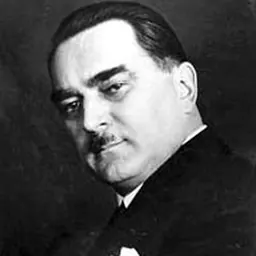
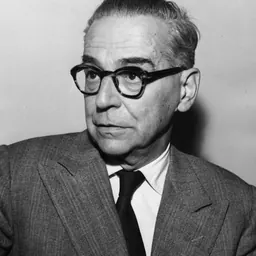
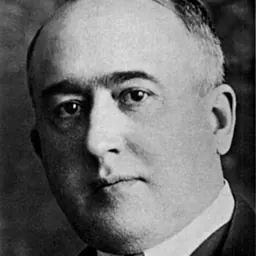

Related people
Same field, nearest in time





Contemporaries
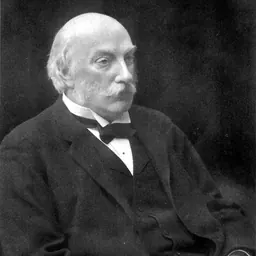
People whose lives overlapped Vlada Ilić's





Frequently asked questions
Who was Vlada Ilić?
Serbian politician
When was Vlada Ilić born?
Vlada Ilić was born on 19 September 1882 in Vlasotince.
When did Vlada Ilić die?
Vlada Ilić died on 3 July 1952 in Belgrade.
What was Vlada Ilić's occupation?
Vlada Ilić was a politician, industrialist and mayor.
Sources & further reading
Cite this page
APA: Biography.guide. (2026). Vlada Ilić. https://biography.guide/vlada-ilic/
MLA: "Vlada Ilić." Biography.guide, https://biography.guide/vlada-ilic/.
Chicago: "Vlada Ilić." Biography.guide. https://biography.guide/vlada-ilic/.
Data last updated: 2026-09-20 · Spot an error? Report a correction.
Page generated 2026-09-27 05:18 UTC