
About Jovan Cvijić
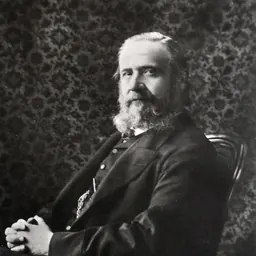
Lived 1865 – 1927 (aged 61). Jovan Cvijić was a geographer, geomorphologist, diplomat, ethnologist, university teacher and geologist.
Jovan Cvijić (, ; 1865 – 16 January 1927) was a Serbian geographer, ethnologist, university professor and academic.
He was the president of the Serbian Royal Academy of Sciences and rector of the University of Belgrade. Cvijić is considered the founder of geography in Serbia. He began his scientific career as a geographer and geologist, and continued his activity as a human geographer and sociologist. He initiated the Serbian Ethnographic Collection (Srpski etnološki zbornik), within which 102 books were published, representing a unique scientific and interdisciplinary project on a global scale. Jovan Cvijić received numerous awards and medals, both domestically and internationally, for his work.
Early life and family
Cvijić was born in Loznica, in the westernmost part of the Principality of Serbia. His family was part of the Spasojević branch of the Piva tribe (Pivljani) in Old Herzegovina (currently Montenegro). Cvijić's father, Todor, was a merchant; his grandfather, Živko, was head of Loznica and a supporter of the House of Obrenović in Mačva. Živko fought in the 1844 Katana Uprising against the Defenders of the Constitution, and died after torture.
Cvijić's great-grandfather, Cvijo Spasojević, patriarch of the Cvijić family, was a hajduk leader in Old Herzegovina who fought in the First Serbian Uprising against the Ottoman Empire. After its failure in 1813, he moved to Loznica, built a house and opened a store. His thesis Das Karstphänomen, introduced the sub-discipline study of karst geomorphology.
Soon afterwards, Cvijić toured the Balkans to conduct fieldwork and research.
Research
Cvijić's work can be compartmentalized into five sections: the karst, glaciations in the Balkan mountains, tectonic elements in the peninsula, lakes and human geography.
Karst geomorphology When studying under Albrecht Penck's tutelage he was encouraged to focus on the study of karst phenomena in the northern Dinaric Alps which was a region Penck was already acknowledged with. His first major work was Das Karstphänomen published in 1893. This work was a publication of the key points of his doctoral thesis. Das Karstphänomen was published as a slightly modified translation in Serbo-Croat in 1895. This work describes landforms such as karren, dolines and poljes. In a 1918 publication, Cvijić proposed a cyclical model for karstic landscape development. The results of this work written in French were made accessible to English-language scientists in 1921 when it was commented by E.M. Sanders. Differences in climate and geology were used by Cvijić to explain various shapes and types of karst landforms, sometimes incorrectly. Nevertheless, his views on the role of climate on the development of karst were more accurate than those of various climatic geomorphologists that succeeded him and who greatly exaggerated the role of climate.
Concurrently, he developed an interest in the life of people living in the Balkans. His travels took him to Macedonia and its lakes, the coastlines of Albania and Greece, to Lake Skadar and Lake Pamvotida. In 1902 he published his first work on human geography.
He published detailed instructions for conducting field research into populations and habitats to help his colleagues, including the 1907 article "On scientific research and our University".
Cvijić's thesis on the effects of climate and geography on human life is the basis of his approach to human geography, where he emphasizes that humankind is ecologically sensitive. When classifying anthropological types Cvijić considered social structure (work, endogamy, exogamy and migration) the primary factor, stressing the effects of the physical environment on a population's psyche. His basic concepts are presented in the 1902 Balkan-peninsula paper, "Human-geography problems". Influenced by Cvijić's paper, Milorad Dragić (a former student) elaborated on psychological anthropological research in his 1911 paper "Instructions for studying settlements and psychological characteristics" (after which Cvijić expanded his thesis on "The Balkan peninsula and South Slavic lands" in Serbian).
Cvijić introduced the term 'metanastasic movements', which referred to slow, gradual, a place-to-place human movement. He and his students took wide exploration of this phenomenon, eventually establishing the Serbian ethnological-historic school which gathered ethnological material from all around the Balkan peninsula and encompassed exploration of written sources.
The sparking of interest in human-geographical and ethnographical research was one of the greatest achievements of Cvijić's scientific career. His efforts and research helped him gather crucial data, which he used during negotiations on the state borders of the Kingdom of Yugoslavia after World War I.
Influence on Yugoslav state borders After the conclusion of World War I, Cvijić was invited to the Paris Peace Conference as an expert on border delineation. Using ethnographic charts, Cvijić demonstrated the geographical distribution of the various Balkan peoples which helped determine the borders of a new country: the Kingdom of Serbs, Croats and Slovenes. It was agreed that the new country should incorporate Banat, Bačka, Baranya and Carniola as well as the Bled triangle (Bled, Bohinj and Triglav).
Teaching After Cvijić's return from Vienna in March 1893 he became a professor in the Faculty of Philosophy of the Velika škola in Belgrade where he taught geography. He was tenured and taught there until 1927.
... For economic independence, Serbia must acquire access to the Adriatic Sea and one part of the Albanian coastline: by occupation of the territory or by acquiring economic and transportation rights to this region. This, therefore, implies occupying an ethnographically foreign territory, but one that must be occupied due to particularly important economic interests and vital needs. He believed that Serbia could govern a much larger area than the territory it held.
Legacy
With a group of geographers and biologists, Cvijić founded the Serbian Geographic Society in Belgrade in 1910 and was its president until his death. On 21–22 November 2002, the Academy hosted a meeting on "the socio-political work of Jovan Cvijić".
The Jovan Cvijić's house is housed in his family's house in Belgrade at 5 Jelena Ćetković Street. Since 1996, the house (built in 1905) has been declared a cultural monument by the state and was decorated by Dragutin Inkiostri Medenjak; Cvijić favored a decorative style based on Balkan folklore. The museum features manuscripts, letters, notes, books, paintings, geographical charts, atlases and personal items, and occasional lectures are presented.
In Serbia, a number of schools and streets are named after Cvijić and he is still considered the most important Serbian geographer.
His work has been continued by his students, six of whom later became members of the Serbian Academy (including Pavle Vujević, Borivoje Z. Milojević and Milisav Lutovac). The scientist's life and work were researched by geographer Milorad Vasović for his 454-page book, Jovan Cvijić: Scientist, Public Worker, Statesman (1994).
Academic honors
Cvijić received a number of awards. He belonged to 30 scientific societies (academies, geographical and natural societies), receiving ten decorations. Cvijić received a gold medal for his work in 1924 from the New York Geographical Society and medals from England and France. Two varieties of saffron were named after him.
Cvijić was awarded:
1901: Order of Saint Sava, III class 1903: Prix Conrad Malte-Brun Golden Medal 1904: Order of Saint Sava, II class 1907: Order of Prince Danilo I, II class 1909: Order of Saint Alexander, II class 1911: Legion of Honour, Commander 1911: Order of the White Eagle, V class 1917: Prix Eugen Patron Silver Medal of Geographical society of Paris 1918: Medal of the Charles University in Prague 1920: Patron's Medal of the Royal Geographical Society 1920: Order of the Charity Cross 1923: Order of Saint Sava, I class 1924: Cullum Geographical Medal 1924: Medal of the Paris-Sorbonne University 1924: Gold medal of the American geographical society, New York 1925: Order of the White lion
Cvijić was named:
Works
In more than 30 years of scientific study, Cvijić published many works. One of the best-known is The Balkan Peninsula. Other publications include:
Prilog geografskoj terminologiji našoj, 1887 Ka poznavanju krša istočne Srbije, 1889 Prekonoška pećina, 1891 Srednja visina i površina Srbije i njenih oblasti, 1891 Geografska ispitivanja u oblasti Kučaja, 1893 Das Karstphänomen, Geographiche Abhandlungen, Wien, 1893 Karst, geografska monografija, Belgrade 1895 Pećine i podzemna hidrografija u istočnoj Srbiji, 1895 Izvori, tresave i vodopadi u istočnoj Srbiji, 1896 Tragovi starih glečera na Rili, 1897 Glacijalne i morfološke studije o planinama Bosne, Hercegovine i Crne Gore, 1899 Karsna polja zapadne Bosne i Hercegovine, 1900 Struktura i podela planina Balkanskog poluostrva, 1902 Antropogeografski problemi Balkanskog poluostrva, 1902 Novi rezultati o glacijalnoj eposi Balkanskog poluostrva, 1903 Balkanska, alpijska i karpatska glacijacija, 1903
Nekolika posmatranja o etnografiji makedonskih Slovena, 1906 Osnove za geografiju i geologiju Makedonije i Stare Srbije, 1, 1906; 2, 1906; 3, 1911 Grundlinien der Geographie und Geologie von Mazedonien und Alt-Serbien. Nebst Beobachtungen in Thrazien, Thessalien, Epirus und *Nordalbanien, 1908 Jezerska plastika Šumadije, 1909 L'anexion de la Bosnie et la question Serbe, Paris, 1909 Dinarski Srbi, 1912 Izlazak Srbije na Jadransko More, 1912 Raspored Balkanskih naroda, 1913 Ledeno doba u Prokletijama i okolnim planinama, 1913 Jedinstvo i psihički tipovi dinarskih južnih Slavena, 1914 Mouvements metanastasiques dans la Peninsule Balkanique, Le Monde Slave, 1917 Hydrographie souterraine et évolution morphologique du Karst, 1918 La Peninsule Balkanique, Geographie Humaine, 1918 Etnogeografske karte jugoslovenskih zemalja, 1918 Severna granica južnih Slavena (La frontiere septentrionale des Jugoslaves), 1919 Đerdapske terase, 1922 Balkansko poluostrvo i južnoslovenske zemlje, 1922 Metanastazička kretanja, njihov uzrok i posledice, 1922 Geomorfologija I-II, 1924. and 1926 Karst i čovek, 1925 Karst i srpske narodne pripovetke, 1925 Seobe i etnički procesi u našem narodu, 1927 Balkansko poluostrvo i južnoslavenske zemlje, 1931
Don’t just read it —
keep it.
Full-length biographies made to live with: read them, listen on the way to work, watch them tonight.
- E-book
- Audio
- Video
Instant download · yours to keep · every purchase keeps this site free
Important facts
People in Jovan Cvijić's life
Named in this biography and alive at the same time



Related people
Same field, nearest in time


Contemporaries
People whose lives overlapped Jovan Cvijić's





Frequently asked questions
Who was Jovan Cvijić?
Serbian scientist (1865–1927)
When was Jovan Cvijić born?
Jovan Cvijić was born on 11 October 1865 in Loznica.
When did Jovan Cvijić die?
Jovan Cvijić died on 16 January 1927 in Belgrade.
What was Jovan Cvijić's occupation?
Jovan Cvijić was a geographer, geomorphologist, diplomat, ethnologist, university teacher and geologist.
What nationality was Jovan Cvijić?
Jovan Cvijić's recorded nationality: Kingdom of Serbia, Kingdom of Serbs, Croats and Slovenes, Principality of Serbia.
Sources & further reading
Cite this page
APA: Biography.guide. (2026). Jovan Cvijić. https://biography.guide/jovan-cvijic/
MLA: "Jovan Cvijić." Biography.guide, https://biography.guide/jovan-cvijic/.
Chicago: "Jovan Cvijić." Biography.guide. https://biography.guide/jovan-cvijic/.
Data last updated: 2026-09-20 · Spot an error? Report a correction.
Page generated 2026-09-27 05:18 UTC