
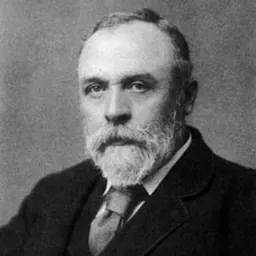
Vivian Stranders
British military officer and German spy
About Vivian Stranders
Lived 1881 – 1959 (aged 77–78). Vivian Stranders was a British and German university teacher, military officer, spy, propagandist, scholar of English and teacher.
Vivian Stranders (1881–1959) was a British-born Royal Air Force officer, German spy, and Nazi propagandist. In his younger years, Stranders worked as a clerk, schoolmaster, and commission agent. He joined the part-time Territorial Force Royal Engineers in 1911 and rose to the rank of lieutenant. Stranders transferred to the Royal Field Artillery upon the outbreak of the First World War and served on the Western Front. He joined the Royal Flying Corps in 1917 as an equipment officer and, following the creation of the Royal Air Force, became a staff officer specialising in intelligence. After the war he served in Germany as a translator for commissions supervising the terms of disarmament and reparations.
Demobilised in 1921, Stranders remained in Germany and established an import business. By 1926, he had begun working for the German intelligence services, gathering information on French aviation matters. He was detected by the British Secret Intelligence Service and marked for arrest but was picked up by the French police first. Stranders was sentenced to two years' imprisonment for industrial espionage. After his release, he emigrated to Germany, joining the Nazi Party in 1932 and taking German citizenship in 1933. He lectured on English at universities and received a doctorate. During the Second World War, Stranders became a officer specialising in propaganda and working with British prisoners of war. He was nominally head of the British Free Corps, a small and unsuccessful collaborationist military unit. After the war, Stranders was arrested but escaped prosecution for treason and lived out the rest of his life in Germany.
Early life Stranders was born in 1881; his father was a composer and a professor at the Guildhall School of Music. He attended King Edward's School, Birmingham, a public school, before taking a degree in classical philology at University College London. He ceased to be supernumerary on 22 September 1911, being taken onto the unit's establishment strength. Stranders was promoted to the rank of lieutenant on 15 August 1913.
After the outbreak of the First World War in 1914 Stranders was serving with the 10th Fortress Company of the Royal Engineers. In July 1915 he was appointed to the brigade's ammunition column and served in that role on the Western Front until 1916.
Stranders joined the Royal Flying Corps on 8 February 1917, being appointed an equipment officer 3rd class. He was appointed to the more senior position of equipment officer 2nd class on 1 July 1917 and granted temporary rank as lieutenant in that role. Stranders was transferred to the Royal Air Force (RAF) when that force was established in April 1918. From September 1919 Stranders served in Germany with the Allied Aeronautical Commission of Control (under the Military Inter-Allied Commission of Control) and the Reparation Commission, mainly in Hamburg and Kiel. On 25 August 1920 he was promoted in his Territorial Force role to lieutenant of artillery, with precedence from 1 July 1917. Stranders relinquished his territorial force commission on 30 September 1921 when the force became the Territorial Army. Stranders left Germany on 21 January 1921 when he was demobilised from the RAF, being transferred to the unemployed list; he received permission to use the rank of captain in retirement.
Espionage case After demobilisation Stranders became a businessman. He established an import company in Düsseldorf, which specialised in English-made motorcycles. His business later moved to Cologne and Berlin and he had operations in Paris. By 1926 he was the official representative of a French aircraft manufacturer in Germany.
By 1926 Stranders had been recruited by the German intelligence services. He was active in London, Paris and Brussels gathering intelligence mainly on French aviation matters. He was detected by the Secret Intelligence Service (SIS) while trying to secure British and French military information from a Belgian person. Before he could return Stranders was, on 21 December 1926, arrested by French police, who had detected a leak of military aviation intelligence. In connection with the case British Special Branch officers raided a property in Brixton, London, in early January 1927 and spoke with an Englishman and an Austrian man. The case attracted significant press coverage and public attention. On 11 February the Member of Parliament for Shrewsbury, Viscount Sandon asked the Under-Secretary of State for Air, Sir Philip Sassoon, if Stranders still held a position in the RAF Reserve and received the reply that he did not, despite contrary press reports.
Stranders' trial began on 24 February 1927; it was held in camera. The trial was attended by Stranders' ex-wife and their two children. By 1931 he was in Weimar and was in contact with the Nazi Party. Stranders was Jewish and some of his SS colleagues suspected him of being a British spy. He worked on schemes relating to British prisoners of war, including the collaborationist unit of the British Free Corps of which he was nominal head from late 1944 until the end of the war. The unit is considered a failure and never amounted to more than a few dozen members, who were arrested by US forces in 1945. Stranders lived the rest of his life in North Rhine-Westphalia and died there after a long illness in 1959, aged 78.
Don’t just read it —
keep it.
Full-length biographies made to live with: read them, listen on the way to work, watch them tonight.
- E-book
- Audio
- Video
Instant download · yours to keep · every purchase keeps this site free
Important facts
Related people
Same field, nearest in time


Contemporaries
People whose lives overlapped Vivian Stranders's




Frequently asked questions
Who was Vivian Stranders?
British military officer and German spy
When was Vivian Stranders born?
Vivian Stranders was born in 1881 in London.
When did Vivian Stranders die?
Vivian Stranders died in 1959 in Schwerte.
What was Vivian Stranders's occupation?
Vivian Stranders was a university teacher, military officer, spy, propagandist, scholar of English and teacher.
What nationality was Vivian Stranders?
Vivian Stranders was British and German.
Sources & further reading
Cite this page
APA: Biography.guide. (2026). Vivian Stranders. https://biography.guide/vivian-stranders/
MLA: "Vivian Stranders." Biography.guide, https://biography.guide/vivian-stranders/.
Chicago: "Vivian Stranders." Biography.guide. https://biography.guide/vivian-stranders/.
Data last updated: 2026-09-20 · Spot an error? Report a correction.
Page generated 2026-09-27 05:01 UTC