
About Věra Janoušková
Lived 1922 – 2010 (aged 88). Věra Janoušková was a Czech graphic designer, sculptor, painter, collagist and graphic artist.
Věra Janoušková, née Havlová (25 June 1922 – 10 August 2010) was a Czech sculptor, collagist, painter and graphic artist. She was the wife of sculptor Vladimír Janoušek. In the 1960s, her sculptures made of enamel were among the highlights of Czech modern art and she is deservedly listed in Hazan's Nouveau dictionnaire de la sculpture moderne (Paris, 1970). After the occupation of Czechoslovakia by Soviet troops in August 1968, both Věra and Vladimír Janoušek lost the opportunity to exhibit and worked in seclusion. After the fall of communism in Czechoslovakia, Věra Janoušková had a retrospective exhibition at the National Gallery in Prague. In 2004, she founded the Věra and Vladimír Janoušek Foundation and bequeathed the entire estate of the couple to Museum Kampa – Jan and Meda Mládek Foundation.
Life Věra Janoušková (née Havlová) was born on 25 June 1922 in Úbislavice, in the family of a country schoolteacher as the youngest of three sisters. On the recommendation of her teacher, who discovered her talent for drawing, she took exams at the School of Applied Arts in Prague (UPŠ) for the study of painting, and although she failed the first time, the atmosphere of the school influenced her decision to devote herself to art. After a year's practice at the Vocational School of Stone-Sculpture in nearby Hořice, where she attended courses in art theory and had the opportunity to draw and model in clay (prof. Plichta), she was accepted in 1942 at the School of Applied Arts (UPŠ) to the sculpture studio of prof. Karel Dvořák.
After the war in 1945 she moved to the studio of Prof. Josef Wagner, where her classmates were Eva Kmentová, Alina Szapocznikow, Olbram Zoubek, Miloslav Chlupáč, Zdeněk Palcr, Vladimír Janoušek, Eugenie Jungová, Antonín Brejník and Vítězslav Jungbauer. During the Nazi Occupation, the School of Applied Arts substituted the closed Academy of Fine Arts and therefore in 1945 it gained the status of a second art college (Academy of Applied Arts in Prague). Among the professors who taught there were Václav Nebeský, Emil Filla, František Tichý, Josef Kaplický, Jan Bauch and Jan Lauda. At school and at post-war Prague exhibitions, students had the opportunity to get acquainted with modern European art. Janoušková absorbed various influences from structural abstraction to pop art, but the closest to her sensibility were the sculptural works of Gutfreund, Picasso, Moore or the works of Dubuffet.
After the war, she negotiated the possibility of studying at the École nationale supérieure des beaux-arts with the then best French sculptor-portraitist Marcel Gimond (a pupil of Rodin and Maillol), but the communist coup of 1948 ruined this opportunity. In 1948, Věra Havlová married Vladimir Janoušek and together with him went on a one-year scholarship to the Academy of Fine Arts in Sofia. In the 1950s, the Janoušek couple worked in a barn in Dolní Kalná at Vladimír parents' house. They acquired their first Prague studio in a workshop with an adjoining yard in the former Smíchov prison in Malátova Street. It became a place of meetings and exchanges of opinions of their generational comrades and younger artists. Věra was friends with Adriena Šimotová. In 1951–1959 Věra Janoušková participated in the 1st–4th Czechoslovak Fine Arts Show and in 1958 in the Young Art Exhibition in Brno.
In 1960, Věra Janoušková was a founding member of the UB 12 creative group and exhibited her sculptures at the first solo exhibition in Gallery on Charles Square. The first UB 12 exhibition in gallery of the then biggest publishing house Československý spisovatel in 1962 was closed three times in a row at the request of the Central City Committee in Prague, was criticised in the party press of the time and a fictional radio interview with an "outraged" visitor was published. This eventually led to unusually high attendance and awakened the interest of theorists – Jindřich Chalupecký and Miroslav Lamač. Věra Janoušková's sculptures made from found materials were cited by the party press as a particularly intimidating example. In 1965, she had her second solo exhibition at Václav Špála Gallery, which was run by Jindřich Chalupecký. In the 1960s, she was represented at important exhibitions of Czech art abroad (Budapest, 1960, Genoa, 1965, Liège, West Berlin, 1966, Turin, Middelheim-Antwerp, Expo 67 Montreal, 1967, Paris, 1968, Legnano, 1969, West Berlin, 1970).
In the second half of the 1960s, the Janoušek couple acquired a plot of land in Prague-Košíře, where they built their own sculpture studio according to the design of Vladimír Janoušek. The approval project of the functionalist building was created by the office Hrubý, Cubr, Pokorný (authors of the award-winning Czechoslovak Pavilion at the Expo 58 in Brussels) and later modified by arch. Alena Šrámková. After a very fruitful period in the 1960s, when the Janoušek couple presented their work both at home and abroad, the soviet occupation in August 1968, followed by two decades of harsh "normalization", was a disaster for both of them. Opportunities to exhibit were rare and held only in unofficial spaces or far outside Prague, public commissions were non-existent, foreign contacts were broken. No official gallery in a larger city was allowed to hold an exhibition for Věra Janoušková's 60th birthday, and in the end it was held in the modest premises of the theatre in Český Těšín.
Neither Věra nor Vladimír Janoušek did consider emigration because of their grandparents. Finally, the strong attachment to the country and the friendly environment within the community of artists similarly driven into involuntary isolation prevailed. The Janoušek couple worked alternately in studios in Prague-Košíře and in Vidonice near Pecka. In 1986, Vladimír Janoušek died and Věra experienced another long personal crisis. At that time she mainly created collages and sporadically sculptures with a strong existential accent. In the 1980s, Věra Janoušková participated in the creation of the unofficial anthology "Grey Brick" (published by the Jazz Section, ed. Karel Srp Jr.) and became a member of the New Group of artists (1987).
After the fall of communism in 1989, the work of both spouses could again be introduced to the wider public. Věra Janoušková gained a firm place in the context of modern Czech sculpture, with retrospective exhibitions of her sculptures and collages taking place at National Gallery in Prague, Gallery of Art in Karlovy Vary, North Bohemian Gallery in Litoměřice, East Bohemian Gallery in Pardubice, Regional gallery of Highlands in Jihlava, Gallery of Modern Art in Hradec Králové, GuBJ in Klatovy, Stodola in Český Krumlov, Prague City Gallery, Mánes exhibition hall, Museum Kampa.
Work One of Věra Janoušková's first creations, important in the context of her later work, was the figurative tapestry "Ulysses" (1948), sewn from scraps of fabric on an old blanket. The source of inspiration was ancient art and Roger Bissière's large-scale fabric collages, presented at the French Modern Art Exhibition in Prague (1947). "Ulysses" and the following "Self-Portrait with Sculpture" and "Pierrot and Columbine (1952–1954)" foreshadow later coloured paper collages and sculpture-collages assembled from coloured enamels.
Her sculptural sensibility was most influenced by Gutfreund, "New Objectivity (Neue Sachlichkeit)" and Naïve art, as well as later classical realism. Equally strong and stimulating was the introduction to the work of Picasso, Giacometti and Dubuffet, the Flemish Expressionists (Constant Permeke, Gustave De Smet), M. Marini, and Fritz Wotruba.
Despite her rejection of profaned classical noble materials and her conscious effort to deny "beauty", her work achieves an unquestionable aesthetic quality. Janoušková eliminated in advance the randomness and indeterminacy of the combination of the found objects and by joining them she established their solid relationship and the confidence of a new reality. Although Janoušková belongs to the artists whose work is based on spontaneity, she is guided by an intellectual control that shapes the works and makes them clairvoyant.
Věra Janoušková's early sculptural work from the first half of the 1960s is notable by her search for shape and expression, experimentation with different materials and their combination with each other, emphasizing sometimes volume, sometimes verticality. The surface is heavily textured or is an assemblage of found objects, and colour often plays a significant role (Coloured Figure, 1962, Seated Figure, 1962). Janoušková gradually abandons modelling and rather composes the sculptures from individual elements (Warriors, 1963). and later used to construct stylized figures (Head, 1964). One line of her work in 1958–1965 are figurative flat plaster sculptures, often combined with iron and other materials, with a simple outline and a complex structural surface, which brought her closer to Jean Dubuffet and the "structuralists" – the creators of Informel They are characterized by frontality, haptically and visually appealing surface and a special hieraticism and relationship to the figural archetype (Seated, 1962, Totem for Fr. Jezerský, 1963, The Couple, 1964, The Little idiot, 1965). The creative intention is supported by formal discipline and a clear conceptual idea. The figures can be understood as modern idols, endowed with a certain grotesqueness. At the same time, several fragile vertical figures composed of small elements were created, evoking a sense of precariousness and threat (Crystalline Totem, 1962, Figure composed of ceramic forms, 1961). The iron sculptures from 1964 to 1965 are a distinctive contribution to the iron sculpture of the time in a witty figurative abbreviation (Iron Figure Set, 1964–1965). The iron figures, sometimes combined with plaster, also represent a different position, which in their rustic character and brutality are reminiscent of totems (Figure II, 1962, Figure made of corrugated iron). Janoušková liked the material for its optical properties – its rough and matt surface absorbs light and then emits it again, as if it were shining itself.
Janoušková uses various metal objects as support for figurative and abstract sculptures made of asbestos cement – parts of agricultural machinery and tools, barrels or petrol tanks of motorcycles, building blocks, etc. The final assemblage, which elevates the used material to a supreme aesthetic level, gives the impression of preciousness. Her sculptures are grotesque and cheerful, but also dignified and, from a certain point of view, tragic; they have an absurd and somewhat ironic monumentality.
Věra Janoušková's best-known and most appreciated figurative work is a reflection of her difficult social situation and personal emotions in the 1970s and 1980s, when a large part of her generation lived in imposed isolation without the opportunity to exhibit (Black Angel, asbestos-cement, 1969). In the early 1970s, she created unique but emotionally powerful figurative sculptures made of enamel sheets (The Hunched Figure,1972). She began welding the sculpture Angel for Vitík (1972) at the time of Vitík's serious illness and completed it after his death. Janoušková's significant place in the history of modern sculpture is also perceived abroad.
Paintings and collages The first large-scale figurative collages, assembled from scraps of paper, date from the late 1950s ('Figure, Silhouette, 1959). The collaged images represent a distinctive part of Věra Janoušková's work, but they were probably created for lack of suitable sculptural material or time, as plastic pleated sculptures whose frontality was brought to conclusion. Ceramic reliefs Mining and Spa industry, Karviná Railway Station Fountain, atrium, former Chemapol building (destroyed during reconstruction) 1980 – Crystal, Prague 11, Háje, removed in 2010
Collections National Gallery Prague Moravian Gallery in Brno Office of the President Museum Kampa Prague City Gallery Czech Museum of Visual Arts Prague, now Gallery of the Central Bohemian Region Kutná Hora Charles University Museum of Art in Olomouc Museum of Art and Design in Benešov Aleš South Bohemian Gallery in Hluboká nad Vltavou Gallery of Fine Arts in Ostrava Gallery of Art in Karlovy Vary Gallery of Modern Art in Roudnice nad Labem Gallery of Modern Art in Hradec Králové Regional Gallery in Liberec North Bohemian Gallery of Fine Arts in Litoměřice East Bohemian Gallery in Pardubice Klatovy / Klenová Gallery Regional Gallery of Highlands in Jihlava Private collections at home and abroad.
Exhibitions (selection) Author's
1960 – Plastiky / Sculptures, Síň Lidové demokracie Prague (with A. Šimotová) 1965 – Intuice a řád / Intuition and order, Václav Špála Gallery, Prague 1967 – Věra Janoušková, Vladimír Janoušek: Sochy / Sculptures, Regional Gallery in Liberec (the only joint exhibition of Janoušek couple) 1982 – Koláže, smalty / Collages, Enamels, Attic Exhibition Hall and Těšín Theatre, Český Těšín (60th anniversary exhibition) 1992 – Koláže, plastiky / Collages, sculptures, Gerulata Gallery, Bratislava 1992 – Sochy a koláže z let 1960/1992 / Sculptures and collages from 1960/1992, National Gallery Prague 1995/96 – Osinky, smalty, koláže / Asbesto cements, Enamels, Collages, Gallery of Fine Arts Karlovy Vary, North Bohemian Gallery in Litoměřice, East Bohemian Gallery Pardubice, Regional Gallery of Highlands Jihlava Stodola Český Krumlov, Galerie U Bílého jednorožce, Klatovy, Galerie ve věži, Planá 1998 – Plastiky a koláže / Sculptures and Collages, Synagoga, Hranice, Egon Schiele Art Centrum Český Krumlov 2001 – Retrospective, Egon Schiele Art Centrum, Český Krumlov 2002 – Tvorba z let 1954–2000, Plastiky, reliéfy, koláže / Works from 1954 to 2000, Sculptures, Reliefs, Collages, Trigon Gallery, Plzeň 2002 – Výběr z díla 1948–2002 / Selected works 1948–2002, Mánes, Prague 2002 – Věra Janoušková: Koláže a smalty / Collages and Enamels, Chamber of Deputies of the Czech Republic 2002 – Sochy / Sculptures, Exhibition Hall Sokolská 26, Ostrava 2007 – Nové koláže / New Collages, Galerie U Bílého jednorožce, Klatovy 2010 – Věra Janoušková, Vladimír Janoušek: Odkaz / Legacy, Nebílovy Castle 2011 – Věra Janoušková: Intuice a řád / Intuition and order, Museum Kampa, Prague
Collective 1950, 1953 – Members' Exhibition Umělecká beseda, Prague 1965 – Nuove realta nell´arte della Cecoslovacchia contemporanea, Sampierdarena, Genoa 1965 – Objekt / Object, Václav Špála Gallery, Prague 1965 – La transfiguration de l'art tchéque: Peinture – sculpture – verre – collages, Liège 1966 – Aktuální tendence českého umění. Obrazy, sochy, grafika / Current trends in Czech art. Paintings, sculptures, graphics, Prague, Berlin, Liège 1966 – Tschechoslowakische Kunst der Gegenwart, Akademie der Künste, Berlin 1967 – Mostra d'arte contemporanea cecoslovacca, Turin, The Hague, Middelheim, Montreal 1967 – Expo 67 Montreal 1968 – Sculpture tchècoslovaque de Myslbek à nos jours, Musée Rodin (Hôtel Biron), Paris 1969 – New Figuration, Mánes, Prague 1970 – Sodobna češkoslovaška umetnost, Ljubljana, Piran, Zagreb 1970 – Tschechische Skulptur des 20. Jahrhunderts, von Myslbek bis zur Gegenwart, Berlin 1984 – Papier wird Kunst, Zeitgenössische Kunst der ČSSR, Galerie Dialog e. V., Berlin 1989 – Czech Sculpture 1948–1988, Regional Museum of Local History, Olomouc 1990 – Nová skupina: Členská výstava / New Group: Members' Exhibition, Municipal Library, Prague, House of Art in Opava 1991 – Tradition und Avantgarde in Prag, Osnabrück, Bonn 1993–2003 – Minisalon, Mons, Hollywood, Cincinnati, New York City, Indianapolis, Rapids, Albuquerque, Chicago, Columbia, Nord Dartmouth, St. Petersburg, Fort Myers, Prague, Brussels, Jakarta, Ubud, Surabaja, Paris 1993/94 – New Figuration, North Bohemian Gallery Litoměřice, East Bohemian Gallery Pardubice, Moravian Gallery in Brno, House of Art Opava, Regional Gallery of Highlands Jihlava 1994 – Foci of Rebirth, Municipal Library, Prague 1997 – Czech Collage, Kinský Palace, Prague 1999 – Umění zrychleného času. Česká výtvarná scéna 1958–1968 / The Art of Accelerated Time. Czech Art Scene 1958–1968, Prague 2004/2006 – Šedesátá / The sixties, From the collection of Zlatá husa Gallery, House of Art Brno, Gallery of Art Karlovy Vary 2008 – 3 Female Sculptors (Janoušková, Kmentová, Szapocznikow), Queen Anne's Summer Palace, Prague 2017 – Generation One: The First Generation of Czech Postmodernism, Castle Brewery Litomyšl
Don’t just read it —
keep it.
Full-length biographies made to live with: read them, listen on the way to work, watch them tonight.
- E-book
- Audio
- Video
Instant download · yours to keep · every purchase keeps this site free
Important facts
People in Věra Janoušková's life
Named in this biography and alive at the same time





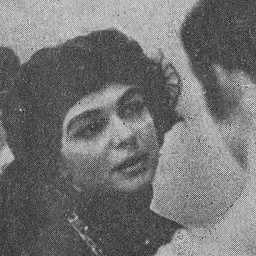

Related people
Same field, nearest in time
Contemporaries
People whose lives overlapped Věra Janoušková's




Frequently asked questions
Who was Věra Janoušková?
Czech painter, sculptor and artist (1922-2010)
When was Věra Janoušková born?
Věra Janoušková was born on 25 June 1922 in Úbislavice.
When did Věra Janoušková die?
Věra Janoušková died on 10 August 2010 in Prague.
What was Věra Janoušková's occupation?
Věra Janoušková was a graphic designer, sculptor, painter, collagist and graphic artist.
What nationality was Věra Janoušková?
Věra Janoušková was Czech.
Sources & further reading
Cite this page
APA: Biography.guide. (2026). Věra Janoušková. https://biography.guide/vera-janouskova/
MLA: "Věra Janoušková." Biography.guide, https://biography.guide/vera-janouskova/.
Chicago: "Věra Janoušková." Biography.guide. https://biography.guide/vera-janouskova/.
Data last updated: 2026-09-20 · Spot an error? Report a correction.
Page generated 2026-09-27 05:27 UTC